
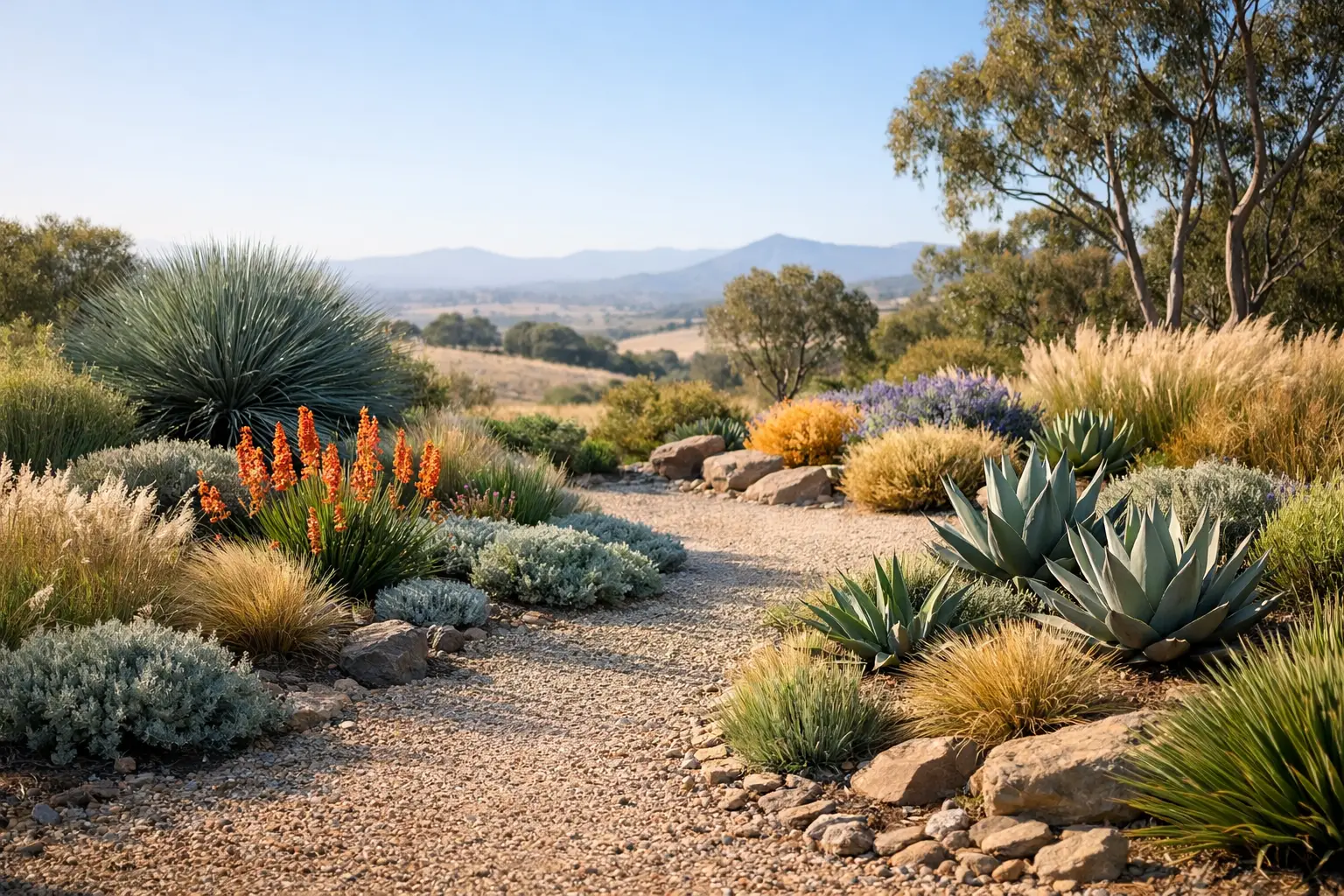
A hot western-facing backyard can turn a promising garden into a weekly battle with dry soil, scorched lawn and stressed plants. A well-planned drought resistant garden design changes that. Rather than relying on constant watering to keep everything alive, it works with the Northern Rivers climate, your soil, sun exposure and the way your household uses the space.
The goal is not a yard full of gravel and cactus. It is a practical, attractive garden that can handle dry stretches, recover well after heat and still give you shade, privacy, colour and usable outdoor areas. For homes across Ballina, Lennox Head, Byron Bay, Lismore and Alstonville, that usually means making a few smart decisions before planting begins.
Start with the site, not the plant list
Two properties on the same street can have completely different gardening conditions. One may have deep, moisture-holding soil and afternoon shade, while the next has compacted clay, a hot concrete boundary and a slope that sheds water as quickly as it falls.
Before choosing plants, look at where the heat lands in summer, which areas catch coastal winds and where water naturally runs after rain. Northern Rivers gardens also need to cope with extremes at both ends: dry, hot periods and heavy downpours. A design that only accounts for drought can still fail if poor drainage leaves roots sitting wet during a stormy season.
This early assessment helps set priorities. A harsh side boundary may need hardy screening and mulch. A sunny front garden may suit low-growing planting with a clear path to the front door. A sloping backyard might benefit from retaining, terraces or planted swales that slow water down rather than allowing it to wash soil away.
Build healthy soil that holds water
Soil preparation is one of the most worthwhile parts of drought-resistant garden work. Good soil acts like a sponge, holding moisture around plant roots for longer while still allowing excess water to drain. Poor, compacted soil does the opposite: water either runs off the surface or disappears beyond the root zone before plants can use it.
Adding organic matter, improving drainage where needed and loosening compacted ground gives new planting a much better start. The right approach depends on the site. Heavy clay may need drainage and structure improved, while sandy ground often benefits from materials that increase moisture retention.
Mulch then protects that work. A generous layer of quality organic mulch reduces evaporation, keeps the soil cooler and suppresses weeds that compete for water. Keep mulch clear of trunks and stems, as piling it against plants can trap moisture where it does not belong and encourage rot.
If you are keeping lawn, be realistic about where it is useful. Lawn is excellent for children’s play areas, pets and open entertaining spaces, but it can be thirsty in large, exposed sections. Reducing lawn in difficult corners and replacing it with planted garden beds, paving or gravel pathways can lower maintenance without making the yard feel bare.
Choose plants for heat, dry periods and local conditions
Drought-tolerant plants are not all the same. Some cope well with dry soil but dislike humidity or poor drainage. Others tolerate coastal exposure but need protection from heavy frost inland. The best choice comes from matching plants to the exact position they will occupy.
Native plants can be a strong option for Northern Rivers properties, particularly when selected for the local conditions rather than simply chosen because they are Australian. Lomandra, dianella, westringia, banksias, grevilleas and many native grasses can create structure, screening and seasonal interest with modest water needs once established. They also suit gardens that need a natural, relaxed look.
Mediterranean-style planting can work well in sunny, free-draining areas. Rosemary, lavender, olive trees and certain salvias can bring silver foliage, fragrance and long flowering periods. However, they are not a default answer for every garden. In humid or poorly drained positions, some can struggle. Plant choice should always follow soil and drainage conditions.
For privacy, avoid relying on one plant species across a whole boundary. A layered mix of trees, shrubs and lower planting usually looks better, supports more wildlife and reduces the risk of losing the entire screen to one pest or disease issue. It also creates a more natural sense of depth, especially on smaller suburban blocks.
Plant in groups with similar needs
Grouping plants by water and light requirements makes maintenance simpler. Thirstier plants can sit closer to taps or irrigation lines, while tougher species take the exposed edges and hard-to-reach areas. This prevents the common problem of overwatering hardy plants just to keep one unsuitable plant alive beside them.
New plants still need regular watering while they establish. Drought tolerant does not mean no water from day one. Deep, less frequent watering encourages roots to grow down into the soil, making plants more resilient over time than shallow daily watering.
Use shade and hard surfaces carefully
Shade is one of the most effective ways to reduce water demand and make an outdoor area more comfortable in summer. A well-positioned tree, pergola, privacy screen or covered seating area can protect both people and plants from harsh western sun.
Hard surfaces need the same consideration. Large expanses of dark paving, concrete or artificial turf can reflect and hold heat, making nearby garden beds hotter and drier. That does not mean avoiding paving altogether. Paths, patios and practical access are important parts of a functional garden. It means balancing them with planting, shade and appropriate materials.
Permeable surfaces and thoughtful drainage can also help manage heavy rainfall. Where practical, directing runoff towards planted areas rather than sending every drop straight to a drain allows the garden to benefit from rain when it arrives.
Make irrigation efficient, not excessive
An irrigation system should support a water-wise garden, not hide poor design choices. Drip irrigation and well-placed low-volume systems deliver water closer to plant roots with less waste than sprinklers spraying across paths, fences and foliage.
Zoning is important. Lawns, new garden beds, established shrubs and potted plants all have different needs. Separating these areas allows watering schedules to be adjusted without treating the entire property the same way. A timer can help busy households stay consistent, but it should be reviewed as seasons change.
After meaningful rain, switch irrigation off or adjust the schedule. Check for leaks, blocked drippers and overspray a few times a year. These small maintenance jobs protect your water use and prevent dry patches from becoming larger problems.
Design for a garden you can actually maintain
The most successful gardens suit the owner as much as the climate. A large acreage block may need broad planting areas, simple access for mowing and tough plants that do not require constant attention. A compact Lennox Head courtyard may benefit more from built-in seating, screening, raised planters and a small number of carefully selected feature plants.
Think about access before garden beds go in. Can you reach plants for pruning? Is there room to move a mower? Will leaf litter collect in a narrow strip behind a pool fence? These practical details affect how the garden looks after six months, not just on completion day.
It is also worth planning for seasonal maintenance. Mulch needs topping up, hedges need trimming and young plants need monitoring through their first summer. Ongoing garden care keeps a good design performing as intended, especially after heatwaves, storms or a long dry spell.
A tailored approach saves work later
There is no single formula for drought resistant garden design in the Northern Rivers. Coastal exposure, soil type, slope, drainage, household needs and budget all shape the right outcome. Starting with a site-specific plan prevents money being spent on plants, turf or irrigation that will demand more water and effort than the property can reasonably provide.
Evolve Gardens & Landscaping can help homeowners shape practical, water-wise outdoor spaces that still feel welcoming and well finished. Whether the job is a garden clean-up and replant, a new privacy screen, improved irrigation or a complete landscape makeover, the best result comes from building a garden that suits the conditions from the ground up.
A garden should not look its best only in the week after it is planted. With the right soil, plant selection, shade and maintenance plan, it can stay useful, colourful and inviting through the dry months while asking far less of you and your water supply.