A patio needs to do more than look good on the day it is finished. In the Northern Rivers, it has to cope with intense summer sun, heavy rain, damp periods, sandy coastal ground or reactive inland soils, and the everyday traffic of family life. When weighing up pavers versus concrete patios, the best choice comes down to how you use the space, the condition of the site and how much flexibility you want over time.
Both options can create a durable, attractive area for outdoor dining, a barbecue, poolside seating or a garden path connection. The difference is in how they handle movement, water, repairs, heat and style. A well-prepared base matters just as much as the surface material, so it is worth looking beyond the initial price.
Pavers versus concrete patios at a glance
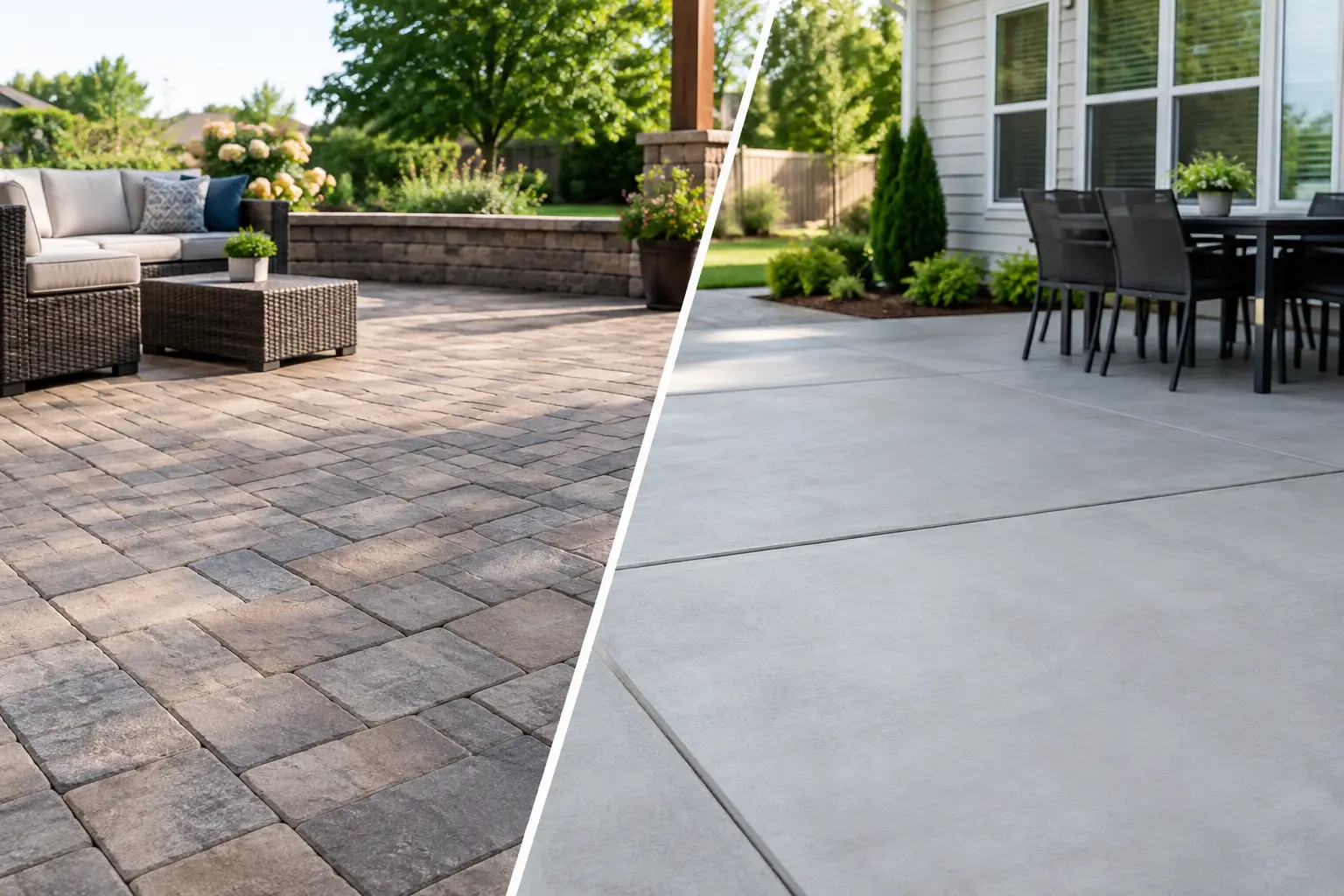
Concrete patios offer a clean, continuous surface. They can be plain, coloured, broom-finished, honed or finished with exposed aggregate for more texture. They are often a sensible option where you want a large, practical entertaining area with a simple, modern appearance.
Pavers are individual units laid over a properly prepared road-base and bedding-sand foundation. They are available in concrete, clay and natural stone, in a broad range of sizes, colours and laying patterns. Paving usually gives a patio more detail and makes it easier to match existing paths, garden edging, pool surrounds or the character of an older home.
Neither is automatically better. A compact courtyard outside a contemporary home may suit a smooth concrete finish, while a garden-focused yard with established trees may benefit from the repairability and visual warmth of pavers.
Upfront cost is only part of the decision
For a straightforward, accessible area, poured concrete can be more cost-effective per square metre than premium paving. It is especially efficient for broad, open spaces with minimal cutting, few level changes and good site access for equipment. Decorative finishes, excavation, drainage work, reinforcing and difficult access can increase the price quickly.
Paving material prices vary widely. Standard concrete pavers may be comparable to decorative concrete, while quality clay pavers, large-format porcelain or natural stone can cost more. Paving also involves more hands-on installation, including careful base preparation, edge restraints, cutting and laying.
The important question is not simply, “Which is cheaper?” It is, “What will this patio need to do over the next ten years?” A low-cost surface that holds water, cracks around a tree root or does not provide enough room for the way your household entertains can become the more expensive choice.
A proper quote should allow for excavation, removal of spoil, base materials, compaction, drainage, edging or formwork, the selected finish and site access. It should also account for tying the new surface neatly into existing levels, lawns, garden beds and doors.
Drainage matters in Northern Rivers backyards
Summer storms can test any hard surface. Water must fall away from the house and move to an appropriate drainage point rather than pooling beside walls, under doors or in the middle of a patio. This is a design and preparation issue, not something to leave until the end of the job.
Concrete is generally laid with a planned fall so water runs across the slab to a drain, lawn or another suitable discharge point. Because it is a continuous surface, water does not drain through it. On a well-designed patio, that is not a problem. On a flat or poorly graded one, puddles and slippery patches can become a regular frustration.
Pavers have joints that allow a small amount of water through, but they are not automatically a drainage solution. The base beneath still needs to be shaped and compacted correctly. In low-lying yards, on slopes, or where runoff comes from neighbouring land, a patio may need spoon drains, strip drains or other measures to control water properly.
This is where local site knowledge pays off. A coastal block in Lennox Head can behave very differently after rain from a sloping property near Alstonville or Lismore. Before choosing materials, assess where water currently goes and whether the new patio will change that path.
Movement, cracking and repairs
Concrete is strong and long-lasting, but it is not immune to movement. Ground settlement, expansive soils, nearby tree roots and temperature changes can lead to cracking. Control joints help manage where cracks occur, yet they do not guarantee a slab will remain unmarked forever. Once a crack is visible, repairing it neatly can be difficult, particularly with coloured or exposed aggregate finishes.
Pavers can move too. If the base is inadequate, edges are not restrained or water gets beneath the surface, they may sink, spread or become uneven. The advantage is that individual pavers can usually be lifted, the base repaired and the same pavers relaid. This is particularly useful where underground services need access or roots are likely to affect a section of the patio.
For established gardens, this repairability is often a major point in favour of pavers. It allows a more practical response to the realities of mature trees and changing outdoor spaces without replacing an entire surface.
Heat, grip and everyday comfort
Northern Rivers patios are often used through the warmer months, so surface temperature deserves attention. Dark pavers and dark concrete can become very hot in direct afternoon sun. Lighter colours generally feel cooler underfoot, although glare may be stronger in an exposed setting.
Texture also matters. Broom-finished concrete and many paver styles offer useful grip around entertaining areas, garden connections and pools. Highly polished concrete, some honed finishes and smooth tiles can be less forgiving when wet, depending on the product and finish selected.
Think about the patio at the time you are most likely to use it. A west-facing barbecue area may need a lighter surface, shade from a pergola or screen planting. A poolside space needs slip resistance and a layout that does not track excessive dirt or loose jointing sand into the water. The most attractive sample can be the wrong choice if it is uncomfortable in full sun or slippery after rain.
Appearance and how the patio connects to the garden
Concrete creates an uncluttered backdrop. It works well with contemporary homes, built-in seating, outdoor kitchens and simple planting palettes. A larger slab can make a small yard feel more open because there are fewer visible lines across the surface.
Pavers bring pattern, texture and a more garden-integrated feel. They can soften the transition from lawn to entertaining area, follow a curved edge or create distinct zones for dining and fire-pit seating. Clay pavers suit many character homes, while large concrete pavers can still achieve a crisp, modern result.
Consider the surrounding materials before making a selection. Existing brickwork, timber decks, retaining walls, fences and pool coping all influence what will look settled rather than added on. The best patios relate to the house while leaving enough planting space to keep the yard cool, private and enjoyable.
Maintenance expectations
Both surfaces benefit from regular sweeping, occasional washing and prompt attention to stains from food, leaves, pots or oil. In humid, shaded areas, mould and algae can develop on either material, especially through wetter months. Good drainage, air movement and sensible planting around the edges help reduce the problem.
Concrete may need resealing depending on its finish and exposure. Pavers may need jointing sand topped up over time, particularly after heavy rain or pressure cleaning. Weeds can appear in neglected joints, although this is usually manageable with routine garden care and the right installation method.
Avoid assuming that either choice is maintenance-free. A patio is part of the garden, and the surrounding trees, irrigation, drainage and shade will affect how it performs and how much cleaning it needs.
Choosing the right patio for your property
Concrete is often the right fit when you want a simple, continuous, hard-wearing surface, have a relatively stable and accessible site, and prefer a clean modern finish. Pavers are often a stronger option when detail, character, future repairs, curves or integration with garden features are priorities.
There are also situations where a combination works best. A concrete entertaining pad may sit beside paved paths, stepping stones or a paved edge around a garden bed. Mixing materials can define different zones without making the yard feel busy.
At Evolve Gardens & Landscaping, patio advice starts with the site rather than a one-size-fits-all material recommendation. A clear on-site discussion can identify drainage concerns, access limitations, existing roots, preferred finishes and how the space needs to work for your household before a detailed quote is prepared.
Choose the surface that suits your yard on its wettest day and its hottest afternoon, not just the one that looks best in a showroom. A well-planned patio should give you a reliable place to spend time outside, while still making room for the garden around it to thrive.