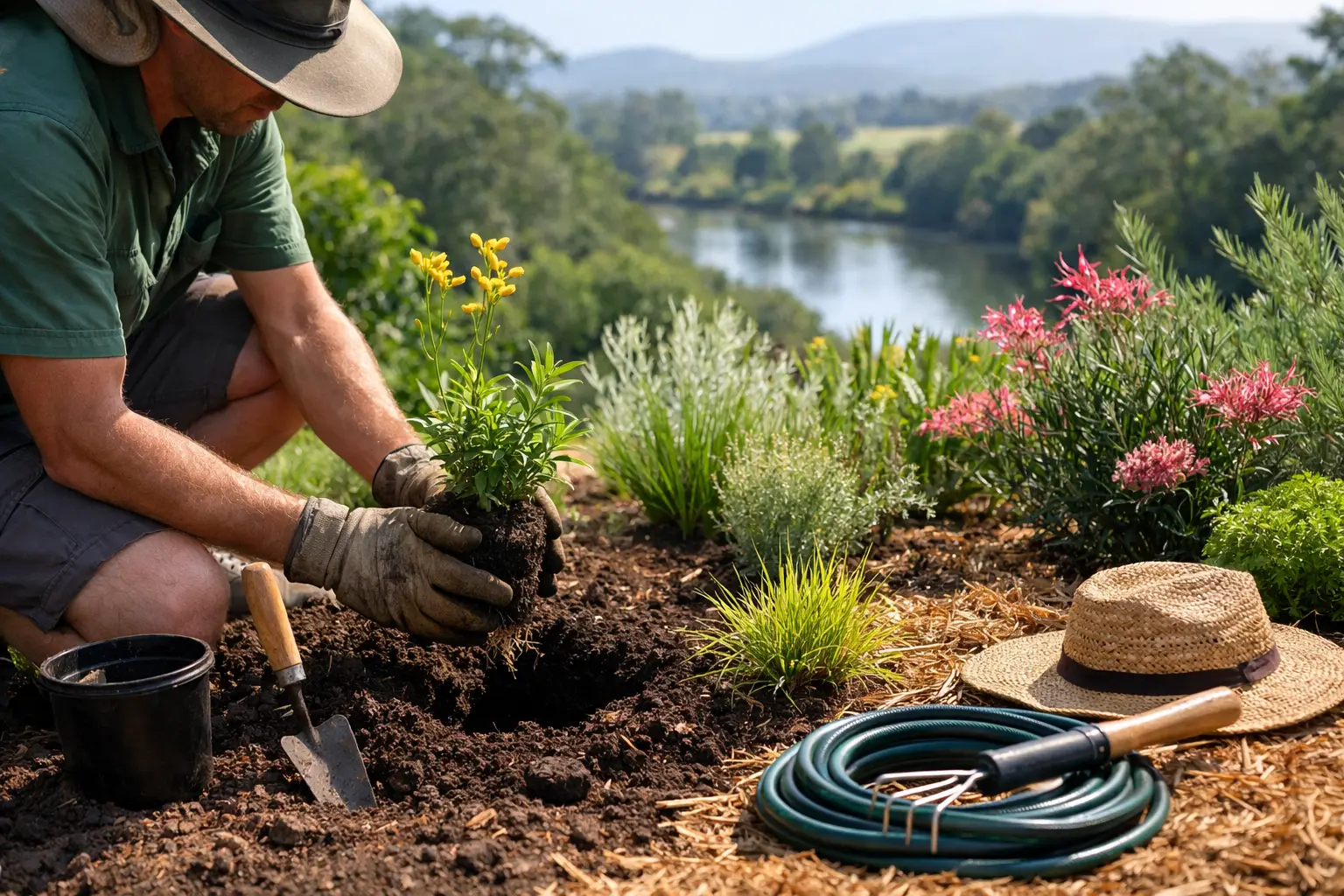
A well-planned native garden can make a Northern Rivers property feel settled into its surroundings rather than simply planted around the edges. But getting that result takes more than selecting a few Australian natives at the nursery. A professional native garden planting service considers your soil, drainage, sun exposure, existing trees, access and the amount of care the garden will receive after installation.
For homes in Ballina, Lennox Head, Byron Bay, Lismore, Alstonville and nearby areas, those details matter. Coastal wind, heavy rain, humid summers and dry stretches can all affect how plants establish. The right planting plan gives you a garden with colour, shade, habitat and structure, while avoiding the common frustration of replacing struggling plants a season later.
Why native planting needs a local approach
“Native” does not mean every Australian plant will thrive in every Northern Rivers yard. A plant suited to a dry inland climate may struggle in a damp, shaded garden. Likewise, a rainforest species may not cope with reflected heat beside a driveway or on an exposed coastal block.
A good planting plan starts with the site. We look at where water sits after rain, which areas bake in the afternoon sun, whether the soil is sandy, compacted or heavy clay, and how mature trees will compete for moisture. This helps determine plants that suit the conditions, not just plants that look good on the day they go into the ground.
Local and climate-suitable native plants can also reduce unnecessary maintenance once established. They are not maintenance-free, though. New plants need watering, mulching, occasional shaping and monitoring while their root systems develop. The aim is a garden that becomes easier to care for over time, without looking sparse or untidy in the process.
What a native garden planting service can include
Every property has different priorities. Some homeowners want to replace a tired front garden with a low-maintenance native display. Others need screening from neighbours, stabilising planting on a slope, or a more usable backyard for children and entertaining. A native garden planting service can be tailored around the job at hand, from a focused garden refresh through to a complete landscape makeover.
The process usually begins with a conversation on site. This is the time to discuss how you use the space, plants you like or dislike, privacy concerns, pets, lawn areas and the level of upkeep you are comfortable with. Practical matters such as drainage, edging, paths, irrigation and access for materials should be resolved early, rather than worked around after planting has started.
Plant selection is then matched to function. Low groundcovers can soften edges and help hold soil. Grasses and strappy-leaf plants add movement and handle open, sunny positions well. Shrubs provide body and screening, while small trees can create shade and a stronger sense of privacy. Flowering species may bring birds and pollinators into the garden, but foliage, form and seasonal reliability are just as important to a garden that looks good all year.
Preparing the ground properly
Healthy planting begins below the surface. Before plants are installed, garden beds may need weeds removed, compacted soil loosened, levels adjusted or drainage improved. In some locations, imported soil or compost is useful. In others, excessive soil improvement can create a soft pocket around the plant that holds too much water or discourages roots from reaching into the surrounding ground.
Mulch is also part of the job, not an afterthought. Applied at the right depth and kept clear of stems, mulch helps retain moisture, moderates soil temperature and limits weed growth. It gives a freshly planted garden a clean, finished appearance while plants grow in.
If your garden regularly dries out, an efficient irrigation system can make establishment far more reliable. Drip irrigation or carefully positioned watering points can deliver water close to the root zone without wasting it on paths and hard surfaces. The best option depends on bed layout, water pressure, plant types and whether the property is occupied full-time.
Designing for a garden that still works in five years
The most common mistake with new gardens is planting for the size everything is now, rather than the size it will become. Plants packed tightly can look instantly lush, but they may compete for light and water, become difficult to prune, or block paths and windows within a few years.
Thoughtful spacing allows each plant to develop properly. It also makes room for maintenance access, especially around fences, retaining walls and service areas. If a quick full look is important, smaller temporary filler plants or mulching can be a better answer than overcrowding long-term shrubs.
Privacy planting needs the same practical thinking. A dense screen may be useful along one boundary, but it should not create dampness against a fence, take over a narrow side yard or shade out the rest of the garden. The right combination of screening shrubs, timber privacy elements and planting layers often gives a better result than one uninterrupted row of the same plant.
For sloping blocks, planting can be combined with retaining, drainage control or steps to make the space safer and easier to use. Plant roots can assist with soil stability, but they are not a substitute for proper retaining or drainage where the site needs structural work. Addressing those issues first protects the investment in your new garden.
The balance between low-maintenance and living well
Many clients ask for a low-maintenance garden, and that usually means less mowing, less weeding and fewer plants that need constant attention. It does not mean a garden should be bare, lifeless or reliant on gravel alone.
A practical native garden can still have layers, flowers and seasonal change. The key is choosing durable species, giving plants adequate space, using mulch well and making the layout easy to reach. A narrow garden bed behind a wide hedge may look neat from indoors but can be hard to maintain. A slightly simpler layout with clear access is often the better long-term choice.
Maintenance expectations should be clear from the outset. During the first few months, plants may need more regular watering, weeding and checking, particularly through hot or dry weather. After establishment, maintenance can shift towards pruning, refreshing mulch, controlling weeds and keeping the garden’s shape balanced. This is where having one team able to complete the planting and provide ongoing garden care can be particularly useful.
Choosing the right team for the work
Native planting should not be treated as a one-size-fits-all package. Ask whether the contractor will assess conditions on site, explain the proposed plant choices and allow for practical elements such as drainage, access and future maintenance. A clear quote should outline the scope of work, including preparation, plants, mulch, irrigation or edging where required, and rubbish removal.
It is also worth choosing a team that understands the wider landscape. A planting job may reveal that a path needs adjusting, a lawn edge needs defining, water needs redirecting or an overgrown tree needs pruning to let more light in. Evolve Gardens & Landscaping brings more than 20 years of hands-on Northern Rivers experience to projects of different sizes, with the ability to coordinate those connected garden and landscaping tasks where needed.
Good communication matters as much as good plant knowledge. You should know what is being installed, when work is expected to take place, how the site will be kept tidy and what care is required once the crew has finished. Weather can affect planting schedules, particularly in periods of heavy rain, but a dependable contractor will keep you informed and adjust the plan sensibly.
A garden that belongs to your property
The best native gardens do not look forced. They provide shade where it is needed, soften hard surfaces, frame views and make outdoor areas more enjoyable to use. Over time, the plants knit together, birds visit more often and the garden begins to feel like a natural extension of the home.
If you are considering a new garden or replacing plants that have never quite worked, start with an on-site discussion and a clear plan for your conditions. The right choices at planting time can give you a healthier, more attractive outdoor space for years to come.