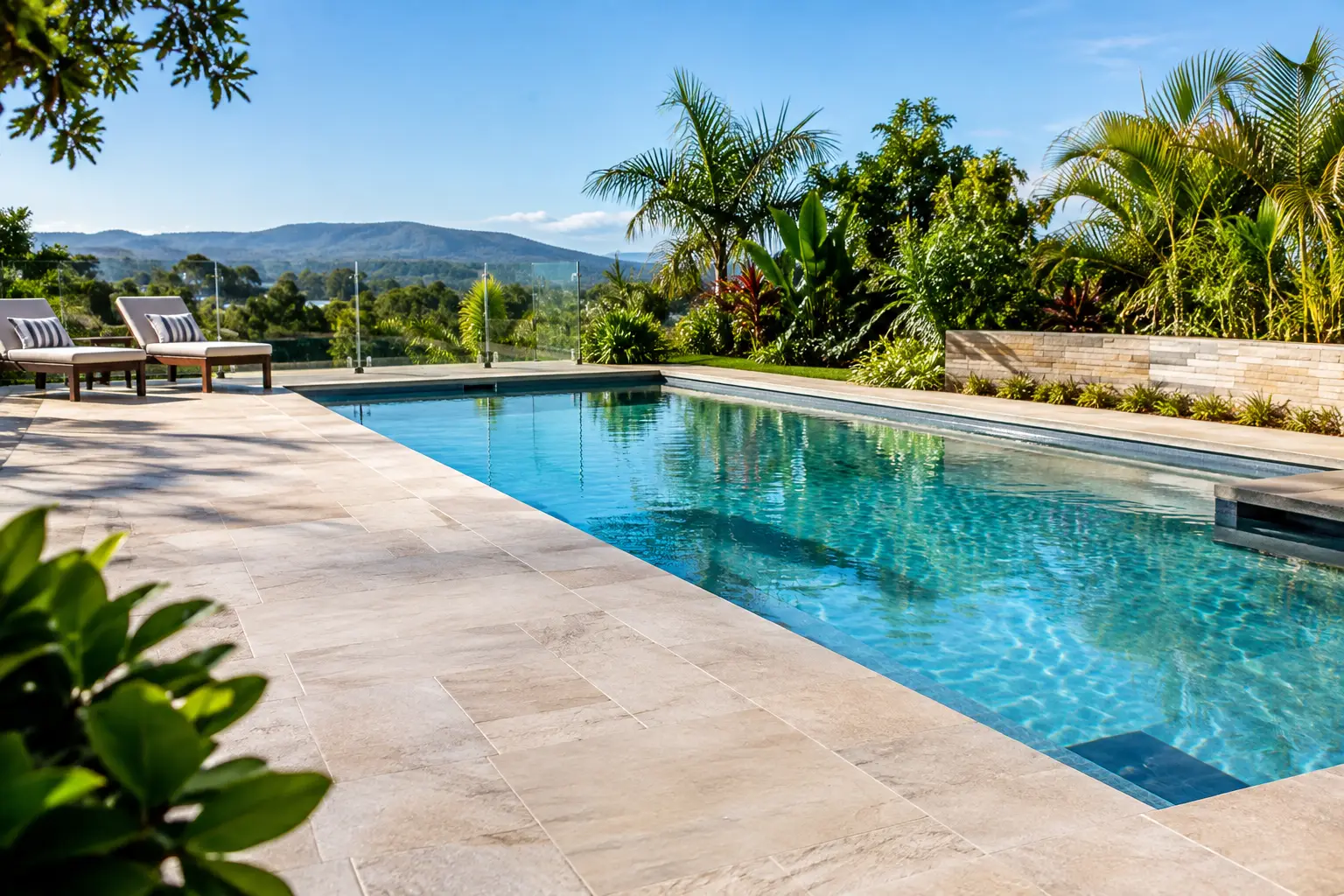
A pool surround has to work hardest when everyone is wet, barefoot and moving quickly. The best paving for pool surrounds is not simply the material that looks best in a showroom. For Northern Rivers homes, it needs to stay comfortable in the heat, provide reliable grip, drain heavy rain properly and suit the way your family actually uses the pool.
A pale stone-look finish may suit a relaxed Byron Bay-style backyard, while a more durable concrete surface can make better sense for an active family pool or a large lifestyle property. The right choice comes down to the site, the pool type, exposure to sun and weather, your maintenance preferences and budget.
What Makes Good Pool Surround Paving?
Safety comes first. Pool paving should have a surface with suitable slip resistance when wet, particularly on pathways between the house, pool gate and entertaining area. A surface can feel textured underfoot without being overly rough. The aim is secure footing that is still pleasant to walk on without shoes.
Heat is equally important in the Northern Rivers. Dark paving can look striking, but it often becomes uncomfortably hot during a Ballina or Lennox Head summer afternoon. Lighter colours generally reflect more heat, although very bright finishes can create glare around the water. Mid-light natural tones are often a practical middle ground.
Drainage deserves just as much attention as the paving itself. Around pools, water needs to move away from the house, avoid pooling on walking areas and be managed without sending runoff where it should not go. A well-planned fall, appropriate drainage and a properly prepared base protect the paving and make the space safer after rain.
It is also worth considering salt, chlorine and coastal air. Homes closer to the coast can be exposed to salt-laden breezes, while all pools bring regular contact with treated water. Materials, grout, adhesives and sealers should be selected and installed for those conditions, rather than chosen on appearance alone.
The Best Paving for Pool Surrounds: Your Main Options
There is no single best material for every pool. Each option has strengths, limitations and a different feel underfoot.
Porcelain pavers
Outdoor porcelain pavers are a popular choice for contemporary pool areas because they are low-porous, consistent in colour and easy to keep clean. Quality exterior-rated porcelain can offer good slip resistance, and lighter stone-look styles generally remain cooler than darker finishes.
Porcelain is especially useful where homeowners want a crisp, modern finish with minimal ongoing maintenance. It can also work well when you want the pool area to connect visually with indoor tiles, although outdoor paving must be specified separately for wet, exterior use.
The trade-off is that porcelain needs careful preparation and installation. It is not a material to lay over an uneven base and hope for the best. Selecting the right surface rating, cutting around curves and skimmer boxes neatly, and allowing for proper falls all matter.
Natural stone, including travertine
Natural stone brings warmth and variation that manufactured products cannot quite replicate. Travertine is often chosen around pools because its light colour and naturally textured face can feel comfortable underfoot. Sandstone and other natural stones can also suit the relaxed, established garden character common across Alstonville, Lismore and the wider Northern Rivers.
Stone needs more consideration than porcelain. Some varieties are more porous, may require sealing and can change in appearance over time. The colour, density, finish and source of the stone all affect performance. A smooth polished stone may look refined, but it is rarely the sensible finish beside a pool.
Natural stone is a strong option when the pool area needs to sit naturally within established planting, timber screening or a broader garden makeover. Choose a stone with a suitable exterior finish and be realistic about the level of care it will need.
Concrete paving and honed concrete
Concrete is one of the most versatile choices for pool surrounds. It can be poured as a continuous surface, shaped to suit curved pools and finished in a range of colours and textures. Honed concrete gives a clean, modern appearance, while exposed aggregate can offer more texture and visual interest.
For many households, concrete represents good value because it creates a durable, easy-to-clean surface without the joints of individual pavers. It is particularly practical for larger spaces where separate paving units may increase labour and material costs.
The finish matters. A surface that is too smooth can be slippery when wet, while very coarse aggregate may be uncomfortable on bare feet. Colour should also be chosen carefully, as darker concrete can hold heat. Expansion joints, drainage and good base preparation are essential to limit cracking and movement over time.
Concrete pavers
Concrete pavers offer a practical balance between cost, repairability and design flexibility. They are available in many shapes, sizes and colours, from simple rectangular formats to larger architectural slabs. If an individual paver is damaged or access is needed beneath a paved area, repairs are usually more straightforward than with a poured slab.
They do, however, have more joints. Those joints need a properly constructed base and suitable jointing material to help prevent movement and weed growth. In damp or shaded areas, regular cleaning can also be needed to manage algae and mould.
Concrete pavers can be an excellent choice for a pool zone that extends into paths, patios or garden steps, particularly where a consistent look across the whole backyard is more important than a completely seamless finish.
Match the Material to Your Site
The pool’s location often narrows the best choices quickly. A fully exposed west-facing pool deck needs a different approach from a shaded courtyard pool beneath mature trees. If the area receives relentless afternoon sun, prioritise lighter colours and materials known for better barefoot comfort. If it sits under trees, choose a finish that can be cleaned easily and plan for leaf litter, moisture and occasional staining.
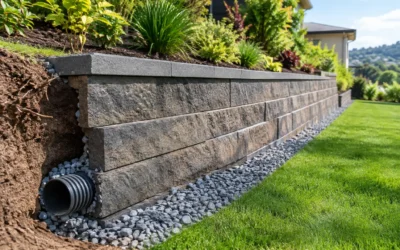
Coastal properties need extra attention to drainage, corrosion-resistant fixtures and materials that handle wind-driven rain and salt exposure. On sloping blocks, the paving design may need retaining, steps, channels or changes in level to create a safe, usable pool area. Trying to solve these issues after the paving is down is expensive and disruptive.
Think beyond the pool edge as well. A narrow strip of paving may be enough for a low-use plunge pool, but a family pool often needs room for loungers, a table, a barbecue and clear access through the yard. Planning these zones early helps avoid an awkward layout where furniture blocks the safest route around the water.
Details That Affect Safety and Longevity
Even premium paving can disappoint if the installation details are overlooked. Falls should be set out before work begins, with water directed away from buildings and managed appropriately across the site. Pool coping, paving height and drainage levels need to work together, particularly where existing patios, doors or garden beds meet the new surface.
Pool fencing is another key consideration. Paving levels cannot compromise required fence clearances or create climbable features close to the barrier. Gates, steps and transitions should be planned as part of the overall design, not treated as an afterthought.
Allow for movement joints and a solid base suited to the material and ground conditions. Northern Rivers soils can vary significantly from one property to the next, and sites with poor drainage or reactive ground need a considered approach. Taking time with preparation is what helps paving remain level and attractive through wet seasons, dry spells and regular pool use.
Keep the Finish Looking Good
Most pool paving benefits from regular sweeping and a gentle wash to remove sunscreen, leaves, dust and organic matter. Shaded areas may need more frequent attention, especially after extended rain. Avoid harsh cleaning methods unless they are suitable for the specific material, as aggressive acids or pressure washing can damage some stone surfaces and jointing.
Sealing is not necessary for every material, but it can be worthwhile for selected natural stones and concrete finishes. The right treatment can make cleaning easier and reduce staining without creating a glossy, slippery surface. It should be selected for the paving, rather than applied as a one-size-fits-all solution.
A well-built pool surround should make the backyard easier to enjoy, not add another demanding maintenance job. Whether you prefer natural stone, porcelain, concrete or pavers, the best result starts with an honest assessment of the site and careful installation. Evolve Gardens & Landscaping can help homeowners plan a practical, attractive pool area with a free, no-obligation quote – so the finished space feels good underfoot and works properly through every season.