
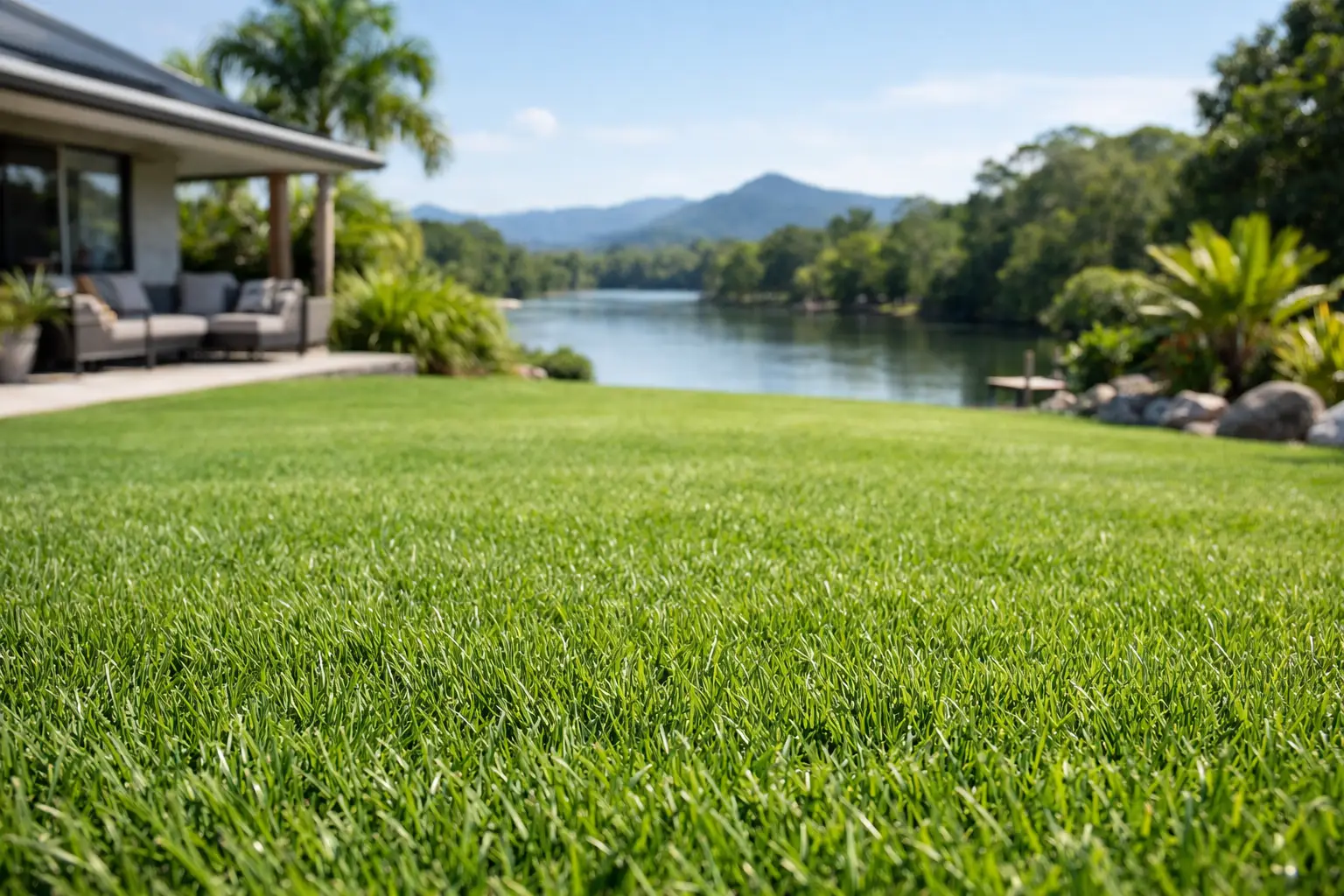
A lawn that looks great in a display yard can struggle once it meets a Northern Rivers summer, a week of coastal rain or the shade from established trees. Choosing the best turf for Northern Rivers properties means looking beyond colour and softness. The right choice depends on how much sun the area receives, how the soil drains, whether salt air is a factor, and how your household will use the lawn.
From compact coastal blocks in Ballina and Lennox Head to larger hinterland gardens around Alstonville and Lismore, there is no single turf that suits every yard. A practical assessment before installation saves a lot of patching, weeds and disappointment later.
What is the best turf for Northern Rivers conditions?
For many local homes, soft-leaf buffalo is the most forgiving all-round option. It handles warm, humid conditions well, copes with moderate shade better than fine-leaf grasses and gives a comfortable surface for families. However, a full-sun, high-traffic lawn may perform better with couch or kikuyu, while zoysia can suit homeowners wanting a slower-growing lawn with good heat and drought tolerance.
The best option comes down to your site rather than a one-size-fits-all recommendation. Before selecting turf, consider four practical questions: How many hours of direct sun does the lawn receive? Does water sit on the ground after heavy rain? Will children, pets or regular entertaining put it under pressure? And is the garden close enough to the coast for salt spray to affect growth?
Soft-leaf buffalo for shade and family spaces
Soft-leaf buffalo is a strong choice for many Northern Rivers backyards. Its broad leaf feels softer underfoot than couch, and it generally tolerates filtered light and part-shade better than most warm-season turf varieties. This makes it useful beside homes, under open-canopy trees and in gardens where neighbouring buildings block part of the afternoon sun.
It is also relatively forgiving when mowing is not done every week. That said, buffalo still needs enough light to stay dense. A lawn with only an hour or two of sun, especially in a damp spot, can thin out regardless of the variety chosen. Tree pruning, drainage improvements or a change to garden beds may be more sensible than repeatedly replacing struggling turf.
Couch for sunny, active lawns
Couch is well suited to open, sunny areas where a tidy, fine-leaf finish is the priority. It recovers quickly from wear and is a popular option for households with active children, dogs and frequent outdoor use. With regular mowing, it can produce the crisp, even appearance many people want around a pool or entertaining area.
The trade-off is maintenance. Couch needs plenty of direct sun and usually looks its best with more frequent mowing than buffalo. It can also creep into garden beds, so clean edging and regular attention are needed. In shaded or heavily compacted corners, couch commonly becomes sparse and allows weeds to move in.
Zoysia for lower mowing and heat tolerance
Zoysia varieties can be a good fit for homeowners who want a dense lawn without the fast growth of kikuyu or couch. Once established, zoysia is known for coping well with heat and dry spells, and its slower growth can reduce mowing frequency.
Patience is the key consideration. Zoysia establishes more slowly than vigorous turf types, so good site preparation and careful watering in the first few weeks matter. It suits sunny to lightly shaded lawns but is not the answer for deep shade or a wet, poorly drained area. It is often a worthwhile choice where a neat, lower-maintenance finish is more important than rapid recovery from very heavy traffic.
Kikuyu for hard-wearing open areas
Kikuyu grows quickly, repairs well and stands up to regular use. On larger sunny blocks, it can be a cost-effective, durable lawn option, particularly where children and pets are constantly outside. Its strong growth also helps it compete with weeds once it is healthy and established.
That same vigour is not for everyone. Kikuyu needs regular mowing during the warmer months and can spread into gardens, paths and neighbouring areas if it is not contained. For a smaller, highly landscaped courtyard, a less aggressive turf is often easier to manage.
Match your turf to the site, not just the look
Northern Rivers soils vary widely. Some properties have sandy coastal soil that dries out quickly, while others have heavier clay that holds water after storms. New estates may also have compacted fill under a thin layer of topsoil. Turf laid over poor ground can look fine initially, then decline when the roots cannot move through the soil or water has nowhere to go.
Drainage deserves particular attention in this region. Persistent wet feet can lead to weak roots, fungal problems and bare patches, especially through humid periods. If water ponds after rain, address the cause before turf is laid. This may involve reshaping the surface, improving soil structure, installing drainage or directing runoff away from the lawn.
Coastal gardens near Byron Bay, Lennox Head and Ballina can also experience salt-laden wind. Salt-tolerant turf and sensible planting around exposed boundaries can help protect the lawn. Buffalo and couch generally cope better with these conditions than turf selected purely for a cool-climate look.
Sun is equally important. Watch the area at different times of day rather than estimating from memory. A spot that seems sunny in summer may receive very little useful light in winter when the sun sits lower and trees or buildings cast longer shadows. This is especially relevant along narrow side yards and beneath mature trees.
Good preparation matters as much as turf choice
A quality turf installation starts below the surface. Existing weeds should be removed properly, old lawn and debris cleared, and the ground graded to create a smooth surface with appropriate fall away from buildings. The soil should then be loosened and improved where required, rather than simply rolling turf over compacted ground.
Fresh underlay soil should be suitable for turf, levelled carefully and firm enough to walk across without sinking. It should not be so hard that roots struggle to establish. Irrigation, drainage and edging are also easier to install before the turf goes down, not after.
Once laid, turf needs immediate and consistent watering to settle the roots into the soil beneath. Water deeply enough to moisten the turf and underlay, then adjust the schedule as roots establish. In hot or windy weather, new turf may need more frequent checks. In a rainy spell, avoid adding water simply because it is on a calendar. Overwatering a damp lawn can be as unhelpful as letting it dry out.
Avoid mowing too early. Wait until the turf has rooted into the soil and lifts only with resistance. The first cut should be light, using sharp mower blades and never removing too much leaf at once. A scalped new lawn is slower to recover and more exposed to heat stress.
Plan for the lawn you can realistically maintain
The right turf should fit your routine as well as your property. A finely manicured couch lawn may be ideal for someone happy to mow often, fertilise seasonally and maintain edges. A buffalo or zoysia lawn may be a better match for busy households wanting an attractive, usable outdoor space with a more relaxed maintenance schedule.
Regular mowing, sensible fertilising and occasional weed checks will keep any lawn healthier than relying on a turf variety to solve every problem. In humid weather, avoid excessive nitrogen fertiliser and take care not to overwater, as lush, constantly damp growth is more prone to disease.
For established lawns that have become thin or uneven, the answer is not always replacement. Compaction, shade, drainage, mowing height and irrigation may be the real issue. Identifying that cause first can make a targeted lawn renovation more effective and better value than starting again.
A local site visit is often the simplest way to make the decision with confidence. Evolve Gardens & Landscaping can assess sun, soil, drainage and how you want to use the space, then provide a free no-obligation quote for turf installation and the practical work needed to give it the best start. The goal is not just a green lawn on day one, but a lawn that still earns its place in your garden through the next wet summer and dry spell.