A lawn can look thirsty even after rain, feel hard underfoot and develop bare, worn patches where the kids play or the mower turns. These are common signs that the soil beneath the grass has been compressed. Knowing how to revive compacted lawns helps you address the cause rather than repeatedly adding fertiliser to grass that cannot properly access air, water or nutrients.
Across the Northern Rivers, compacted lawns are especially common after long dry periods, heavy summer rain, building work or regular foot traffic. Clay-heavy ground around parts of Ballina, Lismore and Alstonville can tighten up quickly, while coastal sandy soils may become water-repellent and show similar symptoms for a different reason. The right fix depends on what is happening below the surface.
What lawn compaction actually does
Healthy lawn soil contains tiny spaces between soil particles. Roots need these spaces for oxygen, moisture and room to grow. When repeated pressure squeezes those spaces closed, rain may pool on the surface or run away instead of soaking in. Grass roots stay shallow, turf loses colour quickly in heat, and the lawn struggles to recover from wear.
Compaction is often caused by a combination of daily use and local conditions. Parking on the verge, regular dog traffic, children’s play equipment, a frequently used gate, wheelbarrows, mowing when the ground is wet and machinery used during renovations can all create hard areas. A newly laid lawn can also compact if the base soil was not prepared properly before turf went down.
Do not assume every dry-looking lawn is compacted. Hydrophobic soil, poor irrigation coverage, lawn grubs, shade and nutrient deficiencies can create patchy turf too. A simple check is to push a screwdriver or narrow garden fork into damp soil. If it is difficult to penetrate more than a few centimetres, compaction is likely contributing to the problem.
How to revive compacted lawns step by step
The most effective approach is to open the soil, improve its structure and give the grass time to rebuild roots. Trying to fix a hard lawn in one weekend with a heavy dose of fertiliser rarely produces a lasting result.
1. Choose the right time for aeration
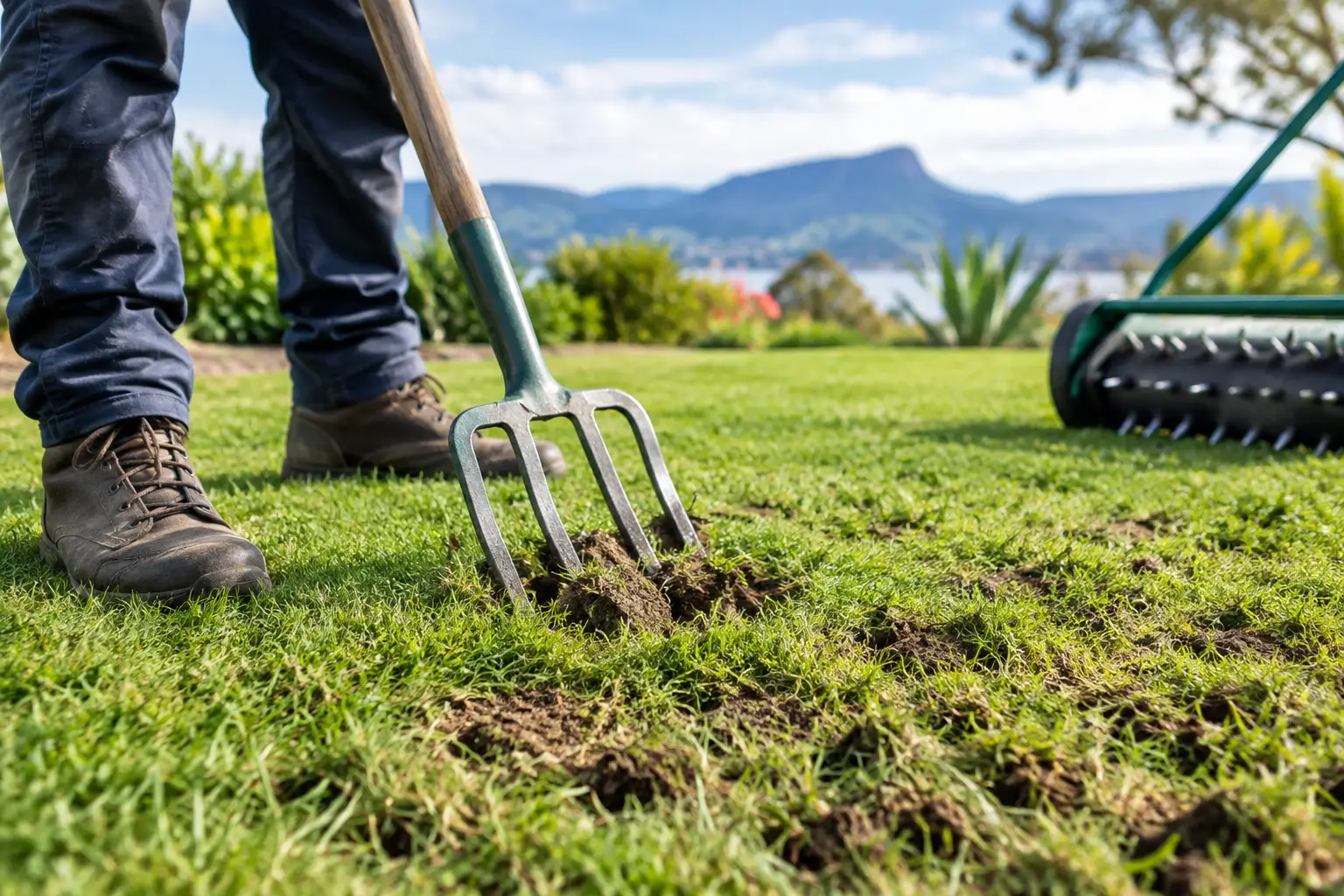
Aeration is the key job. It removes or opens channels through compacted soil so water, air and nutrients can move down to the root zone. For warm-season lawns common in Northern NSW, including buffalo, couch and kikuyu, aerate during active growth when the lawn can repair itself quickly.
Late spring through early autumn is usually suitable, provided the lawn is not drought-stressed or waterlogged. Avoid aerating baked-dry soil because it is difficult to penetrate and can tear turf. Equally, do not work on saturated ground after a major downpour. The soil should be moist enough to yield, but not sticky underfoot.
A garden fork can help with a small compacted patch. Push it in 75 to 100 mm, gently rock it back and forth, then repeat across the area. For larger lawns, a core aerator is more effective because it removes small plugs of soil rather than simply pushing the ground sideways. This creates genuine space for roots and improves drainage.
If your lawn has been heavily compacted for years, one pass may not be enough. A second aeration in the following growing season is often better than aggressively overworking the lawn in one go.
2. Topdress to improve the soil, not smother the grass
After core aeration, apply a light topdress that suits the existing soil. This is where local knowledge matters. A sandy-loam blend is commonly useful for levelling small hollows and helping aeration holes stay open, but the best material depends on the lawn’s soil profile and turf type.
Keep the layer light, generally no more than 5 to 10 mm at a time. Work it through the grass with the back of a rake or a lawn leveller so leaf blades remain visible. A thick layer can bury the growing points, particularly in buffalo lawns, and create more work than it solves.
Compost can improve soil biology and moisture retention, but use a screened, lawn-safe product and apply it lightly. Adding large volumes of sand to heavy clay without a proper plan can create a hard, concrete-like mix. If the soil is very clay-rich, poorly drained or uneven after construction, it is worth getting advice before bringing in material.
3. Water deeply after treatment
Once aerated and topdressed, water the lawn deeply enough to settle the material and wet the root zone. Then allow the surface to begin drying before watering again. This encourages roots to chase moisture deeper into the soil rather than staying close to the surface.
Frequent light watering is one of the most common reasons lawns become shallow-rooted and dependent on constant attention. In hot or windy weather, new turf and recovering lawns may need more regular watering for a short period. Established turf generally responds better to a deeper soak adjusted for rainfall, soil type and irrigation coverage.
Check that sprinklers are reaching the full lawn, especially edges beside driveways, retaining walls and garden beds. In coastal areas, wind can carry spray away from the target zone. In sloping yards, slower watering cycles may prevent run-off and give water time to soak in.
4. Feed only when the lawn can use it
Aeration improves access to nutrients, but fertiliser is not a substitute for soil structure. Wait until the lawn is actively growing and has adequate moisture, then apply a suitable slow-release lawn fertiliser at the recommended rate. Water it in well.
Avoid fertilising a stressed, dry lawn before a heatwave or applying extra product in the hope of forcing fast green growth. Too much fertiliser can scorch turf, encourage soft growth and add unnecessary nutrients to stormwater run-off. If the lawn remains pale after aeration and sensible watering, a soil test can help identify whether nutrients or pH are part of the issue.
Protect the lawn from compacting again
A revived lawn will stay healthier when its main pressure points are managed. If the same route is used every day, consider a practical path, stepping stones or a paved access area rather than expecting turf to cope with constant traffic. This is particularly useful between a driveway and front door, beside a clothesline or through a side yard.
Keep mower blades sharp and avoid cutting more than one-third of the leaf blade in a single mow. Slightly longer grass shades the soil, supports deeper roots and handles Northern Rivers heat more reliably. Mowing when the lawn is wet can press soil down and leave clumps across the surface, so wait for drier conditions where possible.
For lawns used by pets or active families, rotate play equipment and avoid concentrating wear in one corner. During landscaping projects, ask contractors to protect lawn areas and keep heavy vehicles off turf where access allows. Repairing a damaged lawn after construction is possible, but prevention is far simpler.
When aeration will not be enough
Some lawns need more than maintenance. If water regularly sits for days, the lawn has deep wheel ruts, tree roots dominate the area or the soil was poorly prepared during a build, drainage and base-level issues may need attention first. Aerating a lawn with a serious drainage problem can provide temporary relief, but it will not change where water naturally collects.
Turf that is mostly weeds, badly thinned or affected by pest damage may also be more economical to renovate or replace once the underlying soil has been corrected. This is often the case in small courtyards and high-use family backyards, where improving levels, irrigation and access can make a bigger long-term difference than patch repairs.
For larger or persistently hard lawns, Evolve Gardens & Landscaping can assess the turf, soil condition, drainage and traffic patterns before recommending a practical course of work. A tailored plan may include aeration and topdressing, irrigation adjustments, lawn repair or a broader landscape solution that makes the area easier to use and maintain.
A lawn does not need to feel like a cricket pitch to survive Northern Rivers conditions. Give the soil room to breathe, water with purpose and reduce pressure where it is repeated, and the grass has a far better chance of growing thick, resilient and comfortable underfoot.