
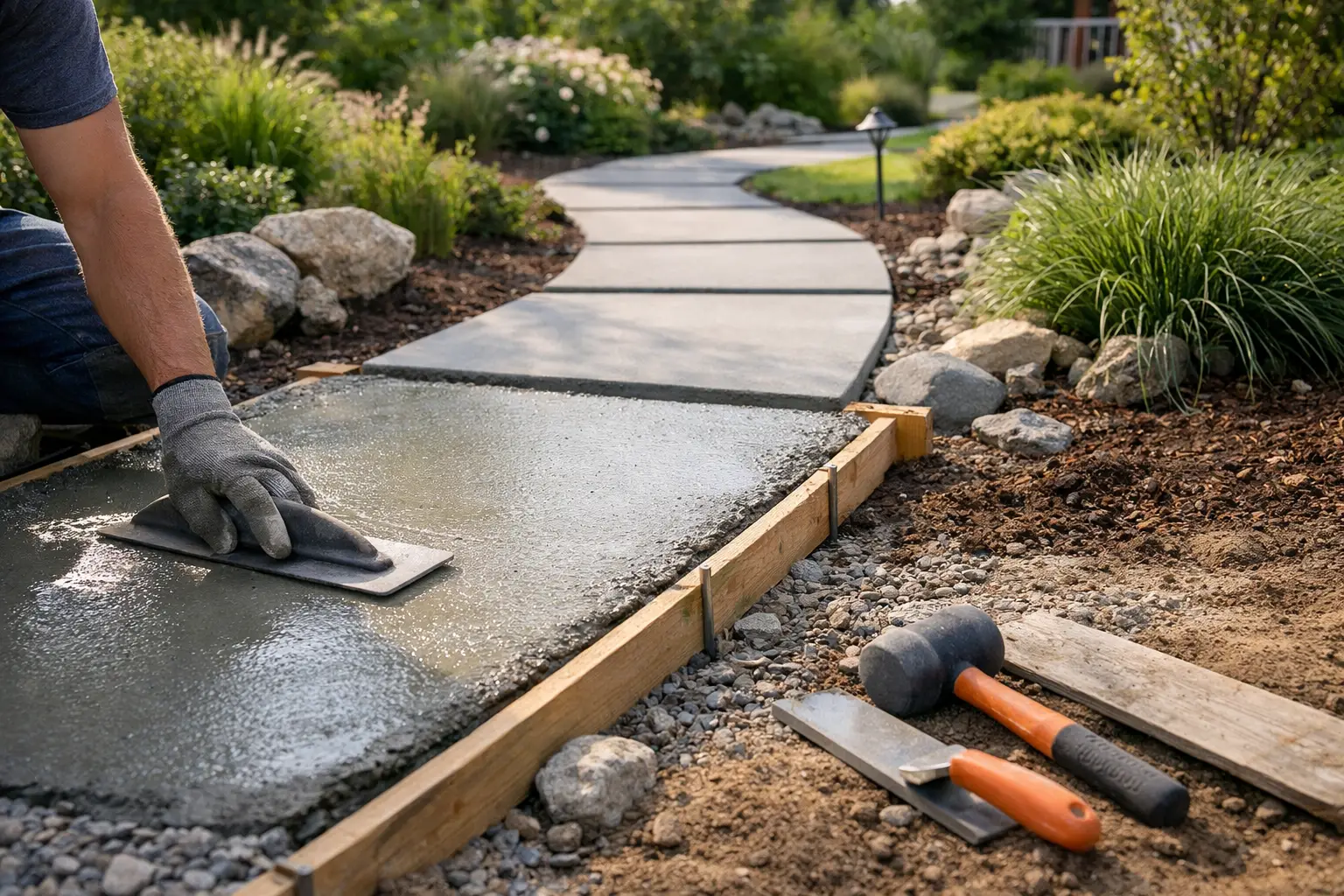
A garden path should make life easier every day, whether you are carrying groceries from the car, walking to the clothesline after rain or guiding visitors through the yard. Quality concrete garden path installation creates a clean, stable surface that suits the way your property is used, rather than becoming another area to weed, repair or work around.
For Northern Rivers homes, the best result starts below the concrete. Our combination of heavy rain, humid summers, shifting soils and strong sun means a path needs careful planning, proper drainage and solid preparation if it is going to stay level and look good over time.
Start with how the path will be used
A path from the driveway to the front door has different requirements from a narrow track through a productive garden. Before choosing a shape or finish, consider who will use it, what they will carry and how often the area gets wet.
For a main access path, generous width makes a noticeable difference. It is easier to walk beside a child, move a wheelbarrow or bring bins through without stepping into garden beds. A secondary path can be narrower, particularly where space is limited, but it should still feel comfortable underfoot.
The route matters just as much. The shortest line is not always the most practical one. A slight curve can work around established trees, improve the view from the house or create room for planting. On sloping blocks, the path may need steps, landings or a gentle grade to make the area safer and more usable.
A site consultation is useful at this stage because it identifies issues that are not always obvious from a sketch. These can include stormwater flow, low points that hold water, tree roots, underground services, access for machinery and the relationship between the new path and existing paving, turf or retaining walls.
Concrete garden path installation is built from the ground up
Concrete is durable, but it cannot compensate for poorly prepared ground. If the sub-base is soft, uneven or unable to drain, movement and cracking are more likely. This is particularly relevant on properties with reactive clay, filled ground or areas that stay damp after prolonged rain.
The work normally begins by setting out the path and excavating to the required depth. Soil and old materials are removed so there is room for a compacted base, reinforcement where needed and the concrete itself. The exact depth depends on the site, intended use and soil conditions. A pedestrian path does not need to be built like a driveway, but it still needs a reliable foundation.
A suitable road base is then spread and compacted in layers. Compaction is one of the least visible parts of the job, yet it has a major effect on the finished path. Taking shortcuts here can leave voids beneath the slab, which may show up later as settlement, rocking edges or cracks.
Formwork gives the path its shape and level. It also allows the correct fall to be established before concrete arrives. The aim is to move surface water away from the house and prevent water pooling on the path. Even a path that looks level should have a controlled fall so it drains properly.
Steel reinforcement may be included depending on the path dimensions, ground conditions and location. It helps manage cracking caused by movement, though it does not mean concrete will never develop fine cracks. Concrete naturally shrinks as it cures. Well-positioned control joints provide planned lines for that movement and help keep any cracking less noticeable.
Drainage is not an optional extra
A path that sends water towards a wall, doorway or neighbouring surface can create far bigger problems than muddy shoes. In the Northern Rivers, one heavy downpour is enough to reveal whether drainage has been considered properly.
The finished levels need to work with the broader yard. Sometimes that means directing water into a garden bed that can absorb it. In other cases, a spoon drain, channel drain or adjustment to surrounding landscaping may be needed. It depends on the slope, soil, roof runoff and existing drainage system.
Garden beds beside a concrete path also need attention. If soil and mulch sit too high against the edge, rain can wash material across the surface and make the path messy. Keeping the bed profile tidy and choosing stable edging helps protect both the garden and the concrete.
Choose a finish that suits the location
Plain broom-finished concrete is a popular choice for good reason. It is practical, cost-effective and provides useful grip underfoot. For side access areas, clothesline paths and utility spaces, it often delivers exactly what is needed without unnecessary expense.
Where appearance is a bigger consideration, exposed aggregate can add texture and colour variation that works well with stone, timber screens and contemporary garden planting. It can be a strong choice around pools and entertaining areas, provided the selected aggregate and finish are suitable for bare feet and wet conditions.
Coloured concrete offers another option, particularly when you want the path to sit more softly within a garden rather than appear bright grey. Earthy tones can complement local homes, rendered walls and natural planting schemes. Keep in mind that darker surfaces can absorb more heat in full sun, which matters in exposed yards and around areas used by children or pets.
A smooth trowel finish may look sleek, but it is usually less suitable for external walkways that get wet. Safety and easy maintenance should carry more weight than a finish that looks good only on the day it is poured.
Details that make a path feel considered
A concrete path does not need to be a straight strip between two points. Small design decisions can make it look like part of the garden rather than an afterthought.
Curved sections can soften a formal yard, while wider pads at gates, taps, washing lines and entries provide practical standing room. Stepping stones or separate concrete pads may suit a more informal garden where you want lawn or groundcovers to remain a feature. However, they require more edge trimming and can be less convenient for wheelbarrows, prams and people with limited mobility.
Lighting, planting and edging should also be planned early. It is much easier to install conduits for path lighting before concrete is poured than to cut into a finished slab later. Planting should be selected with mature size in mind, so foliage does not quickly narrow the walkway or drop excessive debris onto it.
If the path runs close to a house, fence or retaining wall, expansion gaps and finished heights need to be handled carefully. These details help accommodate movement and prevent moisture being trapped where it should not be.
What to expect during the work
A well-organised path project should be clear from the start. Before work begins, you should know the proposed route, material selection, likely timeframe, access requirements and any preparation needed from your side. On a straightforward path, excavation and base work may be completed quickly, but weather can affect concrete scheduling and curing.
There will be some disruption while ground is excavated and materials are brought in. A professional team will keep the work area as tidy as practical, protect nearby garden areas where possible and remove surplus soil and rubble as agreed. If access is tight, the approach may need to be adjusted to suit the property without damaging lawns, garden beds or existing structures.
After pouring, concrete needs time to cure. It should not be treated as ready for full use immediately. Your installer should advise when foot traffic is appropriate and when to avoid heavier loads. Following that advice protects the finish during its most vulnerable period.
Looking after a new concrete garden path
Concrete paths are low maintenance, not no maintenance. Regular sweeping stops leaf litter, soil and mulch building up, while an occasional wash keeps the surface looking fresh. In shaded or humid areas, algae can develop and become slippery, so cleaning is worthwhile before the surface becomes a safety issue.
Avoid allowing garden irrigation to constantly soak one edge of the slab. Check that sprinklers are watering plants rather than the path, and keep aggressive tree roots in mind when planning nearby planting. If small cracks or movement appear, dealing with the cause early is generally more effective than simply patching the visible surface.
For homeowners planning a wider makeover, a new path can be the element that ties everything together. It can connect a refreshed front garden to the driveway, create access around a new turf area or make a previously awkward backyard easier to enjoy and maintain.
Evolve Gardens & Landscaping can assess your site, discuss the finish and layout that suit your home, and provide a free no-obligation quote for concrete work as part of a larger landscape project or as a focused improvement. A path built for your block, drainage and daily routine will keep earning its place long after the concrete has cured.