
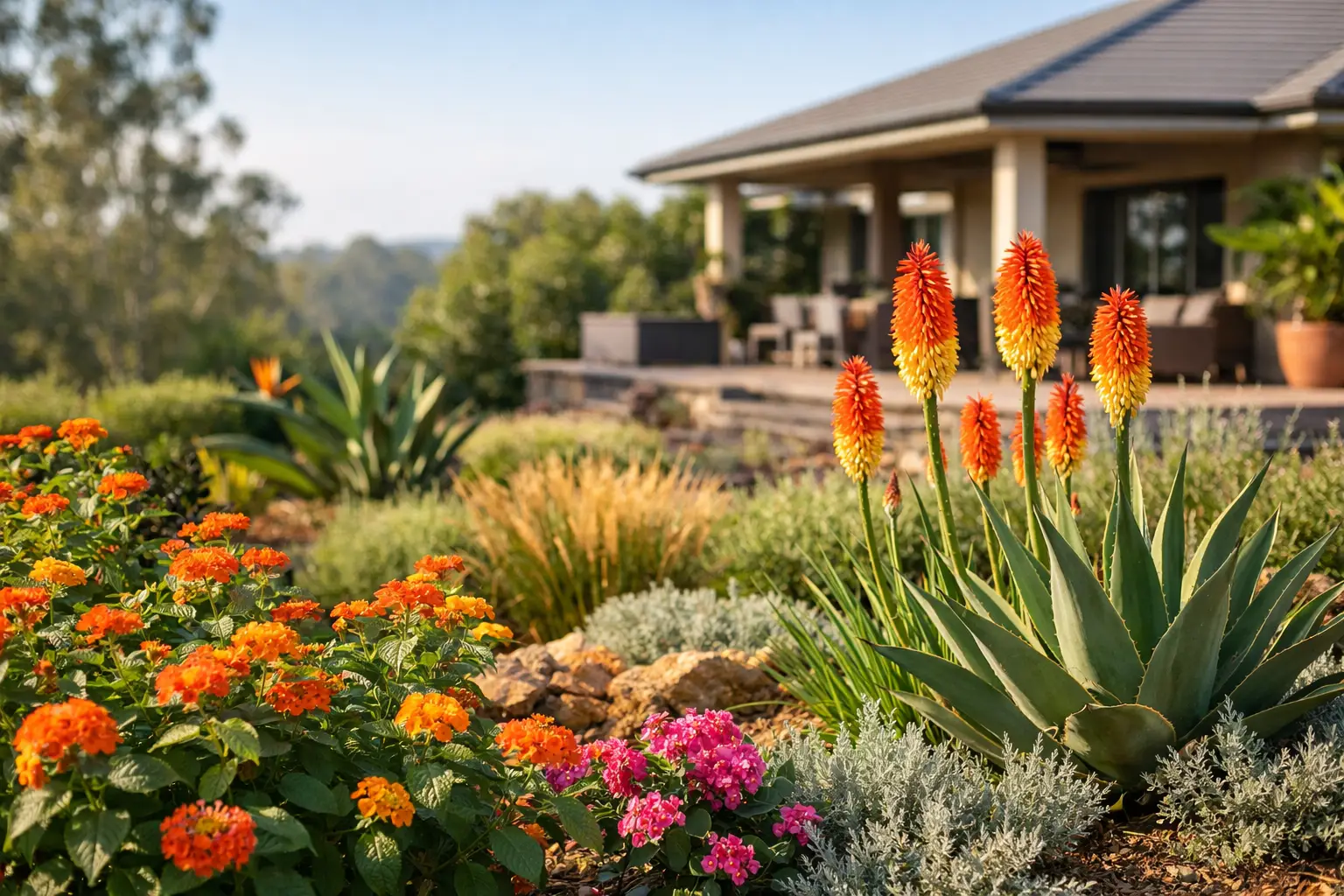
A hot western fence line, reflected heat from paving and a week without meaningful rain can quickly show which plants suit a Northern Rivers garden and which do not. Choosing heat tolerant garden plants NSW homeowners can rely on is not about filling every bed with tough-looking shrubs. It is about matching plants to the sun, soil, drainage and level of care your property can realistically support.
Across Ballina, Lennox Head, Byron Bay, Lismore and Alstonville, gardens deal with more than heat. Coastal sites may have sandy soil and salt-laden winds, while inland blocks can hold heavier clay, bake hard in summer and become waterlogged after a downpour. The right planting plan can keep a garden looking green and considered through difficult weather, without turning watering into a daily chore.
Start with your garden’s hottest spots
Before selecting plants, spend time looking at how heat moves through your yard. The hottest area is often not the open lawn. It may be the narrow bed beside a driveway, the strip against a pale rendered wall, or a raised planter with little soil beneath it. North- and west-facing areas generally receive the harshest afternoon sun, particularly where concrete, paving or metal fencing reflects extra heat.
Soil matters just as much. Sandy coastal soils drain quickly and can leave roots dry soon after watering. Clay soil may retain moisture below the surface but become hard and compacted on top, making it difficult for water and air to reach roots. A heat-tolerant plant still needs suitable soil preparation to establish well.
It also helps to separate plants that can tolerate heat from plants that can tolerate prolonged dryness. Some plants cope beautifully with full sun when they receive regular irrigation, but struggle if a hot spell is paired with watering restrictions or an absent owner. For busy households and holiday properties, that distinction is worth planning for from the start.
Reliable heat tolerant garden plants for NSW conditions
The best choices will depend on your site, but these plant groups have a strong track record in sunny Northern Rivers gardens when planted and maintained properly.
Native shrubs for structure and screening
Lilly pilly varieties can make a dense, attractive screen, especially where there is enough soil and some reliable water while plants establish. They suit many local gardens, although a very exposed, dry western boundary may require improved soil, mulch and irrigation to keep them looking their best.
Bottlebrushes, grevilleas and westringia are often more forgiving in heat and lower-water conditions. They provide form, flowering and habitat value, with options ranging from compact borders to larger screening shrubs. Grevilleas need good drainage, so they are usually better on raised ground or in free-draining soil than in a low-lying clay pocket.
For a more formal look, westringia responds well to clipping and can create a tidy low hedge or softened boundary. It is a practical alternative where a garden needs structure without the thirst of some traditional hedging plants.
Grasses and strappy plants for low-maintenance movement
Lomandra is one of the most useful plants for heat-exposed gardens. It copes with sun, handles a range of soil types and gives garden beds a clean, relaxed shape. It works around driveways, along paths, on slopes and in mass planting where you need coverage that will not demand constant attention.
Dianella, native grasses and some carex varieties can also soften hard landscaping and help tie a new garden together. Their performance varies by variety and site, so placement matters. A dianella in part shade with reasonable moisture may thrive, while the same plant beside hot pavers can look tired without extra water.
Flowering plants for colour in full sun
For colour, look to options such as kangaroo paw, salvias, society garlic and hardy native daisies. These can bring life to a sunny bed and attract birds, bees and other pollinators. Kangaroo paw needs freely draining soil and good airflow, while salvias generally benefit from occasional trimming to encourage fresh growth and flowers.
There is a trade-off with flowering gardens. The more continuous colour you want, the more regular attention the bed may need. A well-designed mix of shrubs, grasses and flowering plants gives colour without relying on a garden full of high-maintenance specimens.
Feature trees and small trees
A carefully placed tree can make a hot garden more comfortable than any individual drought-tolerant plant. Shade lowers soil temperature, protects smaller plants and makes outdoor areas easier to use through summer. Native frangipani, tuckeroo and selected callistemon varieties can work well in suitable locations, depending on mature size, root space and exposure.
Tree selection needs care around pools, roofs, powerlines, paving and neighbouring properties. Planting a small tree too close to a retaining wall or service line creates problems that may not become obvious for years. Allow for the canopy and root zone at maturity, not the size of the plant in its pot.
Good planting is what makes tough plants perform
Even resilient plants need help in their first one or two summers. Planting during milder conditions, usually autumn or spring, gives roots time to spread before intense heat arrives. If planting must happen in summer, consistent deep watering is essential.
Prepare the soil to suit the site rather than applying the same treatment to every garden bed. Compost and quality organic matter can improve structure in many soils, but heavy clay may also need drainage considered, while very sandy soil benefits from materials that improve moisture retention. Raised beds can be a sensible option where drainage is poor or soil is badly compacted.
Plant at the correct depth, water in thoroughly and apply a generous layer of mulch. Keep mulch clear of stems and trunks to reduce the risk of rot and pest issues. A 50-75 mm layer of coarse organic mulch helps hold moisture, moderates soil temperature and reduces weed competition.
Avoid the temptation to plant too closely for an instant result. Crowded plants compete for water, lose airflow and often need heavier pruning later. Spacing plants for their mature width allows the garden to fill out naturally and makes ongoing maintenance more straightforward.
Water smarter, not harder
For heat tolerant garden plants in NSW, watering method often matters more than watering frequency. Deep, slow watering encourages roots to grow down into cooler soil. Frequent light watering can keep roots close to the surface, where they dry out quickly during hot weather.
Drip irrigation or properly set-up subsurface watering is usually more efficient than spraying foliage. It directs water to the root zone, reduces evaporation and avoids wet leaves late in the day. For lawns, irrigation requirements differ depending on turf type, soil and shade, so it is worth treating lawn and garden beds as separate zones.
Check moisture below the mulch before watering. The surface may look dry while the soil underneath is still damp. Conversely, a garden can look green but have shallow, stressed roots if it has been receiving only quick daily sprays.
New plants need more regular watering than established ones. Once plants are settled, gradually extend the time between watering sessions so they develop stronger root systems. This should be done with care in very sandy soil or during extreme heat, when newly planted material can dry out rapidly.
Design for shade, shelter and easier care
Plant choice is only one part of a heat-resilient garden. Shade structures, privacy screens, pergolas and carefully located trees can reduce harsh sun on patios and garden beds. Retaining walls can create usable planting areas on sloping blocks, but their material and orientation may also hold and radiate heat, so plant selection beside them needs to be deliberate.
Group plants with similar water needs together. Put thirstier feature plants closer to an irrigation zone or where runoff can be used, and reserve exposed edges for tougher shrubs and grasses. This approach looks more cohesive and makes maintenance more efficient.
A good garden should also suit the time you have available. A large lifestyle block may need broad, durable planting areas with access for mowing and pruning. A smaller courtyard can carry more detail, provided there is shade, drainage and an irrigation plan to support it.
When a professional planting plan is worthwhile
If your garden has awkward slopes, poor drainage, extreme heat exposure or a mix of old and new landscaping, selecting plants individually can lead to costly replacements. A site-based plan considers sun direction, existing trees, soil condition, privacy needs, irrigation and how the garden will be maintained after the initial work is complete.
Evolve Gardens & Landscaping can help Northern Rivers homeowners build gardens around practical plant choices, suitable soil preparation and a maintenance approach that fits the property. Whether the job is a tired front bed, a full garden makeover or ongoing pruning and lawn care, clear planning makes it easier to keep the garden looking good well beyond the first season.
The most successful hot-weather gardens do not fight the conditions. They use shade where it helps, water with purpose and give each plant a place where it has a genuine chance to thrive.