
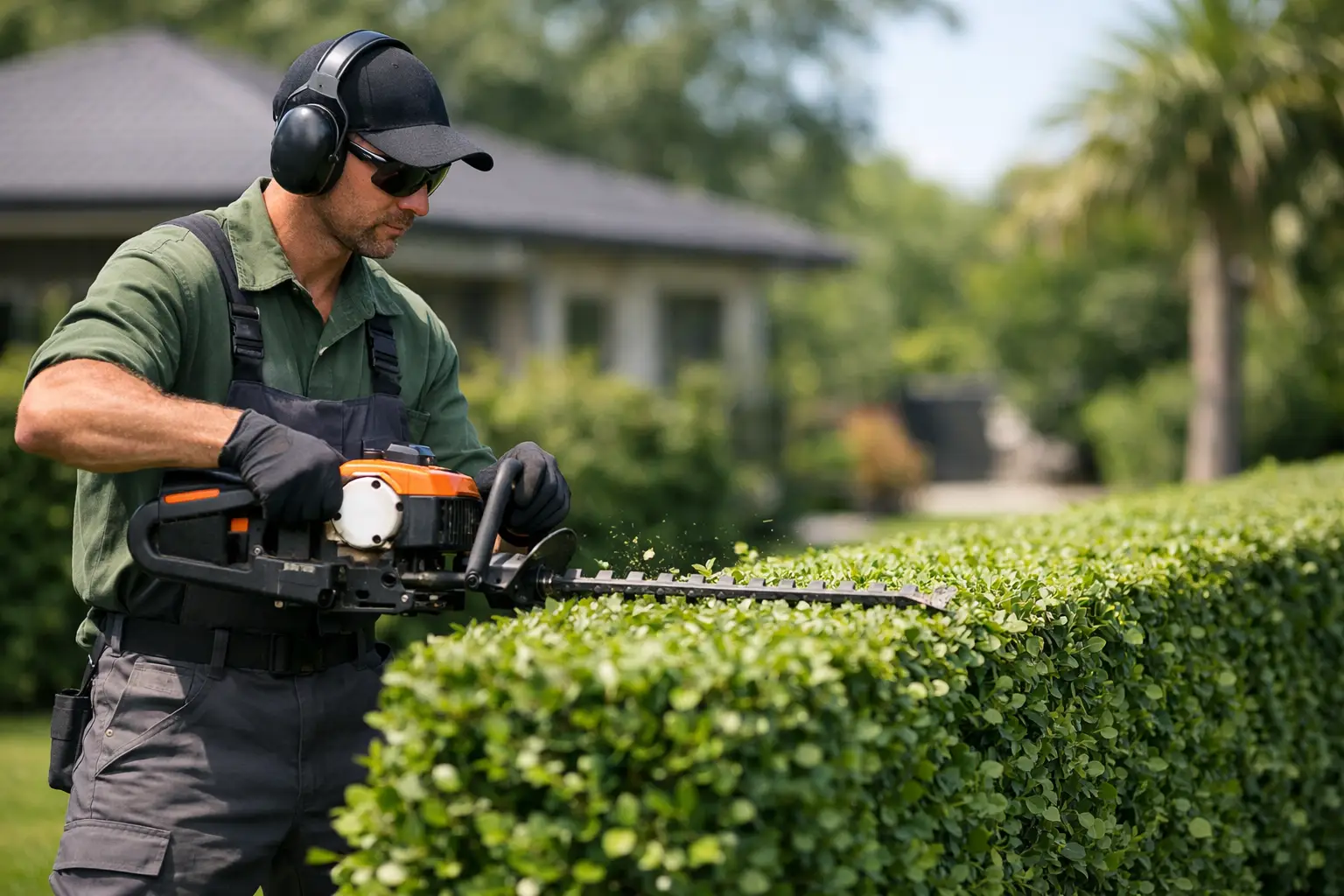
A hedge can go from a neat privacy screen to a heavy, light-blocking problem faster than most homeowners expect. A reliable hedge trimming service Lismore residents can call on keeps boundaries tidy, protects plant health and makes the rest of the garden feel looked after without taking up your weekend.
At Evolve Gardens & Landscaping, hedge work is approached as more than a quick pass with trimmers. The right height, shape and timing depend on the species, its position, recent weather, access around the property and what you need the hedge to do – whether that is screening a neighbour, softening a fence line or framing an entry.
Why regular hedge trimming matters in Lismore
Lismore’s warm conditions and reliable rainfall can produce impressive growth, particularly through the wetter months. That is excellent when you want a dense green screen, but it also means hedges can become uneven, overgrown or too dense in the centre if they are left for too long.
Regular trimming encourages branching and helps maintain a fuller appearance. It also prevents a hedge from pushing out over paths, driveways, letterboxes and garden beds. For busy households, this is often the practical difference between a garden that feels easy to manage and one that has started to close in around the home.
There is a visual benefit too. A well-shaped hedge gives a property cleaner lines and can make lawns, planting areas and outdoor living spaces look more intentional. On lifestyle blocks and larger residential properties, it can also help define separate areas without adding hard fencing everywhere.
However, trimming too hard or at the wrong time can expose bare interior growth, stress the plant or leave it looking thin for months. A professional service should assess the hedge before cutting rather than treating every species and every job the same way.
What a professional hedge trimming service in Lismore should cover
A good result starts with a conversation on site. Before work begins, it helps to establish the desired height and width, whether the hedge is meant for privacy, how close it sits to buildings or powerlines, and whether there are access issues such as narrow side gates, slopes or established garden beds.
From there, the work usually involves careful shaping, reduction of overextended growth where suitable, removal of dead or damaged sections, and a thorough clean-up. Green waste should be discussed as part of the quote so there are no surprises at the end of the job.
The finish should suit the style of the property. A formal lilly pilly hedge beside a front path may need crisp, even faces and a level top. A mixed native screen around a backyard can look better with a softer, more natural shape. Neither approach is automatically better. It depends on the plants, the house and the amount of privacy required.
For very tall or neglected hedges, staged work may be the sensible option. Cutting a large amount off in one visit can be risky for the plant and may leave an exposed result that takes time to recover. A realistic recommendation is more valuable than promising an instant transformation that compromises the hedge.
The right shape helps a hedge stay dense
One of the most common issues with mature hedges is a thin or bare lower section. This often happens when the top is allowed to become wider than the base, shading the lower foliage.
For many hedges, a slightly wider base and narrower top allows light to reach more of the plant. It is a small detail, but it supports denser growth and a more balanced look over time. The exact shape still needs to suit the species and available space, particularly where a hedge sits close to a fence or retaining wall.
Plant health comes before a perfectly square finish
Hedges growing in compacted soil, dry spots or heat-exposed positions may not respond like plants in a sheltered, well-watered garden. Signs such as leaf drop, discolouration, pest damage or patchy growth are worth considering before major pruning is carried out.
Sometimes the best outcome includes practical follow-up work, such as improving mulch coverage, adjusting irrigation, removing competing weeds or replacing sections that are no longer performing. This is where local knowledge matters. Northern Rivers gardens need solutions that account for changing rain, humidity, summer heat and the different soil conditions found across the region.
How often should hedges be trimmed?
There is no single schedule that suits every hedge. Fast-growing varieties may benefit from a light trim every six to 10 weeks through their main growing period. Slower-growing or more informal hedges may only need attention two or three times a year.
A regular maintenance visit is usually easier on both the hedge and your budget than allowing it to become severely overgrown. Smaller, planned trims keep the desired shape in place and reduce the chance of needing a hard cut-back later.
The timing also depends on flowering. If a hedge produces decorative flowers, cutting immediately before its flowering period may remove the display. If privacy is the priority, the best trimming schedule may be different from a hedge planted mainly for colour or habitat. These details are worth raising during your quote.
When a hedge needs more than trimming
Some problems cannot be solved with a tidy-up alone. A hedge may have outgrown its location, become unstable after years of uneven growth, or be struggling because it is planted in the wrong place for the available light and water.
In those cases, options can include selective pruning, gradual height reduction, removal and replanting, or changing part of the boundary design. A timber privacy screen, new planting and a better irrigation layout can sometimes give a more reliable long-term result than repeatedly forcing an unsuitable hedge to fit a tight space.
This is particularly relevant for homeowners updating an older garden. Hedge trimming can make an immediate difference, while complementary work such as garden clean-ups, planting, turf installation or edging can bring the whole outdoor area together. Having one local team able to look at the broader picture makes it easier to plan work in a sensible order.
Preparing your property for a hedge trimming visit
You do not need to do the work before the team arrives, but a little preparation helps the day run smoothly. Move outdoor furniture, pots, toys and vehicles away from the hedge where possible. Let the team know about any irrigation lines, garden lights, pets, access restrictions or areas where clippings must be kept out of pools and ponds.
If the hedge forms a boundary with a neighbour, it can also be helpful to clarify access and your preferred finish beforehand. A professional crew will work carefully around your property, but clear expectations make for a better result, especially on shared fence lines.
Be honest about what is bothering you most. It may be the height blocking a view, branches hanging over the path, a hedge that has become too wide, or simply the time it takes to keep up with it. That information helps shape a quote around the outcome you actually want rather than a generic cut.
Choosing the right local team
Price matters, but it should not be the only consideration. Ask whether the quote includes green waste removal, how the team will access the hedge, whether the work is suited to the hedge’s condition, and if ongoing maintenance can be arranged after the initial tidy-up.
Look for clear communication and realistic advice. A dependable provider will explain what can be achieved in one visit, flag any plant-health concerns, arrive organised and leave the work area clean. For larger jobs, they should also be upfront about timing and whether the hedge needs to be reduced gradually.
A tidy hedge does more than improve street appeal. It gives you back usable space, maintains privacy and makes the garden easier to enjoy from day to day. If your hedge is taking over the yard or has lost its shape, a tailored on-site quote is a practical first step towards a garden that feels under control again.