
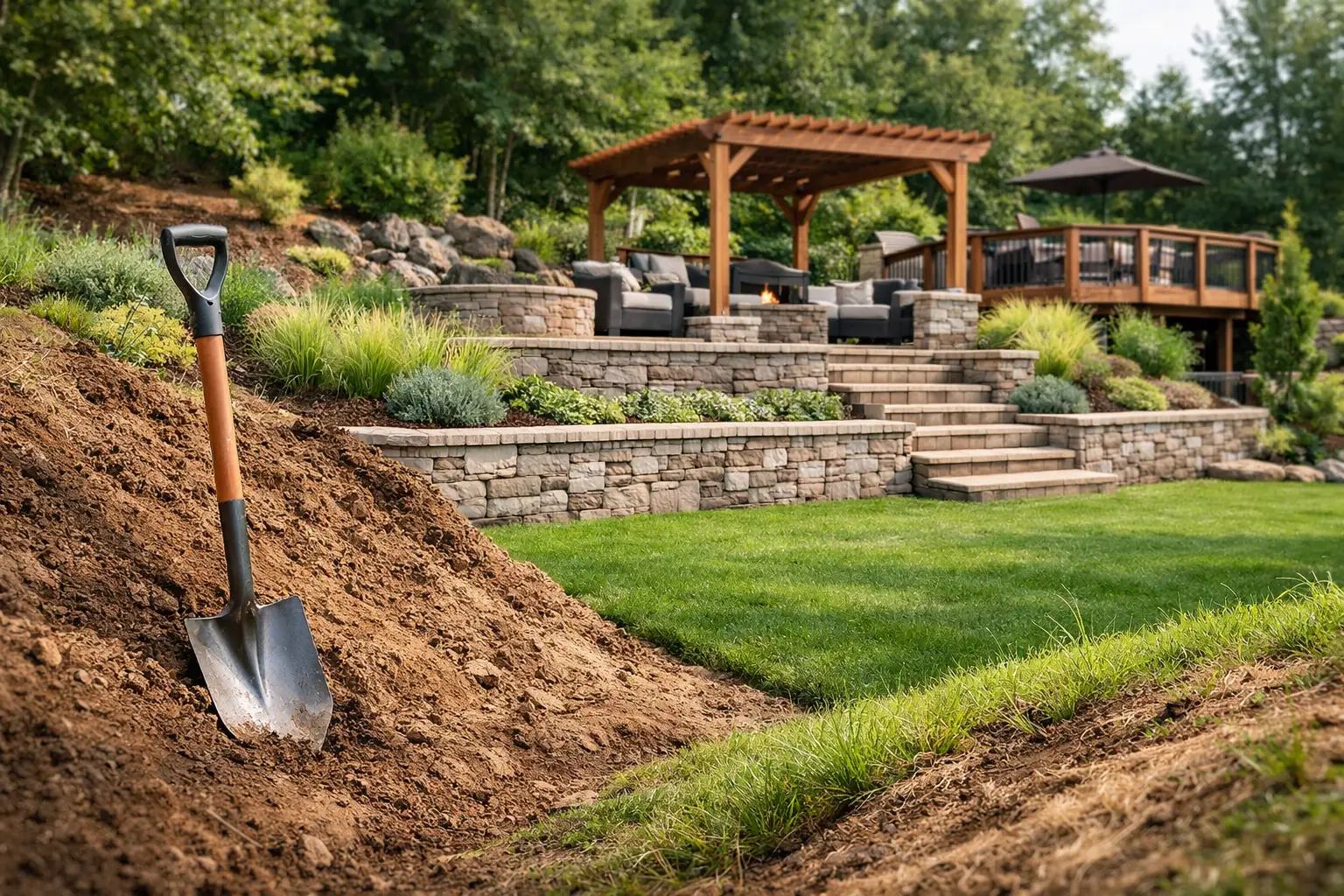
A sloping backyard can make even a generous block feel difficult to use. Mowing becomes awkward, rainwater rushes where it should not, and there never seems to be a level spot for a table, kids’ play area or a decent lawn. Knowing how to fix a sloping backyard starts with understanding where water is travelling, what the soil is doing and how you want to use the space once the work is complete.
For Northern Rivers homes, the answer is rarely just moving a bit of soil. Our heavy rainfall events, humid conditions, varied soils and long dry spells all need to be considered. A well-planned solution can turn an unusable incline into practical outdoor areas that look at home with the property and are manageable long after the landscaping is finished.
Start with the slope, drainage and intended use
Before choosing retaining walls, turf or garden beds, assess the site properly. Look at the direction of the fall, how steep it is, where water pools after rain and whether runoff is moving towards the house, shed, neighbour’s property or boundary fence. These details determine the safest and most cost-effective approach.
It also helps to decide what the yard needs to do. A family may need a level lawn and a paved entertaining area. A lifestyle property may suit broad garden terraces with easy paths between them. If the slope is visible from the house, the finished result also needs to look balanced from above, not like a series of hard edges cut into the yard.
A gentle fall does not always need major construction. Regrading the surface, improving drainage and selecting plants that hold soil together may be enough. Steeper ground, unstable soil or a significant change in level usually calls for retaining, engineered drainage and careful excavation.
How to fix a sloping backyard with terracing
Terracing is often the most practical way to make a steep backyard usable. Instead of fighting one long slope, the ground is divided into smaller, flatter levels. Each level can have a clear purpose: lawn on one terrace, a seating space on another, then garden beds or screening planting further up the block.
The key is to keep terrace heights sensible. A few lower retaining walls are generally more attractive and easier to work with than one very tall wall. They also create opportunities for deep planted beds, wide steps and gentle transitions between spaces.
The final layout should suit how people actually move through the yard. Steps need comfortable risers and treads, with a stable surface that remains safe when wet. On a larger property, a gently graded path can be more practical than stairs for wheelbarrows, bins and garden maintenance.
Terracing does mean excavation, spoil removal and new material being brought in. The cost depends on access, wall height, soil type, drainage requirements and finishes. Tight side access can add time because machinery and materials cannot simply be brought straight into the backyard. A site inspection is the best way to identify the right approach before committing to a design.
Retaining walls need more than a neat finish
A retaining wall holds back soil, but it should also manage water. Water pressure building behind a wall is one of the main causes of movement, cracking and failure. That is why proper drainage behind the wall is as important as the visible face.
A well-built wall typically includes a suitable footing, drainage gravel, agricultural pipe where required, filter fabric and a planned outlet for collected water. The exact construction method depends on the wall material, ground conditions and height. Timber can be a cost-conscious option for lower garden terraces, while concrete block, masonry or stone may suit more permanent structural work and particular design styles.
Do not assume every wall can be treated as a weekend project. Higher retaining walls, walls near boundaries, pools, driveways or buildings, and walls carrying additional loads may need engineering and council approval. Requirements can vary by site and local council area. Getting the structure and approvals right at the start is cheaper than repairing a failed wall after a major downpour.
Put drainage before paving, turf and planting
A sloping garden will always shed water. The goal is not to stop that completely, but to slow it down, collect it safely and direct it away from buildings and unstable ground.
Surface drainage may include spoon drains, shallow swales, grated channels or carefully shaped garden beds. Subsurface drainage can be useful behind retaining walls or in areas where water sits beneath turf. Downpipes also need to be considered. Sending roof water straight onto a freshly landscaped slope can quickly create erosion, mud and washed-out mulch.
In the Northern Rivers, drainage must handle more than ordinary rain. A system that copes only with a light shower may not be enough during a heavy summer event. At the same time, drainage should not send concentrated runoff into a neighbour’s yard. Each property needs a solution that respects natural flow, site levels and legal stormwater requirements.
Choose surfaces that suit the grade
Once the levels and drainage are organised, the surface finishes bring the backyard together. The right choice comes down to use, sunlight, maintenance and budget.
Turf works well on a gently sloping area and provides a soft, open space for children and pets. However, very steep turf can be difficult and unsafe to mow, particularly after rain. On those areas, a planted slope or terraced garden bed is often the better long-term choice.
Paving or concrete creates stable entertaining spaces and paths, but it needs correct falls so water drains away rather than sits against the house. Permeable surfaces, gravel paths and stepping stones can suit secondary garden areas, provided they are installed with a firm base and edge restraint. Loose materials on a steep grade tend to migrate downhill over time.
Decking can be useful where a raised platform offers a simpler alternative to extensive cut and fill. It can create a level entertaining area while allowing the land below to remain planted. The trade-off is that it still requires sound footings, compliant construction and access for future maintenance.
Plant slopes to protect the soil
Planting is not simply the final decorative layer. On a slope, plant roots help bind soil, reduce splash erosion and slow the movement of water across the surface. Dense groundcovers, clumping grasses, shrubs and small trees can all play a role when selected for the aspect and soil.
For heat-exposed Northern Rivers gardens, drought-tolerant planting can reduce water demand once established. Shadier or wetter sections may need a different plant palette altogether. The best results usually come from grouping plants with similar water and sun needs, then installing irrigation that delivers water efficiently without causing runoff.
Mulch helps hold moisture and protect bare soil, but it needs to be used thoughtfully on steep ground. Fine mulch can wash away in heavy rain. Chunkier mulch, planted groundcover and defined garden edges generally hold up better. Newly planted slopes may also need temporary erosion-control measures while roots establish.
Avoid the common shortcuts
The quickest-looking fix is often the one that creates problems later. Filling a low area without considering drainage can push water towards the house. Building a wall without gravel and drainage behind it can lead to bulging or failure. Laying new turf before correcting the levels may leave you with the same wet patches and mowing problems under greener grass.
It is also worth avoiding a design that tries to make every square metre flat. A backyard does not need to be perfectly level to be functional. Retaining a gentle fall where appropriate can reduce excavation costs, preserve established trees and create a more natural-looking garden. The aim is to level the areas that need to work hard, then make the remaining slope attractive and stable.
Plan for the work after the build
A good slope solution should be easy to live with. Consider where the mower will go, whether garden beds can be reached without climbing through plants and how pruning, weeding and irrigation repairs will be handled. Wide steps, accessible paths and sensible planting distances make a real difference over the years.
Evolve Gardens & Landscaping can assess sloping backyards across the Northern Rivers and provide a tailored, no-obligation quote for drainage, retaining, turf, paving, planting and ongoing garden care. The right solution may be a simple regrade or a staged landscape build, but it should be based on your block rather than a one-size-fits-all plan.
A slope can be one of the most valuable features of a backyard when it is planned properly. Give water somewhere safe to go, create level areas where they matter most and use planting to soften the structure. The result is a yard that feels easier to use, easier to maintain and far more enjoyable from the moment you step outside.