
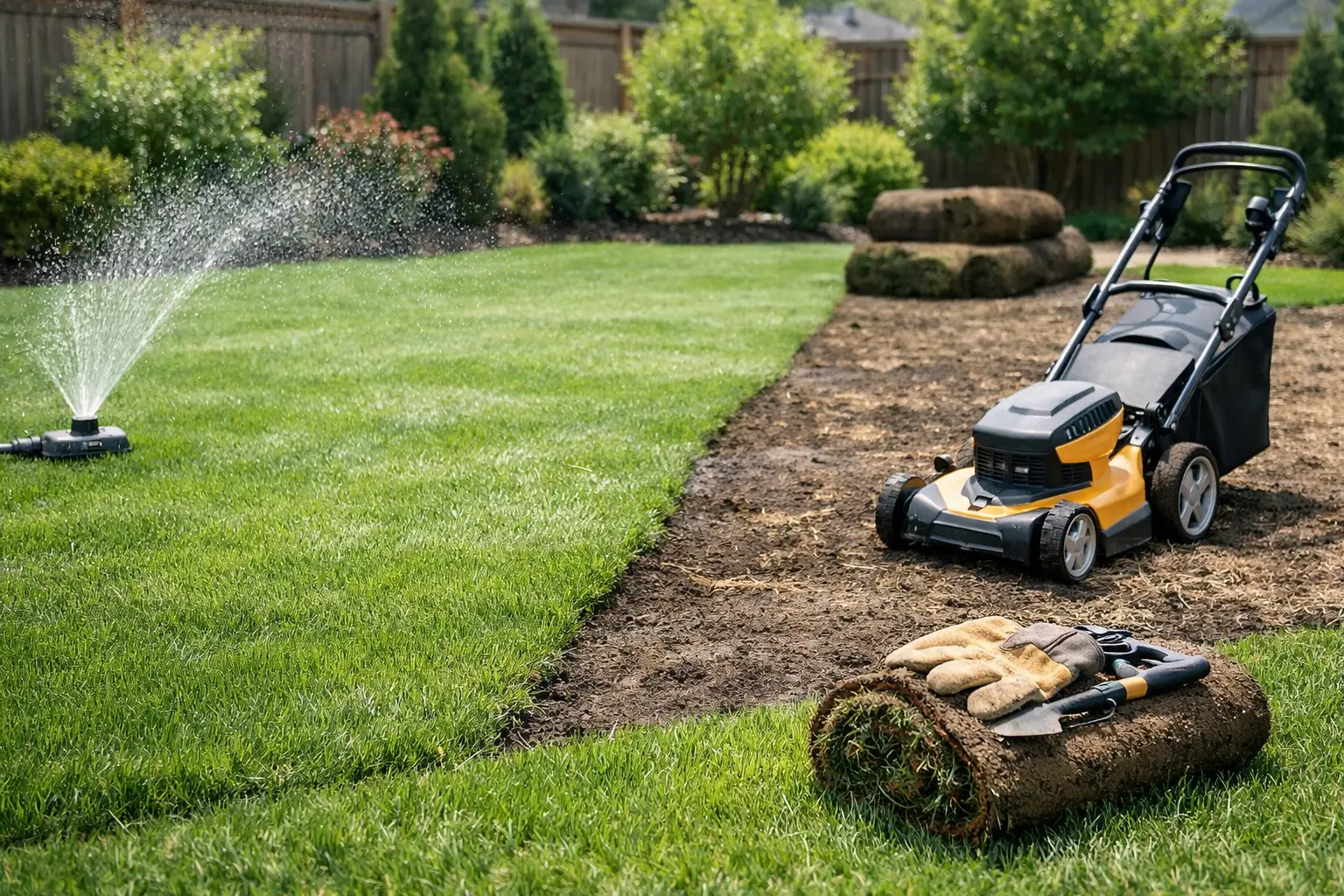
A newly laid lawn can look finished on installation day, but the next few weeks decide whether it becomes a thick, healthy surface or a patchy, stressed one. Good lawn care after turf installation is less about doing everything at once and more about getting the basics right: keeping the root zone moist, limiting foot traffic and responding to the weather in your part of the Northern Rivers.
Fresh turf has roots, but those roots have been cut short during harvesting and transport. It needs time to knit into the soil underneath. Ballina humidity, Lennox Head sea breezes, Byron Bay heat and the heavier soils found around Alstonville or Lismore can all change how quickly that happens. A fixed timetable is useful, but your lawn’s moisture level and root development should always guide the next step.
The first week: water deeply and stay off it
Water is the priority from the moment turf is laid. The aim is to wet the turf itself and the soil below it, not simply dampen the leaf blades. In warm or windy conditions, this often means watering once or twice daily during the first week. Early morning is the most effective time, with a second watering in the afternoon only when the turf is drying out.
Lift a corner of a turf roll after watering. The underside should feel moist, and the soil beneath should be damp to a shallow depth. If the turf is wet on top but dry underneath, the water has not soaked through for long enough. Short, frequent sprays can leave new roots sitting near the surface, where they are more vulnerable to heat.
Avoid walking, playing or placing outdoor furniture on the lawn during this period. Even a few repeated steps can press down loose turf edges and compact wet soil before roots have anchored. If a seam opens or a corner lifts, gently press it back into place and water it in.
In persistent rain, reduce or pause irrigation. Turf does not benefit from waterlogged ground. Saturated soil excludes air around the roots and may cause yellowing, disease or soft areas that are easily damaged.
Weeks two to three: help roots establish
By the second week, watering can usually become less frequent but more thorough. The exact schedule depends on rainfall, soil type, turf variety and exposure. A lawn in full western sun at a coastal property may still need daily attention during a hot spell, while a shaded lawn on moisture-holding soil may need far less.
Check before watering rather than relying only on a timer. Walk across the turf and look for a blue-grey cast, curling blades or footprints that remain visible. These can be signs that grass needs water. If the ground is already moist a few centimetres below the surface, give it time to dry slightly before the next soak.
You can test establishment by gently tugging at an edge of turf. Resistance is a good sign that roots are moving into the base soil. Do not pull hard enough to disturb the turf. Areas that remain loose may need more consistent watering, especially along exposed edges, beside paving or near retaining walls where reflected heat dries the ground faster.
When should newly installed turf be mown?
The first mow is normally due when the turf has rooted in and is actively growing, often around two to three weeks after installation. Do not mow simply because the calendar says it is time. If turf still lifts easily, wait.
Use a mower with sharp blades and make sure the lawn is dry enough to avoid rutting. Set the mower high for the first cut and remove only the top third of the grass blade. A low cut can scalp fresh turf, expose soil and slow recovery. Catching clippings is often sensible for the first mow if they are heavy enough to smother young grass, but do not overwork the lawn trying to make it look perfect.
Avoid a zero-turn mower, ride-on mower or heavy equipment until the lawn has properly settled. A lightweight push mower spreads pressure more gently during the establishment phase.
Lawn care after turf installation in Northern Rivers weather
Northern Rivers conditions can be generous to lawns, but they can also change quickly. Hot, dry winds, intense summer rainfall and high humidity each call for a different response.
During heat, water early and make sure the soil profile is moist before the hottest part of the day. Do not rely on a light evening sprinkle to correct a day of stress. It is better to water deeply before heat arrives where possible. Keep mowing heights slightly higher through summer, as longer leaf blades shade the soil and reduce moisture loss.
After heavy rain, stay off the lawn until it firms up. Check that water is not ponding along turf joins, paths or the base of a slope. Poor drainage is not something more watering will fix. It may point to compacted soil, an incorrect fall or runoff coming from a hard surface. Addressing the cause early protects both the lawn and nearby garden beds.
Humidity can also increase the risk of fungal problems, particularly if the lawn stays wet overnight. Water in the morning, avoid excessive nitrogen fertiliser and keep mower blades clean and sharp. If you notice spreading brown patches, unusual rings or grass that pulls free without roots, a professional assessment can prevent a small problem becoming a larger repair job.
Feeding, weeds and the urge to do too much
New turf generally does not need a heavy application of fertiliser straight away, particularly where the soil was prepared and fertilised before installation. Applying too much product too soon can stress young roots, encourage soft growth or wash into drains during rain.
A slow-release lawn fertiliser may be suitable once the turf is rooted and has had its first mow, but the right timing depends on the turf variety and what was used in the preparation stage. Follow the product rate carefully and water it in afterwards. More fertiliser does not mean faster establishment.
Weeds can appear along joins or in thin areas while turf fills out. Hand removal is usually the safest option early on. Be cautious with herbicides until the lawn is well established, as some products can damage new grass or require a specific waiting period after laying. If weeds are widespread, identify them before treating rather than applying a general product and hoping for the best.
Hold off on aerating, dethatching, topdressing and aggressive edging for the first several weeks. These are useful maintenance jobs at the right time, but they interrupt a lawn that is still putting energy into roots. The same applies to pets: where possible, keep repeated toileting in one area away from new turf, and rinse urine patches with water promptly.
Weeks four to eight: build a regular routine
At around four to eight weeks, a well-established lawn should tolerate normal household use and settle into a more regular maintenance pattern. Move from frequent watering to deep, less frequent watering that encourages roots to grow down. The correct interval may range from every few days in hot, sandy ground to much less in cooler weather or heavier soil.
Keep the mowing rule simple: never remove more than one-third of the leaf at a time. Regular mowing at an appropriate height produces denser turf and helps it compete with weeds. Letting grass become very long, then cutting it hard, puts unnecessary stress on the lawn.
Take a few minutes each week to look for dry edges, thinning areas, pest activity and drainage changes. New landscaping can alter how water moves across a yard, particularly around paving, garden beds and retaining walls. Early adjustments to irrigation or drainage are easier than replacing turf later.
For homeowners who want the lawn to stay tidy without becoming another weekend job, ongoing mowing and garden maintenance can make a real difference. Evolve Gardens & Landscaping can help Northern Rivers property owners establish a practical maintenance routine that suits the turf, the site and the way the space is used.
A new lawn does not need constant fussing, but it does need close attention while it establishes. Water according to the soil and weather, mow gently once roots have taken hold, and give the turf time to become part of the garden. That patient start is what gives you a lawn that looks good well beyond installation day.