A good driveway paving example does more than show a nice finished surface. It shows how the driveway handles vehicles, heavy rain, summer heat, foot traffic and the way your household actually arrives home. For Northern Rivers properties, the best result starts with the ground underneath, sensible drainage and a material that suits both the home and the site.
A paved driveway can lift street appeal, define an entry and turn a dusty, uneven or worn-out accessway into a practical part of the landscape. But the right choice is rarely just about selecting a paver colour. Sloping blocks, clay soils, coastal exposure, mature trees and drainage paths all affect what will perform well over time.
What a practical driveway paving example should show
When looking at driveway ideas, start by asking what the example is solving. A narrow urban driveway in Ballina has different needs from a long rural entrance outside Alstonville or a sloping coastal property near Lennox Head. The paving style should fit the scale of the house, but it also needs to allow easy parking, safe access and reliable water management.
A well-planned driveway will usually include a properly prepared sub-base, compacted road base, edge restraints and falls that direct water away from the house and neighbouring properties. These less visible details are what stop pavers from moving, dipping or developing puddles after repeated wet weather.
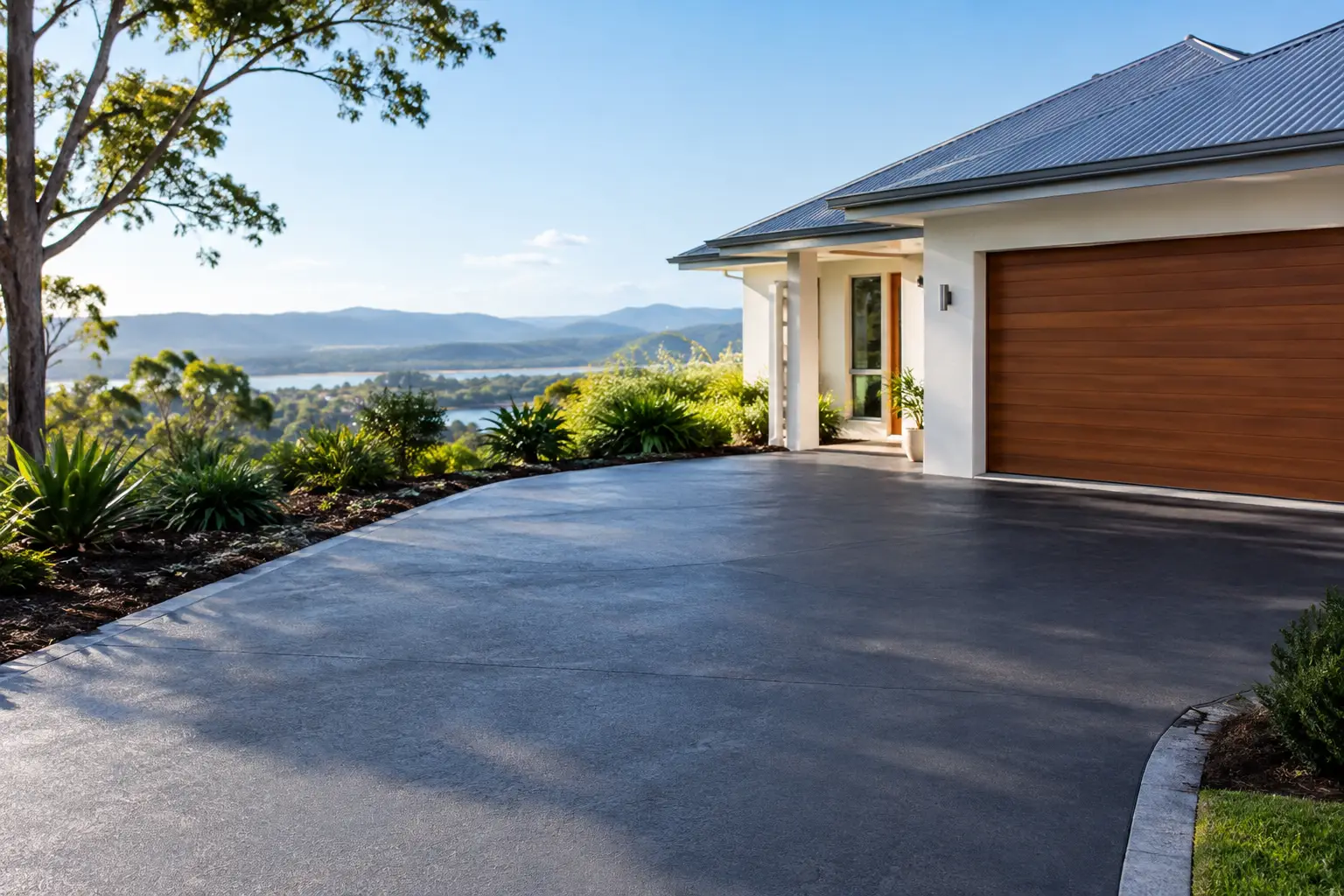
The layout matters as well. Straight lines can make a small front yard feel longer and more organised. A gentle curve can soften a broad landscape entry and work better around existing trees. For homes where cars need to turn or reverse, allowing enough width at key points is often more useful than adding decorative paving to every available space.
Driveway paving examples for common local properties
A clean, practical suburban driveway
For a family home on a relatively level block, rectangular concrete pavers in a mid-tone charcoal, warm grey or natural stone colour are a reliable option. They can be laid in a stretcher bond pattern for a neat, contemporary finish that does not compete with the home or garden.
A contrasting border along each side gives the driveway a finished edge and helps frame garden beds. This is particularly effective where the front yard includes lawn, low hedging or drought-tolerant planting. The border can also make it easier to see where tyres should stay, protecting the adjoining garden from being gradually pushed back by vehicle use.
This approach suits busy households because it looks tidy without needing delicate detailing. Mid-tone pavers are generally more forgiving than very pale surfaces, which can show tyre marks and leaf staining, or very dark surfaces that may become noticeably hot in exposed locations.
A rural or acreage entry with a defined arrival point
Long driveways do not always need to be paved from the road to the house. In many cases, a more cost-effective and practical solution is to use compacted gravel for the longer access road, then introduce paving closer to the home, garage or parking area.
For example, paving the final section of the driveway and the turning bay can create a strong arrival point while reducing dust around the house. Larger-format pavers or a cobble-style finish can suit a country garden, especially when paired with retaining walls, turf and generous planting beds.
The change from gravel to paving needs careful detailing. The transition should be stable, well-contained and graded correctly so loose gravel does not wash across the paved section in heavy rain. It is also worth planning how trailers, boats, caravans or work vehicles will use the space before finalising the layout.
A sloping driveway that needs drainage first
On a sloping site, paving should never be treated as a surface-only project. Water naturally gains speed as it travels downhill, and a poorly planned driveway can direct runoff straight towards a garage, house or lower garden area.
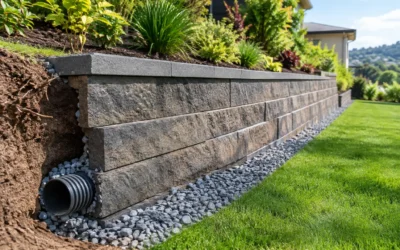
A suitable driveway paving example for this type of block may include cross drains, channel drains or grated pits positioned to intercept water before it becomes a problem. The paving needs appropriate falls, while the base beneath it must be stable enough to cope with vehicle loads and water movement.
Smaller pavers are often a sensible choice on curves or changing gradients because they can follow the shape of the driveway more easily than large units. A textured paver can also provide better grip underfoot, which is useful near the front door, garage and pedestrian access areas.
A coastal home where appearance and durability meet
For Byron Bay, Lennox Head and other coastal locations, the driveway often forms part of a more relaxed outdoor setting. Sand-coloured, light grey or soft earth-toned pavers can work beautifully beside timber screening, native planting and lawns. The key is selecting materials and construction methods that suit salt air, rainfall and direct sun.
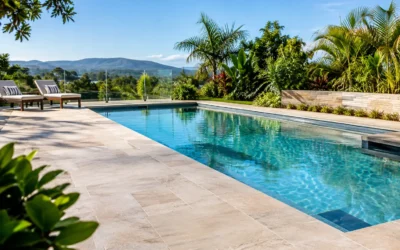
A permeable paving design may be worth considering where managing stormwater is a priority. These systems allow water to move through joints or openings into a prepared base below, rather than sending all runoff across the surface. They are not the right answer for every site, and they still need proper base preparation and maintenance, but they can be a useful option in the right conditions.
Choosing a paver that suits how you live
Concrete pavers are popular because they offer a broad choice of colours, sizes and finishes. They can suit modern homes, traditional properties and practical family driveways, depending on the pattern and edging selected. Individual pavers can also be repaired or replaced more easily than a large poured surface if a specific area is damaged or needs to be accessed later.
Natural stone can create a premium, distinctive look, but it needs to be selected carefully for driveway use. Not every stone is suitable for vehicles, and some finishes may become slippery when wet. Cost, availability and the required base can also be higher, so it is best considered as part of the whole landscape budget rather than an isolated surface choice.
Clay pavers bring warmth and character, particularly around older homes and garden-focused properties. Their colour tends to run through the paver rather than sitting only on the surface. However, driveway-grade products and proper installation are essential, as ordinary garden pavers may not handle regular vehicle traffic.
The right colour is usually one that works with the roof, exterior walls and surrounding landscape without trying to match them exactly. Consider the practical side too. Light paving can brighten a shaded entry, while a balanced mid-tone can be easier to keep looking clean under trees and in high-traffic areas.
The work below the pavers matters most
Even excellent pavers will not perform well on an inadequate base. Before paving begins, the site should be assessed for existing levels, soft ground, drainage patterns, tree roots, service locations and access for machinery and materials. Old concrete, unstable fill or poorly compacted ground may need to be addressed before a new driveway is installed.
The excavation depth and base specification depend on the soil, the paver type and the traffic expected. A driveway used only by passenger vehicles has different requirements from one regularly carrying delivery vans, heavy utes, boats or trailers. Edge restraints are equally important, as they hold the paving together and reduce movement at the sides.
This is where local experience pays off. Northern Rivers soils can vary significantly between properties, and wet periods can expose weak points quickly. A contractor should explain the proposed preparation, drainage plan and likely timeframe before work starts, rather than treating these details as extras once the surface is underway.
Integrating the driveway with the rest of the front yard
The most successful driveways feel connected to the landscape rather than dropped into it. A paved entry can be softened with planted borders, but garden beds should be designed so roots, mulch and irrigation do not undermine the paving edges over time. Low-maintenance planting is often a better choice beside a driveway than plants that constantly spill into the vehicle path.
Lighting, letterboxes, footpaths and front gates should be considered early, particularly if trenches or electrical work are required. It is far easier to organise these elements before paving is completed than to cut into a finished surface later.
Evolve Gardens & Landscaping can help homeowners plan driveway paving as part of a broader front-yard upgrade, including drainage, garden beds, retaining, turf and practical access around the property. A clear on-site quote allows the design to respond to the actual block rather than a one-size-fits-all picture.
A driveway should make daily life easier from the first morning you reverse out in the rain. Start with how water moves, where vehicles need to go and how the space connects to your garden. The finished paving will look better for longer when those practical decisions are made before the first paver is laid.