A bare patch beneath a tree, a hard-to-mow bank or the strip beside a driveway can quickly become a weed problem in Northern Rivers gardens. The best low maintenance groundcovers do more than fill space. They shade the soil, soften hard edges, reduce erosion and create a finished look without demanding weekly attention.
The right choice depends on the site. A plant that handles full Ballina sun and sandy coastal soil may struggle in a damp, shaded Lismore backyard. Before planting, look closely at sun exposure, drainage, soil type, foot traffic and whether the area receives regular watering. Starting with the right plant is what makes a groundcover genuinely low maintenance.
What makes a groundcover low maintenance?
Low maintenance does not mean no maintenance. Every new planting needs sensible soil preparation, watering while roots establish and some early weeding. The difference is that a suitable groundcover eventually spreads to cover the soil, needs only occasional trimming and copes with normal dry periods once established.
For Northern Rivers properties, we generally look for plants that tolerate heat, humidity and periods of heavy rain, while also managing dry spells. On exposed sites, salt tolerance can matter. On slopes, a spreading root system is especially valuable. Dense growth is useful too, but plants still need enough room and airflow to avoid becoming crowded or fungal in humid weather.
10 best low maintenance groundcovers for Northern Rivers gardens
1. Native pigface
Native pigface is one of the toughest options for hot, sunny and free-draining positions. Its fleshy leaves store water, while bright flowers bring colour through the warmer months. It suits coastal gardens, sandy soils, rockeries and banks where irrigation is limited.
Give pigface good drainage. It is not the right choice for a wet, shaded corner where water sits after rain. A light trim after flowering can keep it compact and encourage fresh growth.
2. Creeping boobialla
Creeping boobialla is a hardy Australian native with a neat, spreading habit and small white flowers. It performs well in coastal conditions and copes with wind, sun and poorer soils once established. It is a practical choice along driveways, front gardens and open garden beds.
It generally needs less pruning than faster-growing groundcovers, although an occasional tidy-up will maintain a clean shape. Planting it in well-prepared soil with mulch around young plants helps it establish evenly.
3. Myoporum parvifolium
Creeping myoporum is valued for quickly covering sunny slopes and larger open areas. It forms a thick mat that can help hold soil in place, making it useful where mowing is unsafe or impractical. White or pale flowers add interest without making the plant fussy.
This is a vigorous groundcover, which is helpful on a bank but can be too much for a small garden bed. Allow enough space and keep an eye on its edges so it does not smother smaller feature plants.
4. Prostrate rosemary
For a sunny garden that needs structure as well as coverage, prostrate rosemary is a reliable option. Its aromatic foliage, small blue flowers and trailing form work beautifully over retaining walls, beside paving and across well-drained slopes.
It prefers sun and dislikes wet feet. In heavy clay, improve drainage before planting or raise the bed. A light prune after flowering prevents woody, sprawling growth and keeps it looking intentional rather than untidy.
5. Dichondra repens
Dichondra repens, often called kidney weed, creates a soft green carpet in filtered light and lightly shaded spots. It is useful beneath open-canopy trees, around stepping stones and in areas where a lawn would struggle. Its rounded leaves give a gentler, more informal appearance than many tougher groundcovers.
Dichondra appreciates some moisture, particularly while establishing. It can thin out in harsh full sun or under dense shade, so choose a position with dappled light and avoid areas with constant foot traffic.
6. Native violet
Native violet is a good choice for damp, shaded or partly shaded areas where other plants fail to fill in. It has small purple and white flowers and spreads gently through moist soil, making it well suited to sheltered courtyards, shaded borders and areas near irrigation.
It is not a dry-climate groundcover. During extended dry weather, it will need watering to stay lush. In the right position, however, it provides attractive coverage with very little intervention.
7. Lomandra varieties
Compact, spreading lomandra varieties are not traditional flat groundcovers, but they are among the most practical low-care plants for larger beds, sloping sites and modern landscape designs. Their strappy foliage handles heat, dry conditions and poor soil well, while their clumping roots help stabilise soil.
Lomandra is especially effective when planted in groups with mulch between plants during establishment. It will not create an instant solid carpet, but it offers a tidy, durable finish that needs little more than occasional removal of old foliage.
8. Creeping thyme
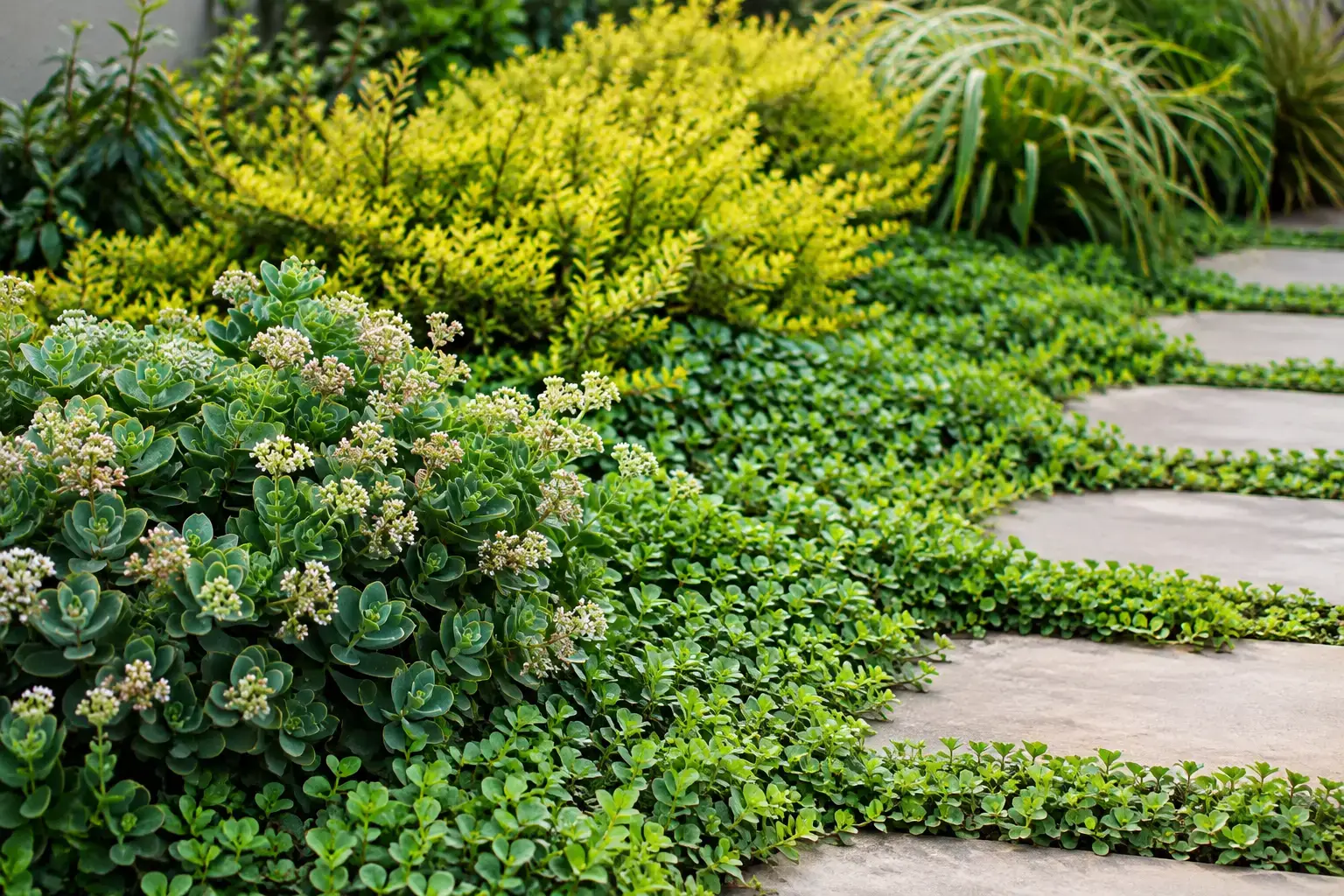
Creeping thyme is ideal for small sunny areas where fragrance and a low-growing finish matter. It can spill over pavers, soften pathway edges and fill gaps between stepping stones in a well-drained garden. When crushed underfoot, the leaves release a pleasant scent.
This is a better choice for light, occasional traffic than a busy family pathway. Northern Rivers humidity and summer rain can cause problems if the soil stays wet, so keep it out of poorly drained clay and avoid overwatering.
9. Blue chalk sticks
Blue chalk sticks bring a striking blue-grey foliage colour to dry, sunny gardens. This succulent groundcover suits coastal properties, contemporary planting schemes and hot areas beside concrete or stone where reflected heat is high.
Drainage is essential. Use it in a raised bed, rockery or sandy soil rather than a low spot that stays wet after rain. It is also worth allowing space around it, as good airflow helps prevent rot during humid periods.
10. Star jasmine
Star jasmine is often used as a climber, but it can also work as a dense groundcover in part shade or sun, particularly across a larger bed or beneath a fence line. Its glossy foliage and scented white flowers create a polished look, and it can hide awkward bare areas effectively.
It needs more initial guidance than the smaller plants on this list. Keep it trimmed away from nearby shrubs, drains and structures, and provide water during establishment. For homeowners who like a fuller, greener result, the occasional pruning is usually well worth it.
Choosing groundcovers for difficult areas
A hard-to-mow slope needs a different solution from a shaded courtyard. For sunny banks, spreading natives such as pigface, myoporum and creeping boobialla are often practical choices. Their roots help bind the soil while their foliage limits the open ground where weeds can establish.
In shade, resist the temptation to force sun-lovers to grow beneath dense trees. Native violet and dichondra will usually perform better, provided the soil has enough moisture. If the shade is very dry because of established tree roots, consider improving the soil carefully and selecting plants with more drought tolerance rather than relying on frequent watering.
Near the coast, wind, salt spray and sandy soil can quickly expose unsuitable plants. Pigface, creeping boobialla, blue chalk sticks and some lomandra varieties are usually stronger performers. Inland gardens may have heavier soil, higher humidity or more frost in certain locations, so drainage and plant placement become more important than a one-size-fits-all plant list.
Establishment is where most of the work happens
Even the lowest-care groundcover will disappoint if it is planted straight into compacted soil full of weeds. Remove persistent weeds first, loosen the planting area and add compost or soil conditioner where needed. If drainage is poor, address that before planting rather than hoping a drought-tolerant plant will solve it.
Space plants according to their mature spread, not just how small they look in the nursery pot. Crowding can create humidity, disease and unnecessary pruning work. A layer of mulch between new plants conserves moisture and suppresses weeds, but keep it clear of stems to reduce rot.
Water deeply and consistently through the establishment period, then reduce watering gradually as the root system develops. Most plant losses happen in the first few months, not years later. A quick monthly check for weeds, pests and overly vigorous growth will save a larger clean-up later.
For a garden that looks settled sooner, combine groundcovers with edging, feature shrubs and practical irrigation where needed. Evolve Gardens & Landscaping can help match planting choices to your soil, exposure and the amount of upkeep you genuinely want to take on.
The best result is not the plant with the lowest advertised care level. It is the one that suits your particular patch of ground well enough to thrive without becoming another weekend job.