A sloping yard can look manageable for months, then one heavy Northern Rivers downpour cuts channels through mulch, exposes roots and sends soil towards the fence line. Can garden terraces stop erosion? In many cases, yes – but only when the terraces are built as part of a complete solution for water, soil and planting, rather than as a series of level garden beds alone.
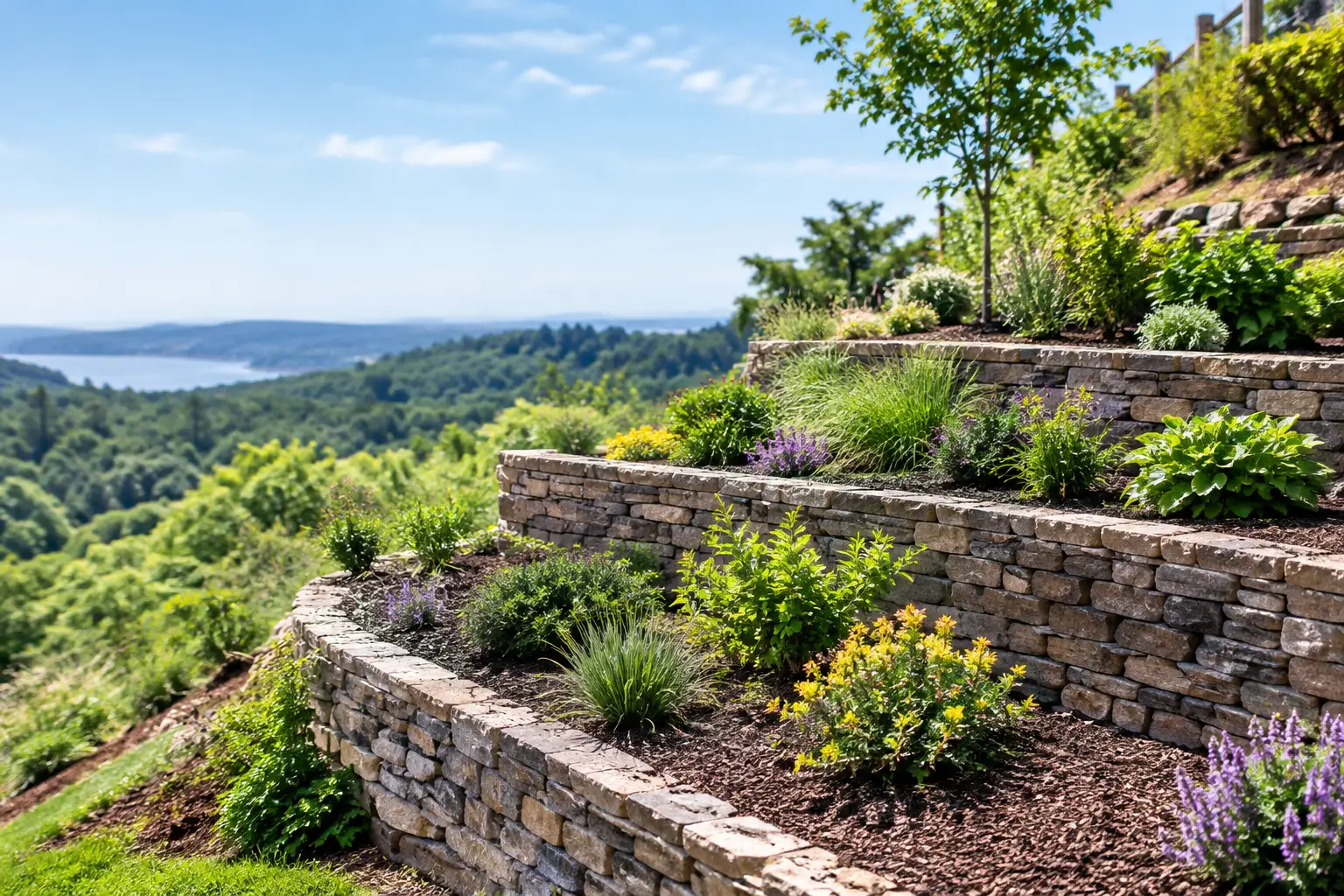
Terracing breaks a long slope into shorter, flatter sections. That slows the path of rainwater downhill and gives it more opportunity to soak into the ground. It can turn an awkward, hard-to-maintain incline into usable garden areas, access paths or lawn spaces. However, the retaining, drainage and plant selection behind each terrace are what determine whether the work holds up through a wet summer.
How garden terraces reduce erosion
Erosion happens when water moves across bare or unstable ground with enough force to carry soil away. On a long slope, runoff gathers speed and volume as it travels downhill. Even a modest fall can become a problem where soil is loose, garden cover is thin or a roof discharge concentrates water in one spot.
A terrace interrupts that flow. Each retained level acts as a small step, reducing the distance water can run uninterrupted. The flatter surface can hold mulch and vegetation more effectively, while a properly designed drainage system directs excess water away without washing out the soil.
This does not mean terraces make water disappear. During a significant storm, water still needs a safe route through the site. The goal is to slow it down, spread it sensibly and move the surplus to an appropriate discharge point. On Northern Rivers properties, where intense rainfall can arrive quickly after dry spells, that distinction matters.
Terraces work best with retaining and drainage
A garden terrace needs a retaining edge to hold the higher ground in place. Depending on the site, this could be treated timber, concrete blocks, natural stone or a constructed retaining wall system. The right material is not simply a style choice. It depends on the height of the wall, soil conditions, access, expected loading and how water behaves on the property.
Low, carefully built garden edging may be suitable for a gentle slope. Taller walls or sites close to buildings, pools, driveways and boundaries require more detailed planning. Some retaining structures need engineering and approvals, particularly where their height, location or loads trigger local requirements. It is far less costly to establish this before construction than to repair a leaning wall later.
Behind the retaining wall, drainage is essential. Water pressure building up in wet soil is one of the main reasons walls fail. A suitable drainage layer and agricultural drain can relieve that pressure and carry water to a planned outlet. Surface water also needs attention. Downpipes, paved areas and neighbouring runoff should never be allowed to pour directly onto the top of a terrace.
A well-built terrace is therefore more than a wall with soil behind it. It is a small earthworks and drainage system designed to protect the garden above and below it.
When terracing is a good option
Terraces can be particularly effective when a property has a consistent slope, recurring washouts or a garden that is difficult to use safely. They are also a practical option where homeowners want to create planting zones, a level lawn area, a seating space or easier access through the yard.
On a typical sloping backyard in Ballina, Lennox Head or Alstonville, two or three modest terraces may be enough to break up a fall that previously sent mulch and topsoil downhill. On larger lifestyle properties around Lismore or Byron Bay, the approach may involve wider benches, swales, access paths and planting across a broader area.
Terracing is not always the best first answer. If the problem is one overflowing downpipe, poor surface drainage or a narrow strip of bare soil beside a driveway, targeted drainage and planting may solve it without retaining walls. Likewise, a very steep or actively slipping slope may need geotechnical advice before landscaping begins. The visible erosion is sometimes a symptom of a deeper ground or water-management issue.
Signs your slope needs attention
Look for small rills or channels appearing after rain, exposed plant roots, mulch collecting at the bottom of the yard, muddy water crossing paths, or soil piling up against a fence. Cracks, bulging or leaning in an existing retaining wall deserve prompt assessment, especially after prolonged rain.
These signs do not automatically mean major construction is required, but they are worth addressing early. A small drainage correction and fresh groundcover are easier to manage than a slope that has lost substantial soil.
Planting is part of erosion control
Terraces without planting can still erode. Bare soil on the flat beds and exposed batters between levels remains vulnerable to wind, rain and summer heat. Plant roots help bind soil, while foliage softens the force of raindrops and mulch reduces splash and surface runoff.
For Northern Rivers gardens, planting should suit the aspect, soil type and available water. A hot western slope needs a different approach to a sheltered, moisture-holding area under established trees. Drought-tolerant plants can be a sensible choice for exposed areas, but they still need reliable watering while establishing. The first few months after planting are when the ground is most vulnerable.
Dense groundcovers, clumping grasses, shrubs and deeper-rooted species can work together across a terraced garden. Rather than relying on one plant type, a layered planting plan provides better coverage and a more natural-looking result. Mulch should be applied at a sensible depth and kept clear of plant stems. On steep sections, coarse mulch or stabilising treatments may be needed so it does not simply wash downhill in the first storm.
Irrigation also needs to be considered carefully. Overwatering can create its own erosion problem, particularly if water runs across compacted soil. Drip irrigation or well-positioned low-flow watering is generally easier to manage than frequent heavy spraying on a slope.
Common mistakes that undermine a terrace
The most common issue is building a retaining edge without planning where the water will go. A tidy wall may look finished on day one, but if drainage has been overlooked, wet soil can build pressure behind it and runoff may find a new path around the ends.
Another mistake is creating terraces that are too narrow or too steep to maintain. Garden beds need enough room for planting, mulching and pruning without people standing on the retaining edge. Access should be planned from the beginning, whether that means steps, a path or wider spaces between levels.
Using unsuitable materials can also shorten the life of the project. Timber, for example, has a place in many gardens, but the product, construction method and drainage details must suit the conditions. Cheap fixes often become expensive when they fail after a season of heavy rain.
Finally, avoid clearing a slope completely and leaving it exposed while waiting for the next stage of work. If a project needs to happen in stages, temporary measures such as mulch, erosion-control matting or prompt planting can help protect the soil in the meantime.
A practical approach for Northern Rivers properties
The best starting point is a site assessment that looks beyond the obvious washout. Consider the slope direction, soil condition, existing drains and downpipes, hard surfaces, established trees, neighbouring land and how the yard is used. A family backyard needs safe access and durable lawn areas. A low-maintenance retirement property may benefit from planted terraces with easy paths. A larger block may need a more extensive water-management plan.
From there, the work can be staged logically: correct concentrated water flows, shape and retain the ground where needed, install drainage, then plant and mulch the finished areas. This sequencing protects the investment and makes it easier to maintain the garden over time.
At Evolve Gardens & Landscaping, local experience informs the practical details – from selecting plants that cope with heat exposure to organising retaining, paving, irrigation and ongoing garden care as one coordinated project. Clear scope, realistic timing and a tidy worksite make a real difference when a slope is being transformed.
A well-designed terrace will not stop every drop of rain, nor should it try to. It gives water a controlled path and gives your soil, plants and outdoor space a much better chance of staying where they belong.