
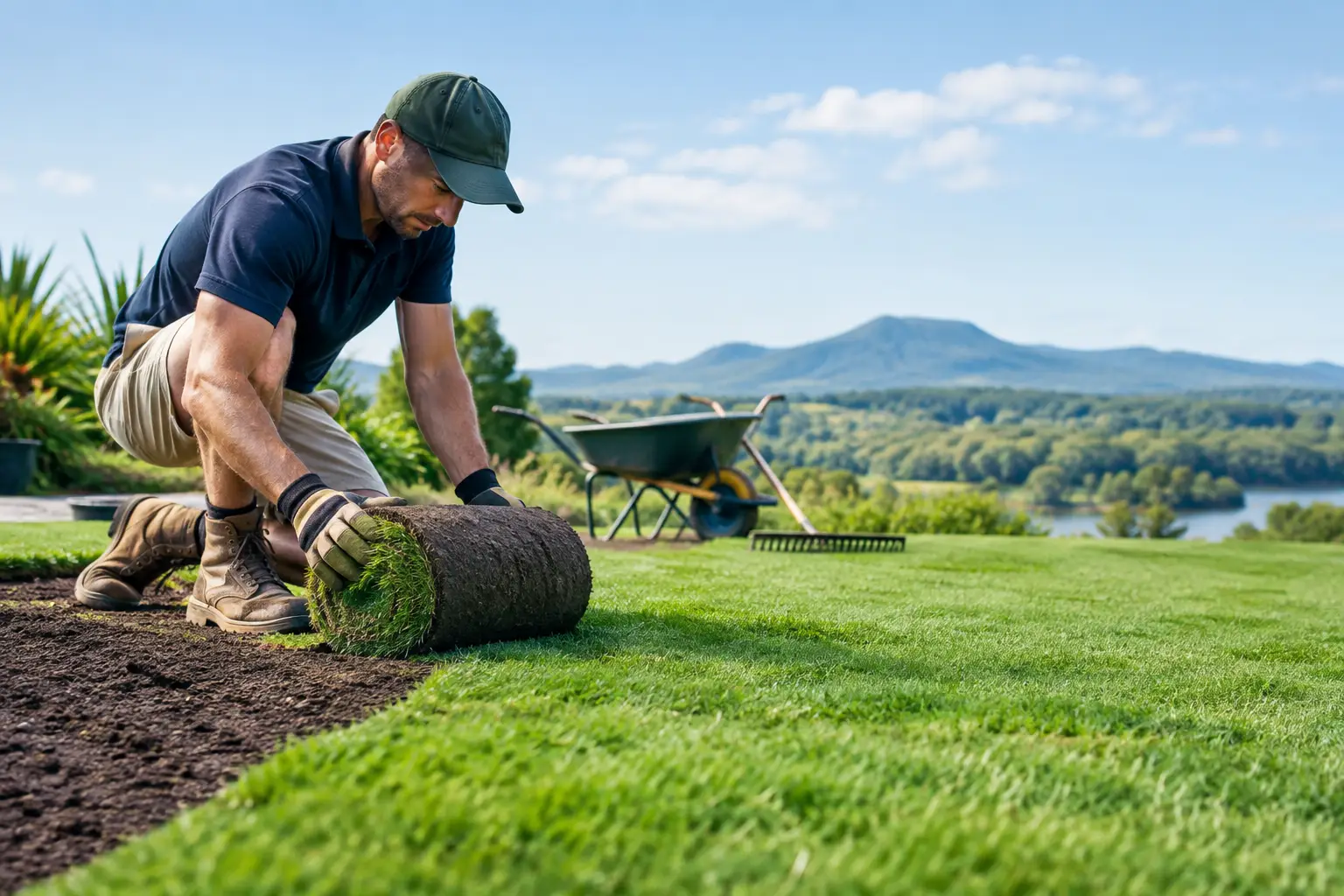
A lawn can look tired long before it is beyond saving. Bare patches near the clothesline, compacted soil along the side gate, weeds around the edges and water pooling after a heavy shower are common signs that the lawn needs more than another mow. This guide to lawn renovation helps Northern Rivers homeowners work out what has gone wrong, what can be repaired and when starting again makes better sense.
Start by finding the cause
Renovating a lawn is not simply spreading seed or laying fresh turf over the top. If poor drainage, hard soil, shade or an unsuitable grass type caused the original problem, new growth will struggle in exactly the same way.
Walk over the area and look at it after rain as well as during dry weather. Water that sits on the surface points to compaction, low spots or drainage issues. Thin grass beneath large trees may be competing with roots for moisture and light. Dry, pale turf in an open yard can indicate heat stress, sandy soil or inadequate irrigation coverage.
In Ballina, Lennox Head, Byron Bay and other coastal areas, sandy soils often drain quickly and can lose nutrients fast. Further inland, heavier clay soils may hold water, become hard underfoot and make it difficult for roots to move through the ground. A lawn renovation should suit those conditions rather than follow a one-size-fits-all approach.
Is renovation enough, or should you replace the lawn?
A renovation is usually worthwhile when more than half of the lawn is still healthy, the existing grass type suits the site and the main issue is compaction, thatch, unevenness or isolated weeds. Core aeration, topdressing, fertilising and targeted repairs can bring this type of lawn back into good condition.
Replacement is often the smarter investment if weeds have taken over, the lawn has widespread dead areas, drainage needs major correction or the turf is wrong for the amount of sun the yard receives. For example, a sun-loving couch lawn will always struggle under dense shade, while some buffalo varieties can cope better with a yard that gets a mix of sun and filtered light.
There is a trade-off. Renovation generally costs less and retains an established lawn, but it can take time and may not solve deeper site problems. New turf gives a more immediate finish, yet preparation is still the most important part of the job. Laying turf over poor soil is a short-lived fix.
The practical guide to lawn renovation
Clear weeds and excess growth first
Start with a low mow, then remove clippings, fallen leaves and built-up thatch. Thatch is the layer of dead stems and organic material sitting between the grass blades and soil. A little is normal, but a thick layer can stop water, air and fertiliser reaching the roots.
Weeds need to be dealt with before repairing bare areas. Hand removal can work for small outbreaks, especially while the soil is moist. Larger infestations may need a suitable treatment and enough time for it to work before new seed or turf is introduced. The treatment choice depends on the weed and grass type, so avoid applying a general product without checking that it is safe for your lawn.
Relieve compacted soil
If the ground feels hard, water runs off rather than soaking in, or the lawn gets heavy use from children, pets and regular foot traffic, aeration is likely needed. Core aeration removes small plugs of soil, creating channels for moisture, oxygen and roots. It is far more useful than simply poking holes with a garden fork across a large lawn.
Aerate when the soil is slightly moist but not wet. On waterlogged ground, machinery can smear and compact the soil further. In a small yard, a hired aerator may be practical. For larger properties, slopes or lawns requiring drainage corrections, professional equipment and site preparation can produce a more even result.
Fix levels and drainage before adding soil
A lawn should fall gently away from the house so surface water does not collect against walls, paths or entertaining areas. Low patches can be corrected with a sandy soil blend or suitable topdressing mix, applied in light layers. Do not bury healthy grass under a thick load of soil in one go.
Where water repeatedly pools, the solution might involve reshaping the area, improving subsoil drainage or installing drainage infrastructure. These jobs are best considered alongside paving, garden edges and irrigation, particularly if the yard is being improved as part of a larger landscape project.
Build better soil, not just greener leaves
Healthy turf needs roots that can access moisture and nutrients. A soil test can be useful for lawns that repeatedly fail despite regular watering and fertilising, particularly where soil is very sandy, acidic or compacted. It takes the guesswork out of adding lime, gypsum or other amendments that may not be needed.
After aeration, spread a quality topdressing mix lightly and work it into the holes with a levelling rake. This improves the surface and gradually builds a better root zone. Follow with a slow-release lawn fertiliser suited to the season and water it in as directed. More fertiliser is not better – excess nutrients can encourage soft growth, increase mowing and wash into drains after heavy rain.
Repair bare patches with the right grass
For a patchy but mostly healthy lawn, repair damaged areas with the same grass type where possible. Matching turf is usually the quickest way to fill larger bare sections. Seed can be economical for suitable grass varieties, but it requires careful watering and protection while it establishes.
Choose grass for the site, not just the look. Couch creates a fine, durable lawn in full sun and responds well to regular mowing, but it needs plenty of light. Buffalo is often a practical choice for warm Northern Rivers conditions and areas with some shade, although varieties differ. Kikuyu grows vigorously and can handle tough use, but it can spread into garden beds and needs consistent edging.
Before laying new turf, loosen the topsoil, remove stones and roots, level the ground and firm it lightly. Butt turf rolls tightly together without stretching them, then water deeply straight away. Keep the new lawn consistently moist while roots establish, adjusting for rainfall rather than running sprinklers on a fixed schedule.
Choose the right time for the Northern Rivers
Warm-season grasses grow most actively from spring through early autumn, provided there is enough warmth and moisture. That usually makes these months the most reliable time for significant lawn work. Spring renovation allows turf to establish before summer use, while early autumn can offer warm soil and milder days.
Timing still depends on weather. A run of heavy rain can delay levelling, drainage work and turf installation. During dry spells, renovation is possible only if reliable watering is available. Avoid major work immediately before a holiday period if no one will be around to monitor moisture levels on newly laid turf.
Keep the renovated lawn looking good
The first few months decide whether the effort pays off. Mow often enough to remove no more than one-third of the leaf blade at a time, using sharp mower blades. Cutting too low exposes soil to heat, stresses roots and gives weeds room to establish.
Water deeply and less often once the lawn is established, encouraging roots to grow down rather than stay near the surface. The exact schedule will vary with soil, weather and grass type. Check sprinkler coverage occasionally, especially around garden beds, fences and corners where dry patches are easy to miss.
Keep edges defined, remove weeds while they are small and clear leaf litter before it mats down. If the lawn is part of a busy family yard or lifestyle property, regular mowing, seasonal fertilising and occasional aeration are practical maintenance measures, not cosmetic extras.
A good lawn renovation should make the whole yard easier to enjoy, from a level area for the kids to play to a cleaner frame around gardens and outdoor living spaces. If the problem includes drainage, irrigation, retaining work or an overgrown garden, Evolve Gardens & Landscaping can assess the site and provide a clear, no-obligation quote for work that suits your property. The best next step is to inspect the lawn after its next decent rainfall, because the way water moves through the yard often tells you exactly where to begin.