
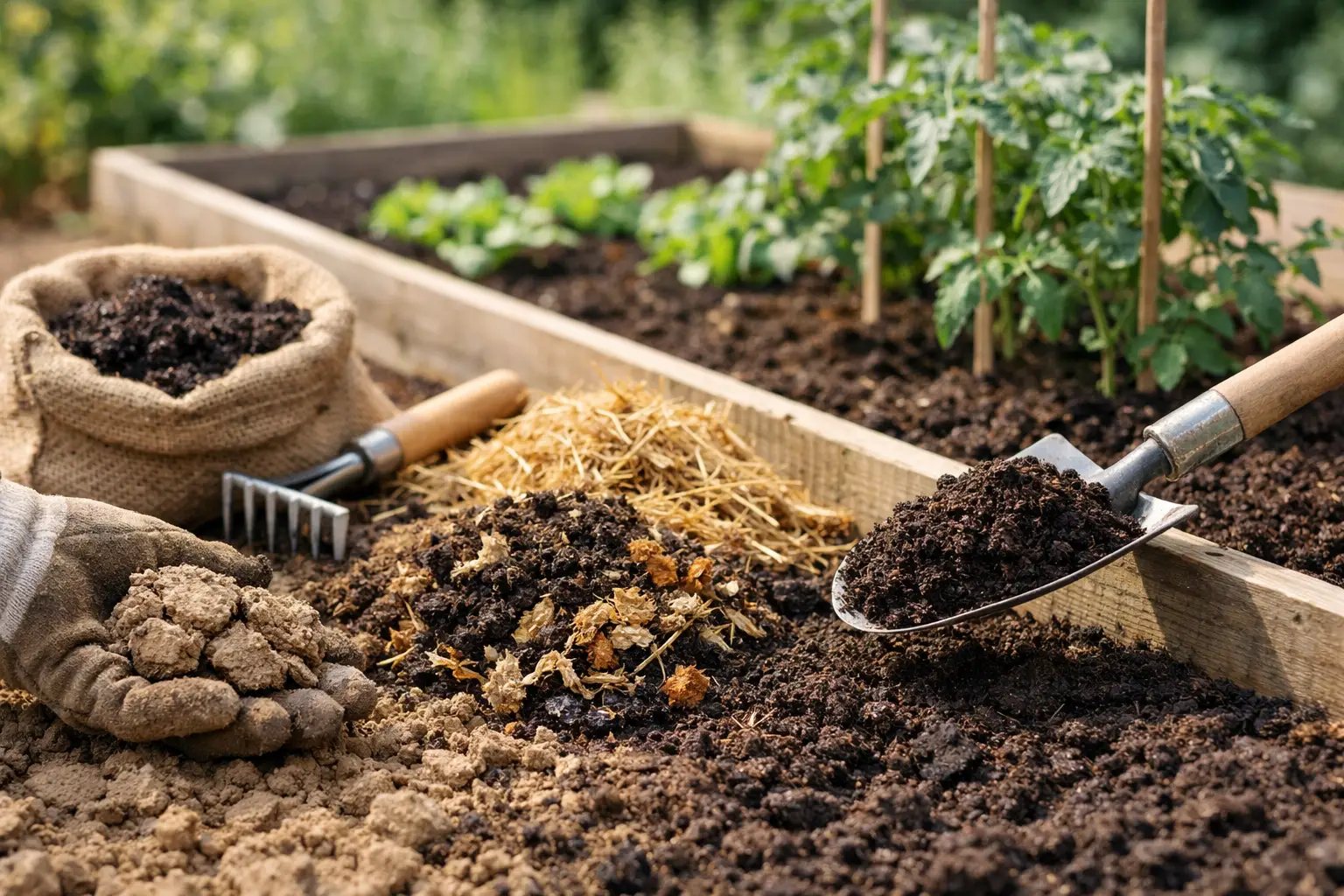
A garden bed can look well prepared on planting day, then turn hard as concrete after a dry Northern Rivers spell or hold water for days after heavy rain. To improve clay soil for garden beds, the aim is not to replace every bit of soil. It is to steadily build a more open, living soil that drains better, holds moisture sensibly and gives plant roots room to grow.
Clay is common across parts of the Northern Rivers, but no two properties are quite the same. A low-lying block near Ballina may stay wet for longer, while an exposed yard in Alstonville or Lismore can bake hard in summer. The right approach depends on where water sits, how much sun the bed receives and what you want to grow.
Why clay soil needs a different approach
Clay particles are extremely fine and pack tightly together. When wet, they can become sticky, heavy and poorly drained. When dry, they shrink, crack and resist water, which can make watering feel pointless. A quick sprinkle often runs off the surface or pools in a shallow depression rather than soaking down to the root zone.
That does not mean clay soil is bad soil. It often contains useful minerals and can hold nutrients well. The issue is structure. Good garden soil has small spaces between particles for air, water, worms and roots. Improving clay is about creating and protecting those spaces over time.
The common mistake is trying to fix the problem in one weekend by adding a thin layer of topsoil or digging in a little sand. A shallow layer of imported soil may look good initially but does little for the compacted clay beneath it. Sand can also make matters worse if it is added in the wrong quantity, creating a dense, cement-like mix. Organic matter, sensible drainage and appropriate planting deliver more reliable results.
Start with drainage and site conditions
Before adding compost or choosing plants, watch what happens after rain. If water drains away within a day or so, you may only need to improve the bed structure. If water remains pooled for several days, the site may need more than soil conditioning.
Check where runoff comes from. Downpipes, paved areas, neighbouring slopes and compacted lawn can all direct water into one garden bed. In these situations, reshaping the surface, installing drainage or creating a raised bed can be more effective than continually adding soil products.
For a simple test, dig a hole around 30 centimetres deep, fill it with water and let it drain. Refill it and observe the second drainage cycle. Slow drainage suggests compacted soil or a high-clay layer. This is useful information, but it is only one part of the picture. A bed can drain adequately in dry weather and still become waterlogged after repeated rain.
On sloping properties, avoid moving soil around without a plan. Water, retaining, access and planting all work together. A garden that looks level but sends water towards the house is not a good outcome. Where the ground is awkward, a professional site assessment can prevent costly rework later.
Improve clay soil for garden beds with organic matter
Well-made compost is one of the most practical additions for clay. It helps separate clay particles, encourages beneficial soil life and improves the way water moves through the profile. It also gives the soil a better chance of holding moisture during dry weather without becoming airless and boggy.
Spread a generous layer of compost across the bed, generally around five to 10 centimetres, then work it gently into the top 15 to 20 centimetres where practical. Do not cultivate wet clay. If a handful can be rolled into a shiny, sticky ribbon, leave it until it has dried a little. Digging or walking on wet clay compacts it further and creates hard clods that are difficult to break down.
For established beds, avoid disturbing plant roots just to dig deeply. Apply compost over the surface and let earthworms, rainfall and regular mulching do much of the work. This slower method is often kinder to existing shrubs and creates steadier improvement year after year.
Aged animal manure can be useful, especially for hungry flowering plants and vegetables, but it should be well composted. Fresh manure may burn roots, introduce weed seeds or create an overly rich mix. Mushroom compost, leaf mould and quality green-waste compost can all contribute, provided they are free from large pieces of rubbish and fully broken down.
Use mulch properly, not heavily
Mulch protects clay soil from the two conditions that cause the most trouble: pounding rain and hot sun. It reduces surface crusting, limits weeds and helps moderate moisture levels. As it breaks down, it adds more organic matter to the topsoil.
Apply an organic mulch such as arborist woodchip, leaf mulch or a suitable bark product at roughly 50 to 75 millimetres deep. Keep it clear of plant stems and tree trunks, leaving a small gap to reduce the risk of rot and pests. Mulch should sit on the soil, not be dug through it in large amounts, as fresh woody materials can temporarily draw nitrogen from the soil while decomposing.
Mulch is especially valuable around newly planted shrubs in hot, open gardens. It will not replace watering during a dry spell, but it makes each watering more effective and reduces stress on young root systems.
Build upwards where drainage is poor
Raised garden beds are often the most sensible answer where clay remains saturated or where the property has shallow, compacted fill. Raising the soil level by even 20 to 30 centimetres can give plant roots access to a better-aerated growing zone.
A raised bed should still connect with the ground below rather than sit on an impermeable base. Loosen the existing surface where possible, then build up with a quality soil blend enriched with compost. This allows roots and water to move through the profile rather than creating a separate pot sitting in the yard.
For larger areas, gentle mounding can be more natural-looking than hard-edged raised beds. It suits ornamental planting, native gardens and areas where you want to soften a slope. The trade-off is that mounded beds can dry faster, so irrigation and mulch need to be considered from the start.
Choose plants that cope with the conditions
Soil improvement gives plants a better start, but plant selection still matters. A species that needs free-draining sandy soil will struggle in heavy clay, even with compost added. In a wet part of the garden, choose plants that tolerate occasional moisture around their roots. In a hot clay bed, select varieties that can handle summer heat once established.
Native grasses, lomandras, dianellas and many hardy shrubs can be useful in challenging conditions, depending on the site and the look you want. For colour, screening or a more structured garden, the best choices will depend on sun, frost exposure, drainage and how much ongoing maintenance you want to commit to.
Avoid planting too deeply. The top of the root ball should generally sit level with, or slightly above, the finished soil surface. In clay, a plant set too low can end up sitting in water after rain. Water new plants deeply at planting, then monitor them closely through their first season rather than following a fixed watering schedule.
Keep compaction from returning
Even improved soil will become dense again if it is regularly walked on, driven over or left bare. Create defined paths, stepping stones or access points so garden beds do not become shortcuts. This is particularly useful in productive gardens where people need to reach plants often.
Aeration can help compacted areas, but it is not a substitute for organic matter. A garden fork pushed into the soil and gently rocked back can open channels without turning the entire bed over. Do this when the soil is moist but not wet, then top-dress with compost and mulch.
Be patient with clay. Noticeable gains can happen in a season, but the best results come from repeating the basics: compost, mulch, careful watering and less compaction. If drainage problems, uneven levels or difficult slopes are affecting the whole yard, a tailored landscaping plan may be a better investment than treating each garden bed in isolation.
A well-prepared clay garden will never behave exactly like sandy soil, and it does not need to. With the right structure and plants suited to the site, it can become a productive, attractive part of the garden that handles Northern Rivers weather far more confidently.