A hard surface should not turn your driveway, courtyard or garden path into a fast lane for stormwater. In the Northern Rivers, heavy rain can arrive quickly, and water that cannot soak into the ground often ends up pooling near the house, washing soil from garden beds or running towards neighbouring properties. This permeable paving guide explains how water-friendly paving works, where it suits a residential property and what needs to happen below the surface for it to last.
Permeable paving is not simply paving with gaps between the pavers. It is a complete drainage system built in layers. Water passes through joints, porous surfaces or open cells, then moves through a carefully prepared base before soaking into the soil or draining to an approved outlet. Done well, it creates a tidy, durable outdoor area while taking pressure off conventional drainage.
What is permeable paving?
Permeable paving allows rainwater to pass through the finished surface rather than sheet across it. Depending on the material, water may flow through widened joints filled with clean aggregate, through the paver itself, or through an open grid system that can be filled with gravel or turf.
Underneath, the paving sits on layers of washed, free-draining aggregate. These layers store water briefly and help it filter down into suitable ground conditions. The design may also include geotextile fabric, edge restraints, agricultural drainage or a connection to a legal stormwater system where site conditions require it.
That is why the preparation matters as much as the pavers you see from the street. A surface can look excellent on day one but still fail if the sub-base is too shallow, the wrong material is used in the joints, or water has nowhere appropriate to go during sustained rain.
Why it can suit Northern Rivers properties
Many local homes have a mix of intense rainfall, sloping blocks, clay-heavy soils and established gardens that need protecting. Conventional concrete or tightly laid paving can be the right answer in some locations, but it increases runoff. Permeable paving can slow and spread water closer to where it falls.
For a garden path, it may help prevent puddles and muddy edges. Around a patio, it can reduce the amount of water directed towards garden beds or lawn. On a driveway, it can be part of a broader plan that manages runoff without relying on one small drain to handle every downpour.
It is not a cure-all for drainage issues. If your yard already has water flowing from uphill, a low point near the house, unstable ground or poor legal drainage options, the solution may need swales, pits, channel drains, retaining work or regrading as well. A site assessment should look at the whole property, not just the area being paved.
Choosing the right permeable surface
The best option depends on how the space will be used, the look you want and the condition of the ground beneath it. A pedestrian path has different requirements to a turning area for family cars, a caravan or regular deliveries.
Permeable concrete pavers
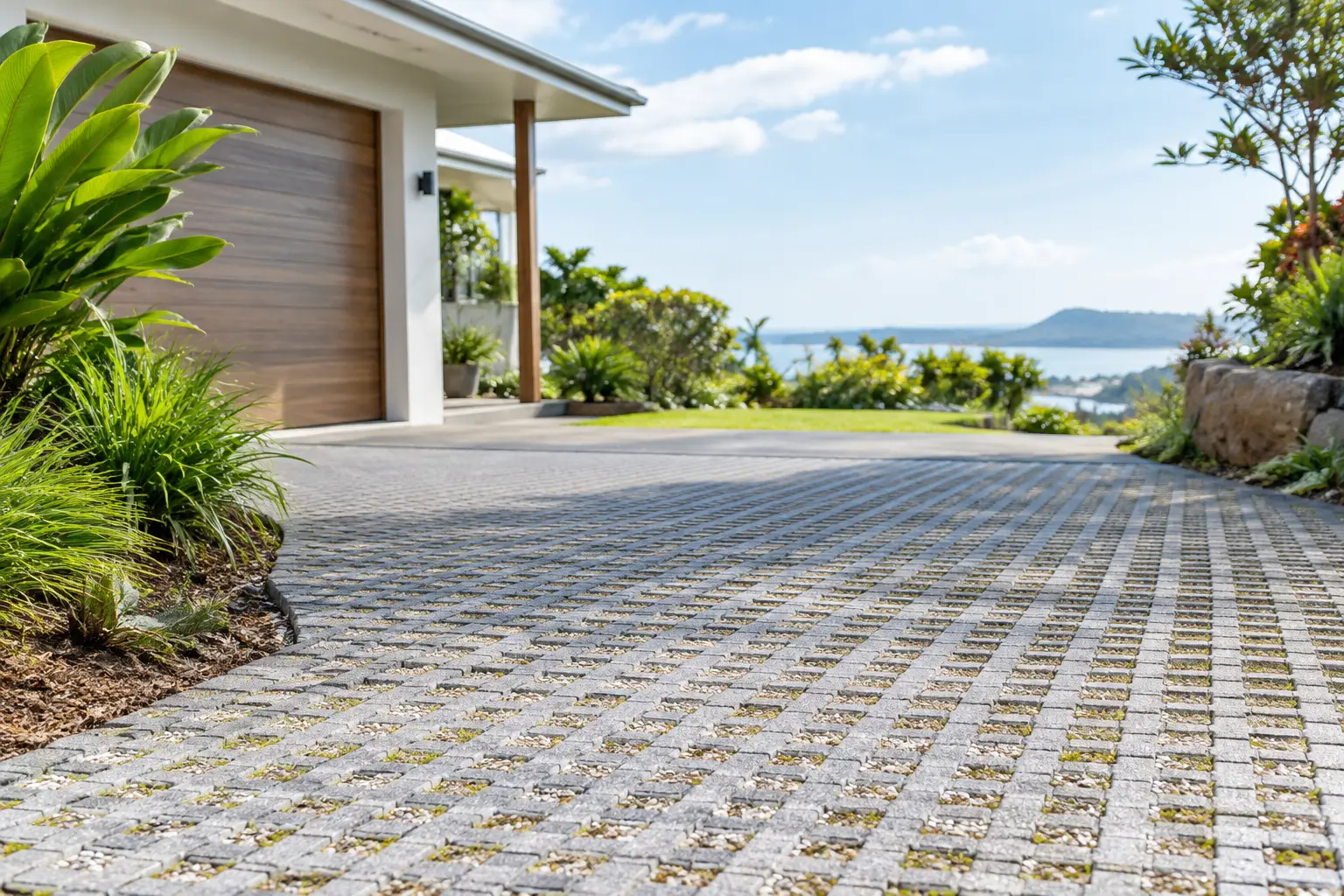
Permeable pavers are purpose-made units with joints that allow water through. They offer a neat, structured finish and can suit driveways, courtyards and paths. There is a good range of shapes and colours available, making them easier to coordinate with a home’s exterior and landscaping.
They do need precise installation, solid edge restraint and the correct clean aggregate in the joints. Standard sand is generally not suitable because it can clog the drainage gaps and stop the system working as intended.
Porous concrete or porous asphalt
These surfaces look more continuous than individual pavers and can work well for larger driveways or practical access areas. Water passes through the surface into a drainage base below.
They need experienced installation and a well-designed base. Repairs can also be more noticeable than replacing an individual paver, so they are usually chosen where a simple, uninterrupted surface is the priority.
Gravel grids and reinforced grass systems
Open-cell grids filled with gravel can provide a stable surface with a more relaxed, natural appearance. They are useful for overflow parking, side access, bins, service areas and lifestyle properties where a fully paved look would feel too formal.
Grass-filled grids can keep an area greener, although they need enough sunlight, suitable turf and realistic expectations. Constant tyre movement, shade and wet weather can make grass systems difficult to maintain in high-use areas. Gravel is often the more dependable choice for regular vehicle access.
Natural stone with permeable joints
Stone can create a beautiful path, entry or entertaining area, particularly around established gardens. It can be laid with drainage-friendly joints where the site and selected stone allow for it.
This option is often more about appearance and pedestrian use than heavy vehicle loads. The finish should be chosen with slip resistance, maintenance and the way the area is used in wet weather in mind.
A permeable paving guide to planning the base
The base is where permeable paving succeeds or fails. Before work begins, the area needs to be set out properly and checked for falls, existing services, access, tree roots and water movement across the block.
Excavation depth is determined by the intended load and the ground conditions. A footpath may need a lighter build-up than a driveway, while soft or reactive soil may require additional preparation. The ground is shaped, compacted where appropriate and separated from the aggregate base with suitable fabric if required. Clean, angular stone is then placed in layers and compacted to create stable voids for water storage.
The finished surface still needs considered levels. Permeable does not mean flat or careless. Gentle falls help avoid surface ponding and make sure water moves into the intended parts of the system. Around homes, garages and covered outdoor areas, thresholds and waterproofing details need particular attention.
If the soil drains poorly, the base may need a subsoil drain or overflow route. This should be planned before paving starts, not added as an afterthought once water is sitting against a wall. Local requirements can also apply to driveway crossovers, stormwater connections and work near boundaries, so these should be checked for your property.
Where permeable paving works best
Permeable surfaces are particularly useful in areas where you want a firm finish without covering every square metre in impermeable concrete. Common applications include front paths, garden walkways, courtyards, pool surrounds where an appropriate slip-resistant product is selected, side access, parking bays and residential driveways.
It can also be a practical addition to a larger garden makeover. For example, a new driveway may be paired with planting that handles occasional wet conditions, edging that keeps gravel contained and drainage that protects the lawn. Treating these elements as one project usually produces a cleaner result than tackling each problem separately.
There are situations where another surface may be better. Very steep sites, ground with known instability, heavily shaded areas that collect leaf litter and locations with concentrated runoff may need a different approach or extra drainage measures. A practical design should suit the site rather than forcing one material into every area.
Maintenance keeps water moving
Permeable paving is low-maintenance, not no-maintenance. Leaves, mulch, soil and fine sediment can gradually block joints and surface pores, especially beneath large trees or near unsealed areas.
Regular sweeping or blowing away debris is the simplest preventive step. For pavers, joints may need topping up with the specified clean aggregate over time. A careful vacuum sweep can remove fine material from the surface where needed. Avoid washing sediment into the joints, using ordinary sand for repairs or allowing garden soil to spill across the paving during landscaping work.
After a major downpour, take a quick look at how the surface performs. If water sits for much longer than expected, the cause could be blocked joints, settled areas, overloaded drainage or an issue beneath the paving. Addressing it early is far easier than waiting for movement or erosion to develop.
Getting the installation right from the start
A quality permeable paving job begins with a conversation about how you use the space. Is the driveway used by two cars every day? Do you need room for visitors? Does stormwater currently run towards the house? Are you hoping to connect the area with new turf, garden beds or a retaining wall?
At Evolve Gardens & Landscaping, we look at those practical details alongside the finished appearance. The aim is to create an outdoor surface that suits your home, handles local conditions and fits into the rest of your landscape, with clear advice on preparation, materials and realistic timeframes.
The most useful next step is to have the site assessed before settling on a product. A well-planned permeable surface can make wet-weather access cleaner, protect surrounding gardens and give you an outdoor area that remains attractive long after the first rain.