A lawn can look healthy on Friday and tired, patchy or straw-coloured by the following week. If you are asking, “why is my lawn dying?”, the answer is rarely just that it needs more water. Across the Northern Rivers, lawns contend with intense summer heat, humid spells, heavy rain, sandy coastal soils, compacted clay and shade from established trees. Getting the cause right before treating it is the quickest way to avoid wasting water, fertiliser and time.
Why Is My Lawn Dying? Start With the Pattern
The shape, timing and location of the damage offer useful clues. A lawn that fades evenly across the whole yard is often under stress from heat, watering or nutrition. Patches that appear in the same place each year may point to poor soil, tree-root competition, drainage problems or too much shade.
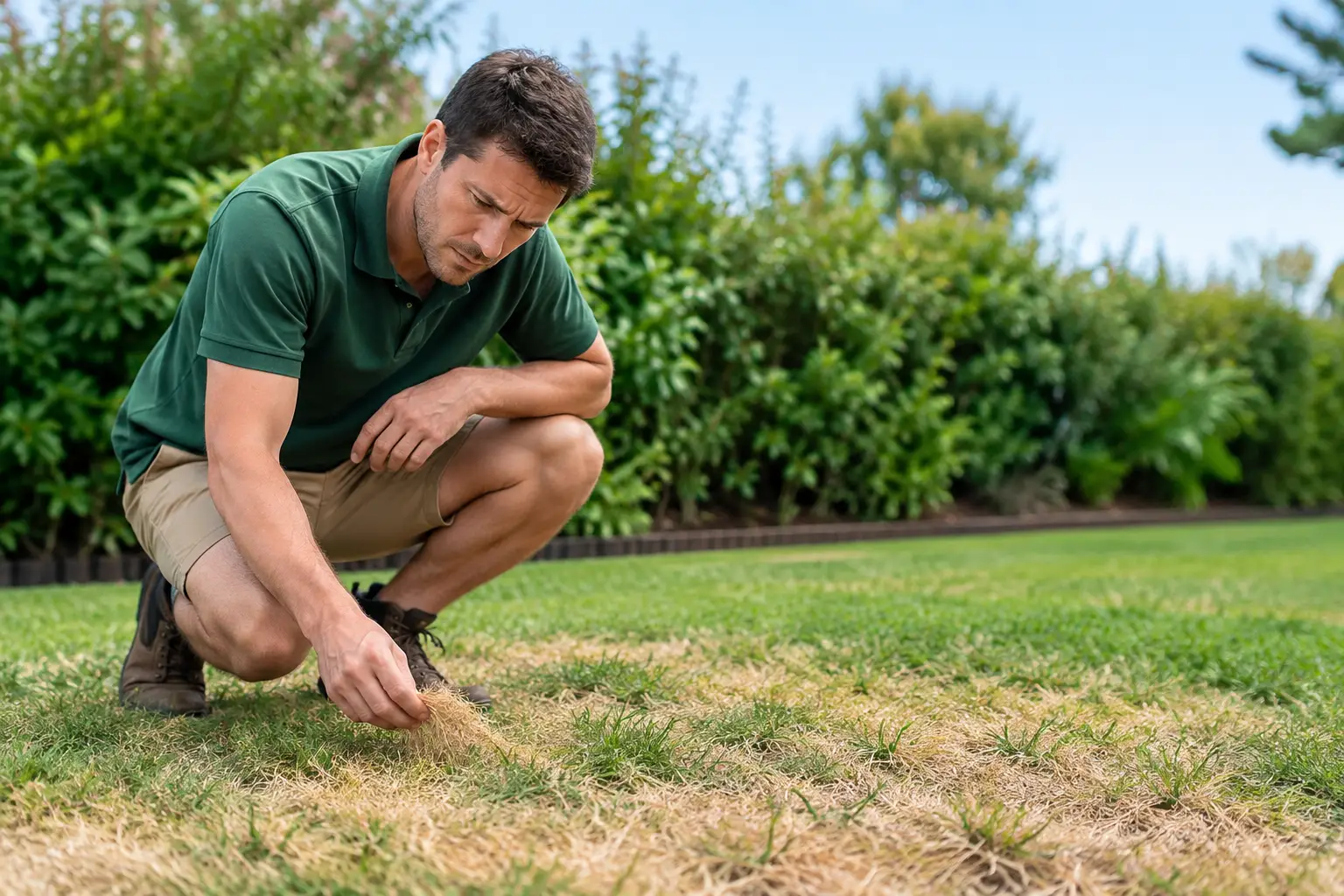
Look closely at the affected area rather than judging the lawn from the back door. Grass that is dry and grey-green may recover after a deep drink, while grass that pulls away easily from the soil can indicate lawn grub activity. Yellowing with a soft, damp feel after rain often suggests the ground is holding too much water or a fungal issue is developing.
Before reaching for a product, check whether the lawn is actually dead. Many warm-season grasses common in our area, including buffalo, couch and kikuyu, can go dormant or look rough during prolonged dry weather. If the runners or crowns at soil level are still firm and pale inside when gently scratched, the lawn may be stressed rather than gone.
Heat, Water and Northern Rivers Soil Conditions
Not enough water – or watering too lightly
A quick sprinkle every day encourages shallow roots. When hot, dry weather arrives, those roots sit near the surface and the lawn dries out fast. Water less often but deeply enough for moisture to reach the root zone. Early morning is generally the best time, as it gives the grass a chance to dry during the day and reduces water loss to heat and wind.
How often depends on your soil and grass type. Free-draining sandy soil around coastal areas may need deeper watering more often than heavier inland soil, but it can also be very easy to overcompensate. Check by pushing a screwdriver or narrow trowel into the ground after watering. If the soil is wet only in the top few centimetres, the lawn has not received a deep soak.
Too much water and poor drainage
Northern Rivers downpours can create the opposite problem. Waterlogged soil has little oxygen, so roots struggle to function even when the lawn is surrounded by water. Low spots, compacted areas and lawns built over hard fill are particularly prone to this issue.
If water sits on the lawn for more than a day or two after rain, avoid mowing and walking on it until it firms up. Traffic compacts wet ground further and can turn a manageable drainage issue into bare, muddy sections. Aeration, correcting levels, improving soil structure or installing drainage may be needed where the problem persists.
Heat reflected from hard surfaces
Lawns beside driveways, pools, pale retaining walls and paved entertaining areas can burn out first. These surfaces reflect and hold heat, raising soil temperatures and drying the turf at the edges. A little extra irrigation can help, but a better long-term result may involve adjusting sprinkler coverage, improving the soil beneath the turf or choosing a grass variety suited to the location.
Mowing Habits Can Make a Tired Lawn Worse
Scalping is one of the most common causes of a lawn that suddenly looks dead. It happens when too much leaf is removed in one mow, often after the grass has grown long during rain or a busy period. The exposed crowns and soil then take the full force of the sun.
Raise the mower height during hot, dry conditions and follow the one-third rule: do not remove more than one-third of the leaf blade at once. If the lawn is overgrown, take it down gradually over two or three mows. Keep mower blades sharp as well. Blunt blades tear grass rather than cut it cleanly, leaving ragged tips that brown off and are more susceptible to disease.
It also pays to match mowing frequency to growth. During warm, wet weather, a lawn may need cutting more regularly. In cooler or dry periods, mowing too often can add unnecessary stress. Leave clippings on the lawn when they are light and evenly spread, as they return organic matter to the soil. Remove heavy clumps that could smother the grass.
Pests, Disease and Weed Pressure
A healthy lawn can still develop a pest or disease problem, particularly after changing weather conditions. Lawn grubs often feed at night and can leave irregular dead patches. Birds may peck at the turf as they search for larvae, and affected grass may lift away because the roots have been eaten.
Fungal problems are more likely when warm, humid weather combines with poor airflow, extended leaf wetness or overwatering. You may see circles, patches with darker edges, or yellow and brown areas that continue to spread despite adequate moisture. Applying extra fertiliser in this situation can make matters worse, especially if the lawn is already stressed.
Weeds are usually a symptom as much as a cause. Bindii, summer grass, clover and broadleaf weeds take advantage of thin turf, bare soil and poor growing conditions. Treating weeds without addressing shade, compaction, mowing height or nutrition often leads to the same weeds returning next season.
If you suspect pests or disease, take a close photo and note when the patch first appeared, recent weather and any products used. Correct identification matters. A treatment for grubs will not solve a fungal issue, and a broad herbicide can damage some turf varieties if it is applied at the wrong time or rate.
Soil Problems Often Sit Under the Surface
Grass needs air, moisture, nutrients and room for roots to grow. Compacted soil limits all of them. It is common in high-traffic areas, along footpaths, near clotheslines, around children’s play spaces and on lawns that have been repeatedly mown when wet.
A simple test is to try pushing a screwdriver into moist soil. If it is difficult to penetrate, compaction may be restricting root growth. Core aeration can relieve this by removing small plugs of soil and allowing water and air to move deeper. On clay-heavy ground, adding quality organic material after aeration can help improve structure over time. It is not an overnight fix, but it builds a more resilient lawn.
Nutrient issues can also cause pale growth, weak colour and slow recovery. However, fertiliser is not a cure-all. Fertilising dry, heat-stressed grass can scorch it, while fertilising waterlogged ground is wasteful and can encourage disease. Apply a suitable slow-release lawn fertiliser when the grass is actively growing, water it in as directed, and avoid guessing if the lawn has several possible issues.
Shade, Tree Roots and the Wrong Turf for the Site
As gardens mature, the conditions around a lawn change. A space that once received full sun may now be shaded by trees, hedges, a new pergola or neighbouring buildings. Most turf needs several hours of direct light to remain dense. Couch, in particular, performs poorly in shade, while some buffalo varieties tolerate lower light but still need reasonable sun and airflow.
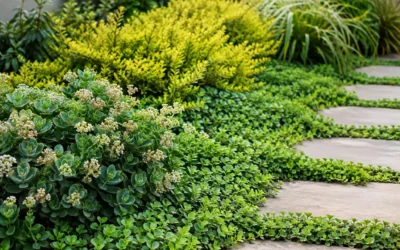
Tree roots can be just as influential. They compete with turf for water and nutrients, particularly beneath large established trees. Repeatedly watering and fertilising the lawn may not overcome that competition, and cutting tree roots can harm the tree. In heavily shaded or root-filled areas, a practical landscape solution may be a mulched garden bed, shade-tolerant planting, stepping stones or a different use for the space.
This is where a tailored approach matters. Re-turfing a problem area with the same grass, without changing the conditions that caused the decline, can mean paying twice for the same result.
A Sensible Recovery Plan
First, pause any harsh treatments. Mow only if the grass is actively growing and dry, and raise the cutting height. Check irrigation coverage by placing a few shallow containers across the lawn during a watering cycle. Uneven levels quickly reveal dry zones caused by blocked, tilted or poorly positioned sprinklers.
Next, assess the soil moisture below the surface, inspect for pests and consider how the affected area behaves after rain. Give drought-stressed turf a deep watering, but do not keep saturated turf wet. Once the cause is clearer, you can choose the right response: aeration for compaction, drainage work for wet areas, targeted pest treatment, soil improvement, selective weed control or replacement turf where recovery is unlikely.
For lawns with large bare areas, persistent puddling, recurring disease or significant shade, an on-site assessment is usually more cost-effective than trial and error. Evolve Gardens & Landscaping can assess the conditions around your lawn and recommend practical maintenance, irrigation, turf or landscape changes suited to your property and the local climate.
A struggling lawn is often telling you something useful about the ground beneath it. Read the pattern, correct the underlying condition and give the grass time to respond. The goal is not simply greener turf this week, but a lawn that can handle the next hot spell or heavy rain without starting over.