A freshly mulched garden can make a tired yard look properly finished in an afternoon, but the real benefit happens below the surface. In the Northern Rivers, where hot spells, heavy rain and humid conditions can all arrive within the same season, knowing how to mulch gardens properly helps protect soil, reduce weeds and give plants a far better chance of thriving.
Mulch is not simply a decorative layer spread over bare dirt. Used well, it keeps root zones cooler, slows moisture loss, softens the impact of rain and gradually improves the soil as organic materials break down. Used badly, it can hold too much moisture against stems, encourage fungal problems or leave plants competing for nutrients. The difference comes down to choosing the right material, preparing the bed and applying it at the right depth.
Why mulch matters in Northern Rivers gardens
Many local gardens deal with a combination of sandy soil, compacted clay, exposed slopes and intense summer sun. These conditions make it difficult for new plants to establish and for existing garden beds to stay evenly moist. A good mulch layer acts as a buffer between the soil and the weather.
During dry periods, mulch reduces evaporation so irrigation and rainfall stay in the ground for longer. When a heavy shower arrives, it reduces splash on leaves and helps limit surface erosion, particularly on sloping sites. It also shades the soil, which is useful around shallow-rooted ornamentals, productive plants and young hedges.
There is a trade-off, though. Thick, constantly damp mulch can be unsuitable around plants that prefer dry conditions, such as some succulents and Mediterranean-style plantings. In shaded or poorly drained parts of a yard, improving drainage and selecting suitable plants may matter more than adding extra mulch.
How to mulch gardens step by step
The best time to mulch is after rain or a deep watering, when the soil has moisture to hold onto. In the Northern Rivers, many homeowners refresh mulch in spring before the hottest weather, then top it up as needed after summer storms or before a dry spell. There is no need to wait for one perfect month – the condition of the soil and garden bed is the better guide.
Start with a clean, well-watered bed
Remove established weeds first, including roots where practical. Mulch suppresses new weed growth by blocking light, but it will not reliably kill a vigorous weed that is already growing through the bed. For heavily neglected gardens, it is often worth doing a thorough clean-up before any mulch goes down.
Rake away old mulch only if it has become matted, mouldy or excessively thick. A thin, broken-down layer can usually stay in place and contribute organic matter to the soil. Check irrigation lines at this stage too. Drippers should sit on the soil surface beneath the mulch, where water can reach the roots rather than evaporating quickly in the sun.
Choose mulch to suit the garden
The right mulch depends on the look you want, the plants you are growing and how much maintenance the area receives. In a formal garden near the house, a fine, consistent mulch can give beds a neat appearance. In larger native or rural-style gardens, a coarser product may be more economical and stay in place better during heavy rain.
Common options include:
- Hardwood chip or forest blend, which is long-lasting and practical for established shrubs, trees and broad garden beds.
- Pine bark, which creates a tidy finish and is often useful around ornamental plantings, although lighter grades can move in wind or rain.
- Sugar cane mulch, which breaks down quickly and suits vegetable gardens and seasonal planting areas where regular top-ups are expected.
- Compost or aged leaf mulch, which improves soil condition but is best used in a thinner layer or beneath a coarser mulch, as it can compact if applied too heavily.
Avoid using fresh lawn clippings in thick piles. They can become slimy, smelly and dense enough to stop water moving into the soil. Fresh wood chips from unknown sources can also be unpredictable, particularly if they contain weed seed, diseased material or unsuitable timber.
Apply the right depth
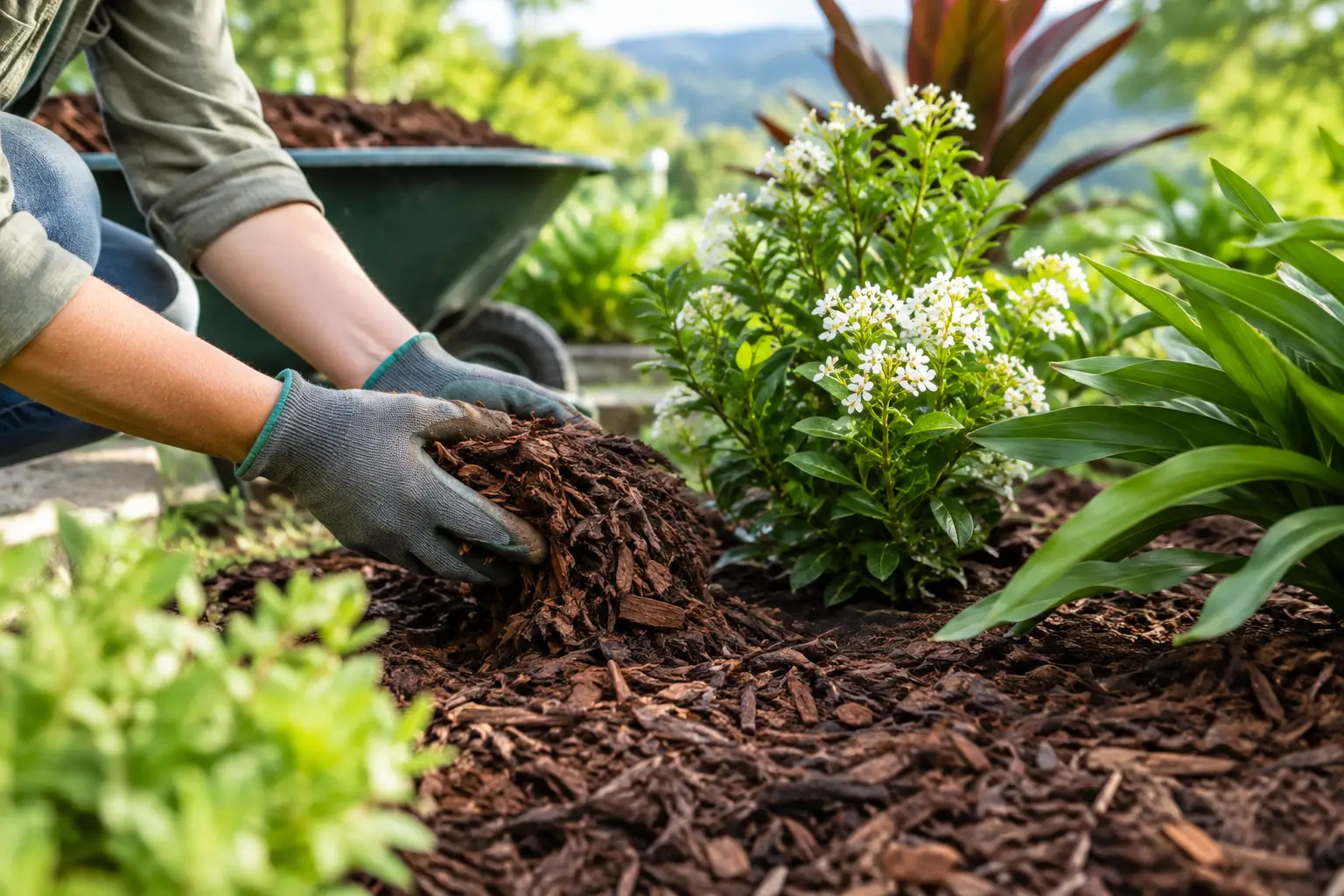
For most garden beds, aim for a mulch layer around 50 to 75 mm deep. That is enough to suppress weeds and retain moisture without smothering the soil. Fine materials, such as compost, should generally be spread more lightly, while coarse wood chips can sit closer to the upper end of that range.
Keep a clear gap around every plant stem and tree trunk. As a practical rule, pull mulch back by at least 50 mm around smaller plants and further around young trees or woody shrubs. Mulch piled against a trunk creates the familiar “mulch volcano”, which can trap moisture against bark, cause rot and make plants more vulnerable to pests and disease.
Spread the mulch evenly with a rake rather than leaving high piles in one area and bare soil in another. On a slope, a chunkier mulch is less likely to wash away. Edging can also help contain it, especially beside paving, lawns and footpaths where loose mulch tends to migrate after rain.
Water it in and check the bed over time
Once mulch is down, give the bed a steady watering. This settles the material and ensures moisture is available in the root zone. It is still worth checking the soil underneath during dry weather. Mulch slows water loss, but it does not replace proper irrigation for newly planted gardens or thirsty plants.
Over the following months, watch for weeds, exposed soil and mulch that has washed into drains or against fences. Organic mulch breaks down, which is part of its value, but it will need topping up. Most beds benefit from a refresh once or twice a year, depending on the material, weather exposure and how tidy you want the garden to look.
Mulching around different plants
Established trees and shrubs generally respond well to a generous, wide mulch zone. Extending mulch out towards the drip line, where practical, protects the feeder roots that take up water and nutrients. Keep the material lower and thinner immediately around the trunk.
Vegetable gardens need a little more flexibility. Sugar cane, pea straw and fine leaf mulch are useful once seedlings are established, but keep mulch away from tiny emerging plants so they do not struggle through the layer. As crops are harvested and replanted, the mulch can be moved aside, compost added and the bed refreshed.
For natives, use a low-phosphorus approach if fertiliser is needed and choose a natural mulch that does not create an overly rich, constantly wet environment. The plant selection, drainage and aspect should all work together. A mulch choice that suits a lush tropical planting may not suit a sunny native border.
Common mulching mistakes to avoid
The most common issue is applying mulch too thickly in the hope that more will mean fewer weeds. Beyond a sensible depth, mulch can shed water, reduce air flow to the soil and keep the root zone too wet. It can also provide a sheltered spot for pests if it is packed against structures or stems.
Another mistake is mulching before addressing the cause of a struggling garden. If water runs across a compacted area, plants are in the wrong location, or a bed receives far more sun than expected, mulch will help but it will not solve the underlying problem. Sometimes the best result comes from combining mulch with improved drainage, irrigation adjustments, new edging or more suitable planting.
It is also wise to keep mulch away from the base of timber fences and the walls of the home. This allows air flow, makes inspections easier and avoids keeping moisture where it is not wanted. In termite-prone areas, maintaining a visible inspection zone around the house is particularly important.
A better finish without extra garden work
Mulch is one of the simplest ways to make a garden bed look cared for while reducing the amount of watering and weeding it demands. The material does not need to be expensive or overly decorative to work well. It needs to suit the site, be spread evenly and be maintained as it breaks down.
For larger garden makeovers, awkward slopes or beds that repeatedly dry out or wash away, Evolve Gardens & Landscaping can help match planting, soil preparation, irrigation and mulch to the conditions on your property. A well-prepared, properly mulched bed gives your garden a stronger foundation – and makes the time you spend outside feel far more rewarding.