
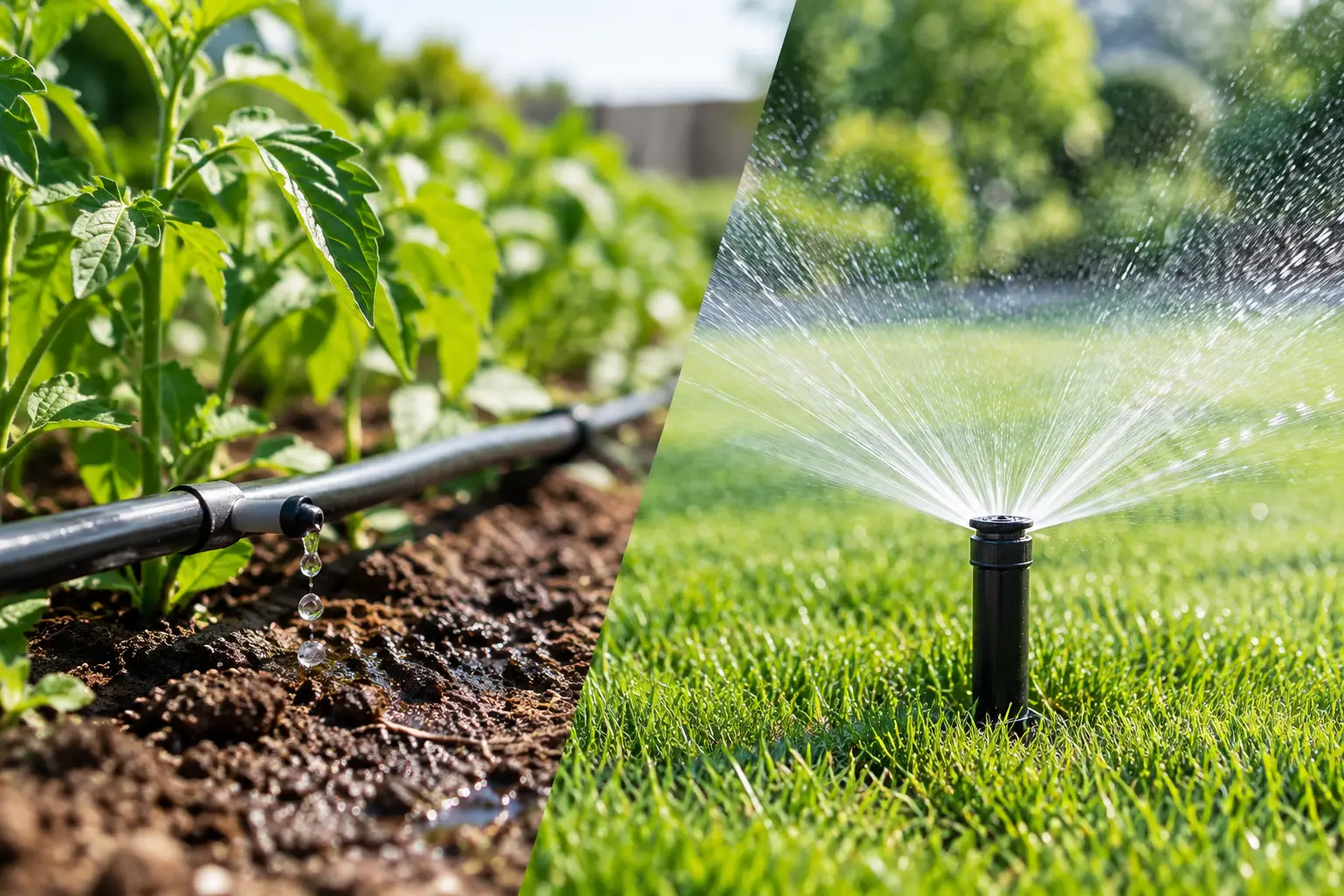
A garden can look healthy after a week of rain, then struggle quickly when hot, dry weather returns. That is why the choice between drip irrigation versus sprinklers matters so much for Northern Rivers homes. The right system keeps plants, turf and garden beds watered efficiently without creating unnecessary work, wasting water or leaving parts of the yard dry.
There is no single winner for every property. Drip irrigation is usually the better fit for established garden beds, hedges, fruit trees and water-wise planting. Sprinklers are often the practical choice for lawns and broad areas of groundcover. Many well-planned gardens use both, with separate zones designed around what each part of the property actually needs.
Drip irrigation versus sprinklers: the key difference
Drip irrigation delivers water slowly at or below ground level, directly around plant roots. It may use dripline laid through a garden bed, small drippers at the base of shrubs or adjustable emitters for pots and feature plants. Because the water goes where the plant needs it, there is far less evaporation and overspray.
Sprinklers throw water across the surface in a spray, much like rainfall. Pop-up sprinklers are commonly used in lawns, while risers and micro-sprays can be used for larger planted areas. They are good at watering a wide space evenly, but they also wet paths, fences and foliage if they are not positioned and adjusted properly.
The difference is not simply water-saving versus water-wasting. It comes down to matching the delivery method to the garden. A broad lawn needs even surface coverage. A row of lilly pillies, a native garden or a sloping planted bed usually benefits more from slow, targeted watering.
When drip irrigation is the better choice
For garden beds, drip irrigation is hard to beat. It puts moisture into the root zone rather than onto leaves and open soil, helping plants make the most of each watering cycle. This is particularly useful in full-sun yards around Ballina, Lennox Head, Byron Bay and Alstonville, where heat and coastal breezes can dry exposed beds quickly.
Dripline also works well beneath mulch. Mulch slows moisture loss, while dripline provides a steady supply of water below it. Together, they support healthier root growth and can reduce the frequency of hand watering. The garden looks tidier too, as there are no hoses running across paths or sprinklers soaking the side of the house.
For new landscaping, drip irrigation can be designed around different planting zones. Newly planted hedges need more regular watering than established natives. Pots often need their own line because they dry out faster than in-ground plants. A good layout separates these needs rather than making every plant receive the same amount of water at the same time.
Drip has limits. It needs to be installed carefully so each plant receives enough water, especially where beds are irregularly shaped or densely planted. Drippers can block if the water supply carries sediment, so filters and occasional flushing are worthwhile. It can also be accidentally cut during planting, edging or future garden work, which is why the layout should be documented and installed at a sensible depth.
Where sprinklers make more sense
A healthy lawn generally needs watering across its full surface, not just at selected points. This is where sprinklers are the more suitable option. Properly spaced pop-up sprinklers can cover turf evenly, helping avoid the dry patches that appear when one area receives less water than another.
Sprinklers can also make sense for large, open garden areas where dripline would be difficult to lay or maintain. If a property has wide turf zones, a sprinkler system is typically simpler to operate and easier to assess visually. You can quickly see whether the heads are covering the intended area.
The downside is that sprinklers are more affected by wind, heat and poor adjustment. On a breezy coastal block, fine spray can drift well away from the lawn. Water may land on driveways, footpaths or fences while the edge of the turf misses out. Runoff can also become a problem on compacted soil or sloping ground if a sprinkler zone runs for too long.
Timing makes a difference. Running sprinklers early in the morning gives water time to soak in before the day warms up. Evening watering can leave foliage damp overnight, which is less desirable in humid conditions where fungal issues can take hold. A timer makes this easier, but it still needs seasonal adjustments rather than being left on the same programme all year.
Water use, maintenance and running costs
Drip irrigation usually uses less water for planted beds because it is targeted and slow. It is especially effective where a garden includes drought-tolerant species that prefer a deeper, less frequent soak once established. It also helps avoid the common problem of watering the spaces between plants more heavily than the plants themselves.
Sprinklers can use more water, but that does not make them the wrong choice. A well-designed lawn zone with correctly matched sprinkler heads can be efficient. Problems arise when sprinklers overlap badly, spray hard surfaces or run long enough for water to flow down the driveway instead of into the soil.
Both systems need maintenance. Drip systems should be checked for blocked emitters, damaged pipe and dry spots in the bed. Sprinklers need occasional nozzle cleaning, height adjustments and checks for broken heads, leaks or overspray after mowing and garden work. Tree roots, settling soil and changes to garden beds can all affect an irrigation system over time.
For busy households, automation is often the biggest practical benefit. A controller can run separate zones for turf, hedges and garden beds, with different durations for each. Rain sensors or smart controllers can reduce unnecessary watering after wet weather, though they should never replace a quick look at the garden. Soil, shade, mulch depth and plant health will tell you more than a schedule alone.
Soil, slopes and Northern Rivers conditions
Northern Rivers properties can vary greatly from one suburb to the next. Sandy coastal soils can drain quickly and may need shorter, more regular watering cycles. Heavier clay soils can hold water longer but are prone to runoff if water is applied too fast. On a slope, a slow drip system or shorter sprinkler cycles with breaks in between can help water soak in rather than wash away.
Heavy rain is another local consideration. Irrigation should be flexible enough to pause when natural rainfall has done the job. Just as importantly, dry spells can follow wet periods, so an established system should be ready to support gardens when conditions change.
Plant selection matters as much as irrigation. A garden built around suitable plants, appropriate mulch and realistic sun exposure will need less intervention than one trying to keep thirsty species alive in a hot, exposed corner. Irrigation should support a good landscape plan, not compensate for the wrong plants in the wrong place.
The best answer is often a combined system
For most established homes, the practical solution is not drip irrigation or sprinklers. It is both, separated into sensible zones. Sprinklers look after the lawn, while dripline handles garden beds, hedges and trees. Pots, vegetable patches and newly planted feature areas may need their own zone so they can be watered without overwatering everything else.
This approach gives you more control and makes future garden maintenance easier. If you replace a garden bed, add a privacy screen with climbers or install new turf, the irrigation can be adjusted to suit that area without disrupting the rest of the yard.
A site inspection is the best starting point. The shape of the block, water pressure, soil type, drainage, existing plants and how you use the space all affect the right design. Evolve Gardens & Landscaping can assess these details as part of a tailored landscaping or garden improvement quote, helping create a system that suits the property rather than a one-size-fits-all plan.
A well-watered garden should not mean a wet driveway, stressed plants or another weekend spent moving hoses. Choose irrigation around the way your garden grows, and it will be easier to enjoy through the changing Northern Rivers seasons.