A lawn can look tired because of the grass, but the real problem often sits underneath it. Compacted ground, poor drainage, uneven levels and low organic matter are common across Northern Rivers properties. Knowing how to prepare lawn soil before laying turf or sowing seed gives the roots the conditions they need to establish, cope with heat and stay greener for longer.
Good soil preparation is not about adding as much soil conditioner as possible. It is about assessing the site, correcting the issues that matter and creating a firm, level base that drains properly. The right approach will vary between a small Ballina courtyard, a sloping Lismore block and a sandy, salt-exposed lawn near Lennox Head.
Start with the site, not the turf choice
Before bringing in soil or ordering turf, look closely at what happens in the area after rain and during a hot week. Water sitting on the surface, bare patches near paths, hard ground underfoot and grass that dries out quickly all point to different soil problems.
Check for shade from established trees, buildings and fences as well. Lawn needs enough direct light to perform, and heavily shaded areas may be better suited to a garden bed, groundcover or a practical hardscape surface. Trying to force turf into a location that receives little sun usually creates an ongoing maintenance job rather than a lasting result.
It is also worth checking where stormwater naturally travels. A new lawn should not direct water towards the house, neighbouring property or a retaining wall. On flatter sites, even a gentle fall away from buildings makes a meaningful difference. On slopes, soil stabilisation and sensible drainage need attention before turf goes down.
Clear the area properly
Remove old turf, weeds, builders’ rubble, roots, large stones and any rubbish left below the surface. This step can be time-consuming, but it prevents weeds from reappearing through new grass and stops hidden debris from affecting levels later.
For small areas, old lawn can be cut out with a turf cutter or removed by hand. Larger lawns may need machinery, particularly where the soil is compacted or access allows for it. Avoid simply covering existing weeds with topsoil. Persistent weeds can grow back through fresh turf, and the new layer may not properly bond with the soil below.
If there are established trees nearby, take care around surface roots. Cutting major roots can damage the tree and may create future lawn problems as roots continue to lift the ground. In these areas, adapting the design is usually better than digging aggressively.
Test drainage, compaction and soil condition
Northern Rivers soils can vary dramatically over a short distance. Some properties have heavy clay that holds water after rain. Others have sandy soil that drains too fast and struggles to retain moisture. Many established homes also have compacted subsoil left behind after construction.
A simple drainage check is useful. Dig a hole roughly 300 mm deep, fill it with water and see how long it takes to drain after the surrounding soil is saturated. Water that remains for many hours may indicate clay, compaction or a drainage issue. Very rapid drainage can mean the soil needs more organic matter to hold moisture and nutrients.
Compaction is another common issue. If a shovel is difficult to push into moist soil, or water runs off rather than soaking in, the ground may need loosening. Cultivate the area to a depth of around 100 to 150 mm where practical. Do not work soil when it is soaking wet, especially clay, as this can create hard clods and make the structure worse.
A soil test provides a clearer picture of pH and nutrient levels. Lawn grasses generally perform best in slightly acidic to neutral soil, but the best correction depends on the test result and turf variety. Applying lime, gypsum or fertiliser without understanding the soil can waste money and create an imbalance.
Clay soil versus sandy soil
Heavy clay benefits from improved structure and drainage. Organic matter, such as quality compost, can help create pore spaces for air and water. Gypsum may assist with some sodic clay soils, but it is not a cure-all for every heavy soil. If waterlogging is severe, drainage works or reshaping the site may be needed.
Sandy soil often needs help holding water and nutrients. Compost and an appropriate soil improver can increase moisture retention, but avoid adding a thin layer of rich material over loose sand without mixing it through. A distinct layer can interfere with root growth and water movement.
Build a level, free-draining lawn base
Once the soil has been cleared and cultivated, shape the area to its finished level. Allow for the thickness of turf so the lawn sits neatly below paths, garden edging and paved areas. Turf laid too high can spill onto footpaths, trap water against hard surfaces and make mowing awkward.
Bring in quality lawn underlay or screened topsoil only where it is needed to improve levels and soil condition. The material should be clean, reasonably consistent and free from weeds, large sticks and building waste. Cheap fill can create more problems than it solves, especially if it contains clay lumps, rubble or weed seeds.
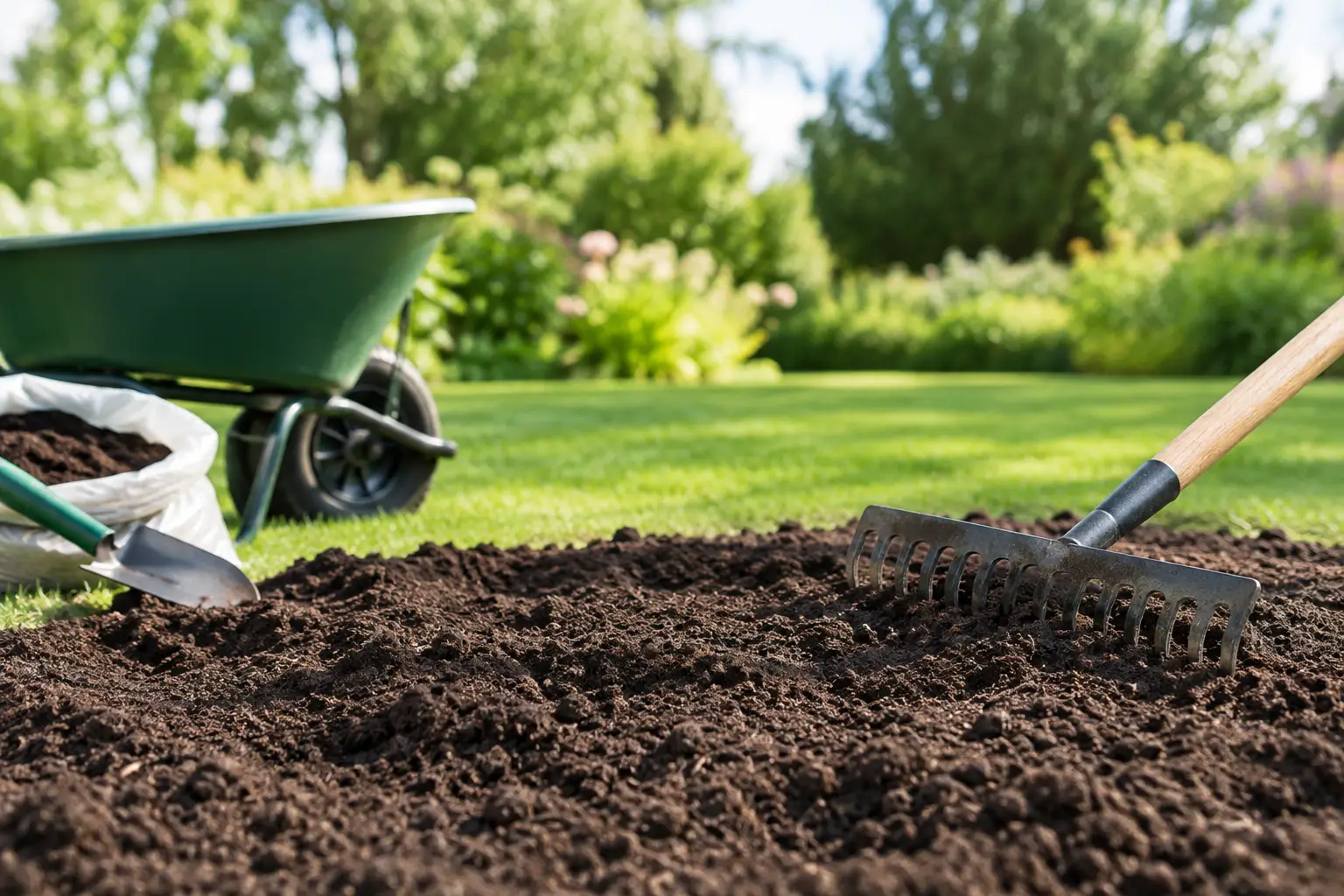
Spread soil evenly, then rake it out in several directions. Use a straight board, lawn levelling rake or the back of a rake to identify high and low spots. The goal is a smooth surface, not a perfectly flat one. A subtle fall for drainage is often essential.
Pay attention to transitions around driveways, garden edges, drainage grates and outdoor living areas. These small details affect how the finished space looks and how easily it can be maintained. It is much simpler to correct them before turf is installed.
Add organic matter and starter fertiliser carefully
Compost can improve both clay and sandy soils when used in sensible amounts and blended into the top layer. It supports soil biology and helps create a better root zone, but more is not always better. Excessive organic material can lead to a soft surface, uneven settling or nutrient runoff after heavy rain.
If a soil test or turf supplier recommends a starter fertiliser, apply it evenly at the specified rate and lightly incorporate it into the surface. Keep fertiliser off paved areas and out of drains. In the Northern Rivers, intense rainfall can quickly wash loose product away if it is not worked in or watered appropriately.
Fresh animal manure is not suitable immediately before turfing. It can be too strong, introduce weeds and create uneven nutrient levels. Well-composted products designed for garden use are the safer option.
Firm the soil without compacting it
A common mistake is leaving prepared soil too loose. Turf needs good contact with the soil beneath it, and a fluffy base will settle unevenly after the first few waterings. Lightly firm the finished surface using a lawn roller or by walking over boards laid across the area.
You should be able to leave a shallow footprint, not sink deeply into the soil. If the ground feels hard like a road base, it has been over-compacted and roots may struggle to move down through it. Rake the surface lightly after firming to create a fine, even finish for turf or seed.
Preparing lawn soil before turf installation
For turf, preparation needs to be complete before delivery day. Turf is a living product and should be laid as soon as possible, particularly in warm weather. Have the base levelled, lightly moist and ready to go so rolls can be laid tightly together without delay.
Water the prepared soil lightly before installation if conditions are dry, but do not saturate it. Once the turf is laid, water deeply enough to moisten the soil below the rolls. Check that water is reaching the base rather than simply beading on the turf surface.
New turf needs consistent watering while roots establish, then a gradual move towards deeper, less frequent watering. The exact schedule depends on weather, soil type, turf variety and rainfall. During hot, windy periods, recently laid turf can dry out faster than expected.
When professional preparation is worth it
Straightforward lawn areas can often be prepared by a capable homeowner. However, it is worth getting advice where there are drainage problems, substantial slopes, difficult access, poor fill soil, retaining walls or large areas needing accurate levels. These are the jobs where an inexpensive shortcut can become an expensive repair.
A professional team can assess the existing ground, organise suitable materials, manage excavation and drainage, and coordinate turf installation so the job progresses cleanly. Evolve Gardens & Landscaping works with Northern Rivers conditions in mind, helping property owners create lawns that suit the site rather than fight it.
A well-prepared lawn base is rarely the most visible part of a finished garden, but it is the part that determines what happens next. Take the time to get the soil right, and your lawn will have a far better chance of handling summer heat, heavy rain and everyday family use.