A tired patio beside a pool, a sloping backyard that is hard to mow, or a bare patch outside the kitchen can all prompt the same question: pavers versus decking, which is the better choice? Around the Northern Rivers, the answer is rarely just about appearance. Our heat, heavy rain, coastal air, soil conditions and the way you plan to use the space all matter.
Both options can create an outdoor area you will enjoy for years. The right material is the one that works with your block, budget and maintenance expectations rather than fighting them. A good landscape plan considers the whole yard too, including drainage, garden beds, access, privacy and how the new surface connects to your home.
Pavers versus decking: the practical difference
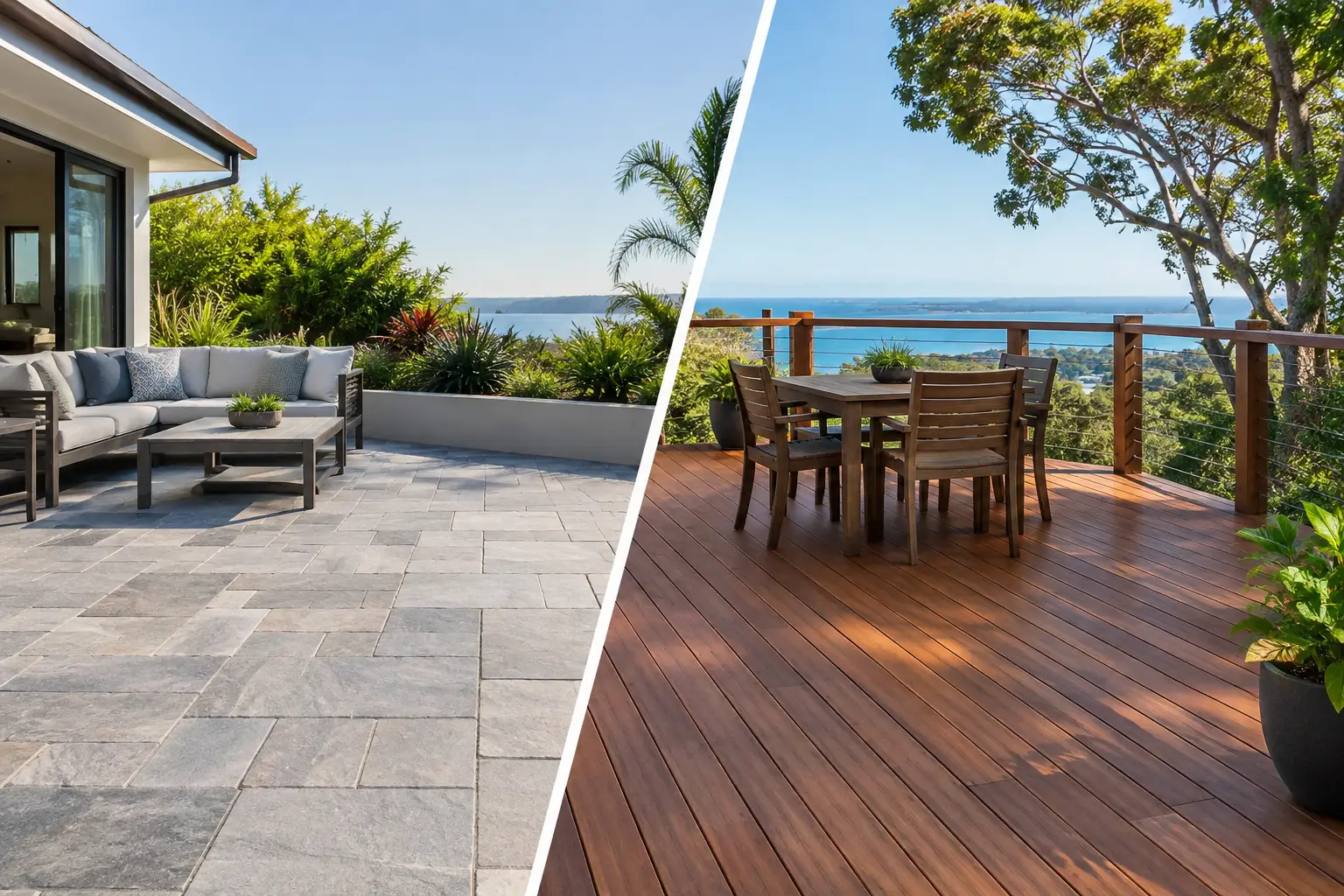
Pavers create a solid, ground-level surface. They are commonly used for patios, pool surrounds, paths, courtyards and entertaining areas. Materials range from concrete pavers through to natural stone, each with different colours, textures and price points.
Decking is an elevated or near-ground platform, usually built with treated timber, hardwood or composite boards. It is particularly useful where the ground falls away from the house, where you want to build over uneven ground, or where a raised entertaining area gives a better view and connection to the home.
The choice is not always either-or. Many of the most functional Northern Rivers gardens use both. For example, pavers can form a durable dining terrace at ground level, while a small deck steps down from a living room or spans a slope. This can make the garden feel more considered without forcing one material to solve every problem.
Start with the way you will use the area
A surface that looks great in a photo can be disappointing if it does not suit everyday life. Think about where people will walk, where furniture will sit, how much sun the area gets and whether children, pets or older family members will use it regularly.
Pavers generally suit areas that need a firm, stable base for a barbecue, outdoor table, fire pit or heavy pots. They are also a practical choice for paths and side access, where mud, lawn wear and wet-weather mess are ongoing problems. With the right finish, pavers offer good grip underfoot and can handle high traffic well.
Decking often suits entertaining spaces directly off the house. It can create a smooth transition from indoor flooring to an outdoor living area, especially when the internal floor sits above the yard. On a sloping block in places such as Lennox Head, Alstonville or Lismore, a deck may avoid the cost and disruption of extensive excavation and retaining.
For pool areas, safety and surface temperature deserve close attention. Some pavers and stone can become very hot in full sun, while dark composite decking can also hold heat. Material samples should be viewed outdoors, not just in a showroom, and the layout should allow for shade where possible.
How Northern Rivers conditions affect the decision
The Northern Rivers climate asks a lot of outdoor materials. Summer heat, humid periods, intense rainfall and coastal exposure can quickly expose shortcuts in construction or product selection.
Drainage is essential under pavers
Pavers need a properly prepared base and a planned fall so water moves away from the house and does not pond on the surface. This is especially important in heavy rain. Poor drainage can lead to movement, uneven pavers, water entering nearby structures or soggy garden edges.
Clay soils and poorly drained sites may need extra groundwork before paving begins. On some properties, this includes compacted road base, appropriate bedding sand, edge restraints and drainage measures suited to the site. A level-looking patio should not mean a flat patio. It needs enough fall to shed water while still feeling comfortable underfoot.
The joints between pavers can also attract organic matter and weeds if they are neglected. Regular sweeping and occasional cleaning keep the area tidier and help stop leaf litter building up, particularly beneath large trees.
Decking needs airflow and sound framing
A deck relies on what is underneath it. Good subfloor ventilation, suitable footings, correct board spacing and quality fixings all help it cope with moisture. When timber is built too close to the ground or water is allowed to sit beneath it, the likelihood of decay and movement increases.
Coastal properties around Byron Bay and Ballina may also need greater care with hardware and material selection due to salt-laden air. This is not a reason to rule out decking. It is a reason to choose materials and construction details that suit the location from the start.
Timber decking has a natural warmth that many homeowners love, but it needs periodic cleaning and recoating to maintain its appearance and protection. Composite decking reduces the need for staining or oiling, although it still needs cleaning and can be more expensive upfront. Its look and heat performance vary significantly between products, so it is worth comparing real samples before committing.
Cost is more than the price per square metre
It is tempting to compare material prices alone, but installation conditions have a major impact on the final cost. A straightforward paved courtyard on stable, accessible ground may be very cost-effective. A paved area that needs excavation, drainage, soil removal, retaining and careful access may be a larger project.
The same applies to decking. A low deck over a simple, level site is different from an elevated deck requiring engineered footings, stairs, balustrades and detailed framing. If there are underground services, tight side access or a steep block, these factors should be discussed early.
Long-term upkeep also belongs in the budget. Concrete pavers are generally low maintenance once installed correctly, though they may need cleaning and occasional joint attention. Natural stone may require sealing depending on the product and location. Timber decking needs more regular care, while composite can lower maintenance but comes with a higher initial material cost.
A clear quote should explain the site preparation, drainage, materials, finishing details and any related work such as retaining, planting or turf repairs. That makes it easier to compare options fairly and avoids surprises once work is underway.
Appearance, comfort and connection to the garden
Pavers offer a broad range of finishes, from clean, contemporary concrete formats to textured stone with a more relaxed, natural feel. Large-format pavers can make a compact courtyard feel calmer and more open. Smaller pavers or stone can bring character to a garden path and sit comfortably beside established planting.
Decking provides a softer visual contrast against masonry homes, pools and leafy gardens. It is often more comfortable than hard paving when sitting or walking barefoot, and it can make a raised outdoor room feel inviting. Under a covered alfresco area, timber or composite boards can be a strong option when the space is protected from the harshest weather.
Neither material should be selected in isolation. The colour of the house, existing fence lines, roof shade, pool coping and garden style all influence what will look right. Light-coloured paving can brighten a shaded yard but may show marks more easily. Darker surfaces can feel more dramatic but may be hotter in direct sun.
Planting also changes the result. Garden beds can soften the edge of a paved area and help reduce glare. A deck may benefit from screening plants, privacy screens or built-in planters to make it feel settled into the landscape rather than perched above it.
When pavers are usually the better fit
Pavers are often the practical choice for a ground-level entertaining area, pool surround, pathway or courtyard where durability and easy access are priorities. They work well when you want a surface for heavy furniture, a level route from the driveway, or a simple extension of an existing slab.
They can also be easier to repair in sections if access is needed to services below, provided matching pavers are kept aside. For homes with a busy family life, pets and regular garden use, a well-laid paved surface can be hard-wearing and straightforward to maintain.
When decking is usually the better fit
Decking is often the smarter solution where the house floor is raised, the land slopes away, or the goal is to create a defined outdoor room without major earthworks. It can preserve more of the natural shape of the block and offer useful space underneath in some designs.
It is also a good option when you want a warmer, more relaxed finish next to living areas. The key is allowing for the maintenance commitment of timber, or budgeting for a quality composite alternative and professional installation.
Get the site assessed before choosing
The best decision usually becomes clearer after looking at the site in person. Sun exposure, drainage paths, soil, access, changes in level and the condition of surrounding structures can all affect the design. A practical plan may include paving, decking, retaining, screening, lawn and planting working together rather than competing for space.
Evolve Gardens & Landscaping can help Northern Rivers homeowners assess the options, plan a surface that suits the property and organise the work around realistic timeframes. The aim is not simply to add pavers or a deck, but to create an outdoor area that handles local conditions and makes day-to-day life outside easier.
Before settling on a finish, stand in the space at different times of day, picture where the table and barbecue will go, and consider where rainwater needs to travel. That small amount of planning can turn a good-looking outdoor project into one that genuinely works for your home.