A coastal garden can look lush and effortless from the street, yet the plants behind that look are working hard. Salt spray, strong onshore winds, sandy soil, heat reflected from paving and long dry spells can quickly expose plants that are not suited to the site. Choosing the best plants for coastal gardens is less about chasing a particular look and more about matching each plant to the conditions it will actually face.
Across the Northern Rivers, coastal conditions can vary greatly between a protected Ballina backyard, an exposed Lennox Head block and a larger lifestyle property near Byron Bay. The right plant palette will handle the climate, reduce ongoing maintenance and still give you the privacy, shade, colour or structure your outdoor space needs.
Start with the conditions in your yard
Not every coastal garden is constantly hit by salt. A property a few streets back may be warm and sandy but well protected, while a beachfront garden can receive regular salt-laden wind. Observe where the wind comes through, which areas bake in afternoon sun and where water sits after heavy rain. These details matter more than simply choosing plants labelled ‘coastal’.
Soil is another deciding factor. Many coastal sites have free-draining sand with limited organic matter, which means water and nutrients can move through quickly. Other Northern Rivers gardens have heavier clay below a sandy top layer, particularly on altered or sloping sites. Improving the soil before planting and using mulch properly will help new plants establish, but it will not make a moisture-loving rainforest plant happy in full salt wind.
A practical approach is to use tougher plants as a first line of defence along exposed boundaries, then place more ornamental or tender plants in the shelter they create. This gives the garden depth without setting you up for continual replacements.
The best plants for coastal gardens in the Northern Rivers
Westringia for low-maintenance structure
Westringia, often called native rosemary, is one of the most useful shrubs for coastal landscapes. It copes well with sun, wind, dry periods and light salt exposure once established. Its grey-green foliage also sits comfortably beside timber screens, stone, paving and contemporary homes.
Compact varieties work well as clipped borders or low hedges, while larger forms can soften a fence line. Westringia responds well to occasional pruning, although it should not be cut back too hard into old bare wood. For busy households, it is a reliable choice that looks neat without demanding constant attention.
Lomandra for paths, banks and difficult ground
Lomandra is a hardworking strappy-leaf plant that earns its place in coastal gardens. It tolerates heat, wind and dry soil, and its dense root system helps hold soil on slopes or around retaining walls. It is particularly useful where lawn struggles, along driveways and beside footpaths where plants need to stay tidy.
Choose a variety based on the finished size you need. Some form compact clumps suitable for edging, while others create a larger, softer mass planting. Lomandra is not a showy feature plant on its own, but grouped through a garden it gives a clean, resilient base for flowering shrubs and trees.
Dianella for colour and movement
Dianella provides similar durability with a little more colour. Its arching foliage, small blue flowers and purple berries can add interest to informal garden beds. Many varieties handle coastal conditions well, although they generally perform best where they have reasonable drainage and are not taking the full force of salt spray every day.
Use dianella around patios, pool areas and garden edges where you want a softer look than a clipped hedge. Remove tired leaves and spent flower stems as needed to keep clumps looking fresh. If a plant becomes too large or sparse after several years, it can usually be divided or replaced easily.
Banksia integrifolia for coastal character
Coastal banksia, or Banksia integrifolia, is a standout tree for larger gardens. It is naturally adapted to sandy coastal conditions, tolerates wind and salt, and offers creamy flower spikes that attract birds and insects. Its silvery leaf undersides also bring a distinct coastal look without feeling overly formal.
Give banksias room to grow and avoid placing them too close to buildings, pools or underground services. They are best suited to open areas, larger front gardens and properties where you want shade and screening over time. Like many Australian natives, banksias do not need heavy feeding. Use a suitable low-phosphorus fertiliser only where soil tests or plant performance indicate it is needed.
Tuckeroo for shade and screening
Tuckeroo is a dependable small-to-medium tree for Northern Rivers coastal gardens. It has glossy green foliage, handles coastal exposure well and can be used for shade, screening or as a street-facing feature. Its rounded canopy is useful where you want more softness than a narrow hedge can provide.
It is generally a better option than forcing a dense, high-maintenance screen into a hot exposed position. Allow for its mature width, particularly near driveways and paved areas. Early formative pruning will help create a balanced shape and suitable clearance beneath the canopy.
Coastal tea tree for exposed sites
Coastal tea tree, Leptospermum laevigatum, is extremely tough in salt, wind and poor sandy soil. It can create an effective windbreak and is useful on very exposed properties where other shrubs fail. Its pale flowers also support pollinators.
The trade-off is size and vigour. It needs space, and it should be maintained before it becomes overgrown or woody. In smaller residential gardens, a compact westringia or a carefully selected paperbark may be easier to manage. For larger boundaries, however, coastal tea tree can be a practical first layer of planting.
Pigface for sunny groundcover
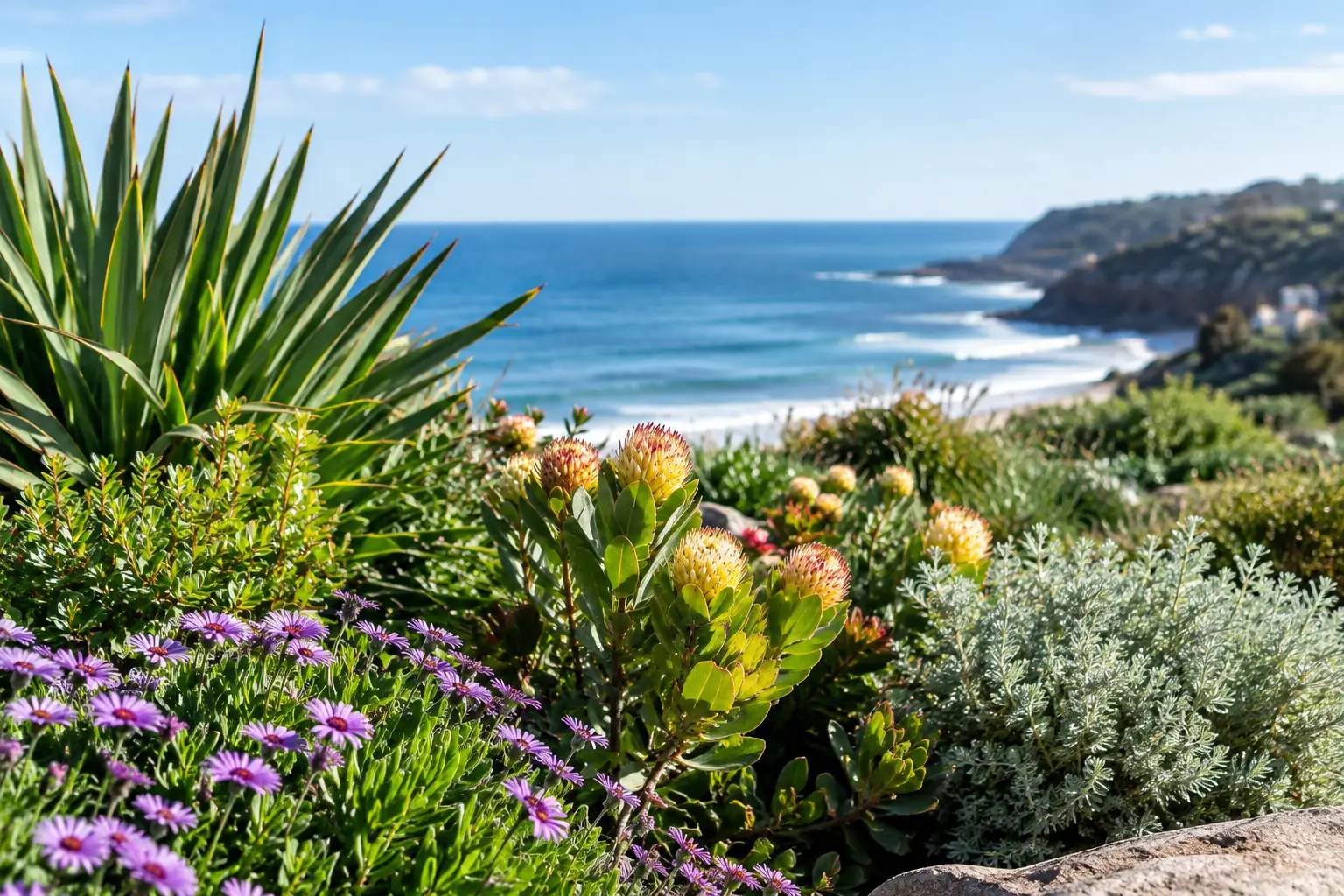
Pigface is one of the best choices for hot, sandy ground where lawn is difficult to maintain. Its fleshy leaves hold moisture, its flowers add seasonal colour and it spreads across bare soil to reduce erosion. It works well spilling over retaining walls, along the front of garden beds and in coastal-style rock gardens.
It needs good drainage and plenty of sun. Avoid overwatering, especially in heavier soil, as this can cause plants to rot. A few plants can spread quickly, so give them room rather than crowding them with slower-growing shrubs.
Pandanus for a bold feature
For larger sites, pandanus creates an unmistakable coastal statement. Its architectural form, upright trunk and long leaves suit open gardens near the beach, around broad lawns or beside wide driveways. It is naturally suited to coastal conditions, but it is not a small-garden plant.
Plan for its mature size and keep it well away from roofs, paths and tight entertaining areas. Fallen fronds can be sharp and the tree needs sensible placement from the outset. Used in the right location, it gives an established coastal feel that smaller shrubs cannot replicate.
Build layers instead of relying on one hedge
A garden made entirely of one hedge species can look flat and leave the whole boundary vulnerable if pests, disease or harsh weather affect that plant. Layering creates a more attractive and practical result. A wind-tolerant screen at the back, medium shrubs through the centre and low grasses or groundcovers at the front will give the garden protection and visual depth.
For example, a larger block may use coastal tea tree or tuckeroo along an exposed edge, westringia and banksia through the middle, then lomandra and pigface near paths or open ground. On a compact suburban block, a narrower mix of westringia, dianella and lomandra may provide privacy without taking over the yard.
Plant spacing is worth getting right. Plants placed too close together can look full in the first year but compete for moisture and light as they mature. They also become harder to prune and more prone to poor airflow. A well-designed garden may look slightly open at first, but it will grow into a healthier and easier-to-maintain space.
Give coastal plants the right start
Even tough plants need regular watering while their roots establish. Deep, less frequent watering encourages roots to travel down into the soil, which makes plants more resilient during dry weather. Drippers or a properly designed irrigation system can save time and avoid the waste that comes with watering hard surfaces or spraying into the wind.
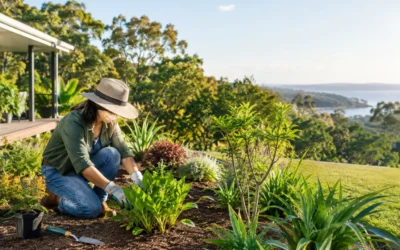
Apply a layer of organic mulch around plants, keeping it clear of stems and trunks. Mulch moderates soil temperature, helps retain moisture and reduces weeds. On very windy sites, use a mulch that will stay in place rather than light material that can blow across the lawn or into drains.
Pruning should be based on the plant, not the calendar. Light, regular shaping keeps hedges dense and manageable. Trees need selective pruning to develop a safe form, while grasses and groundcovers usually just need old material removed when they become untidy. Over-pruning can leave plants exposed to sun and wind and often creates more work in the long run.
When local planning makes the difference
Coastal planting looks simple when it is done well, but poor plant choice can mean years of replacements, patchy screening and unnecessary water use. If you are dealing with an exposed boundary, a steep block, drainage issues or a complete garden makeover, a site-specific plan is usually money well spent.
Evolve Gardens & Landscaping can help match planting to your soil, exposure, lifestyle and maintenance preferences, then carry the work through from preparation and planting to ongoing garden care. The best result is a garden that looks settled, suits your home and keeps performing through summer heat, coastal wind and the changing seasons.