A garden can look tired long before it is truly short of water. In the Northern Rivers, harsh afternoon sun, sandy coastal soils, heavy clay pockets and periods of low rainfall can all leave lawns thin, plants stressed and garden beds hard to manage. This waterwise garden guide is designed to help local homeowners create outdoor spaces that stay attractive while needing less water, less rescue work and fewer replacements.
A waterwise garden is not a yard full of gravel and spiky plants. Done properly, it is a practical, layered garden that suits your block, handles the local conditions and still gives you shade, privacy, colour and room to enjoy outdoors.
Start with the site, not the plant list
The best water-saving decisions are made before a single plant goes in. A plant that thrives in a sheltered Alstonville garden may struggle in a wind-exposed Lennox Head yard, while a low area on a Lismore property can hold far more moisture than a sunny slope in Ballina.
Look at where the sun falls through summer, not just where it sits on a mild winter morning. Western-facing areas can become punishingly hot by mid-afternoon. Also take note of reflected heat from driveways, masonry walls and pool surrounds, along with exposed corners that catch drying winds. These conditions influence what will last, how often it will need watering and whether a new garden bed is worth the ongoing effort.
Drainage matters just as much. Some Northern Rivers properties have free-draining sandy soil that loses moisture quickly. Others have compacted or clay-heavy soil that holds water after rain, then bakes hard in dry weather. Both can be improved, but they need different approaches. Building healthy soil and selecting plants for the right position will save far more water than simply increasing irrigation.
Improve the soil before increasing irrigation
Healthy soil works like a sponge. It absorbs rainfall, holds moisture around plant roots and releases it more gradually during dry periods. Poor soil sheds water or lets it disappear below the root zone before plants can use it.
Compost and well-rotted organic matter can improve most garden beds, especially where soil is compacted, pale or low in life. Work it into the top layer before planting rather than piling it around established stems. On very heavy ground, raising beds slightly may help prevent roots sitting wet after prolonged rain. In sandy areas, organic matter is particularly useful for slowing moisture loss.
Mulch is the next essential layer. A 50 to 75 mm layer of quality organic mulch helps keep the soil cooler, reduces evaporation and limits weeds competing for water. Keep mulch clear of trunks and stems so moisture does not sit against the plant. It will break down over time, which is a benefit for soil health, but it does need topping up as it settles.
Fresh mulch can briefly draw nitrogen from the soil as it decomposes, particularly if it is coarse and woody. For new planting, a suitable slow-release fertiliser or compost beneath the mulch can help plants establish without creating a burst of soft, thirsty growth.
Choose plants for their position
Drought-tolerant planting does not mean every plant must cope with full sun and no water. It means choosing plants that suit the exposure, soil and level of care you can realistically provide. Even hardy plants need regular watering while they establish, usually through their first growing season.
For hot, open areas, consider tough, low-maintenance choices such as lomandra, dianella, westringia, coastal rosemary, pigface, kangaroo paw and many native grasses. These can bring structure, texture and flowers without demanding constant attention once established. In coastal gardens, salt-tolerant varieties may be needed as well.
Shaded or protected zones call for a different palette. Native violets, clivia, bird’s nest ferns and selected lilly pillies may suit these spaces, depending on drainage and airflow. A dense screen planted into a dry, exposed strip is rarely low maintenance, no matter how attractive it looks on planting day. Privacy planting needs enough soil, root room and access to water while it matures.
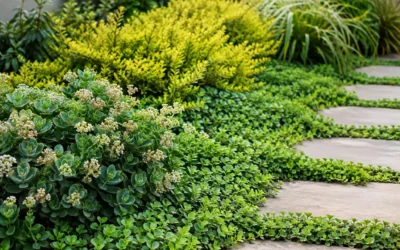
Use a mix of trees, shrubs, groundcovers and feature plants rather than relying on one species across the whole garden. Layers shade the ground, reduce wind at soil level and make the garden feel established sooner. They also make it easier to replace a plant if one does not perform as expected.
Be realistic about lawn
A large lawn can be the thirstiest part of a suburban garden, particularly in full sun on sandy ground. That does not mean you need to remove it all. Families often need a clear area for children, pets and outdoor living, while a neat lawn can make a compact yard feel open.
The practical option is often to reduce lawn to the area you genuinely use and plant out the rest with mulched beds, groundcovers or a small seating area. When installing new turf, choose a variety suited to the level of sun, traffic and care it will receive. Turf in deep shade or on a steep, dry bank may never deliver the result you want, regardless of watering.
Mow higher in dry conditions. Slightly longer grass shades the soil and develops deeper roots, helping it cope better between watering. Avoid taking too much off at once, particularly during heat or drought stress.
Water deeply, slowly and at the right time
Frequent, light watering encourages shallow roots. Deep, less frequent watering encourages plants to seek moisture lower in the soil, making them more resilient when conditions turn dry. The exact schedule depends on rainfall, soil type, plant age and weather, so it is better to check the soil than follow a fixed calendar.
Push a finger or small trowel beneath the mulch before watering. If the soil is still moist several centimetres down, wait. If it is dry below the surface, water slowly enough for moisture to soak in rather than run off into the gutter.
Drip irrigation and properly placed soaker lines are generally more efficient than overhead sprinklers in garden beds. They deliver water near the roots and reduce losses to wind and evaporation. Sprinklers can still be useful for lawn, but check their coverage. A sprinkler watering the footpath, fence or driveway is wasting water and often leaving another section of lawn dry.
Water early in the morning where possible. This gives plants time to take up moisture before the heat builds and avoids keeping foliage wet overnight. Check irrigation lines at the start of each warm season for leaks, blocked emitters and shifted sprinkler heads. A small fault can quietly waste a surprising amount of water.
Design for rainfall when it arrives
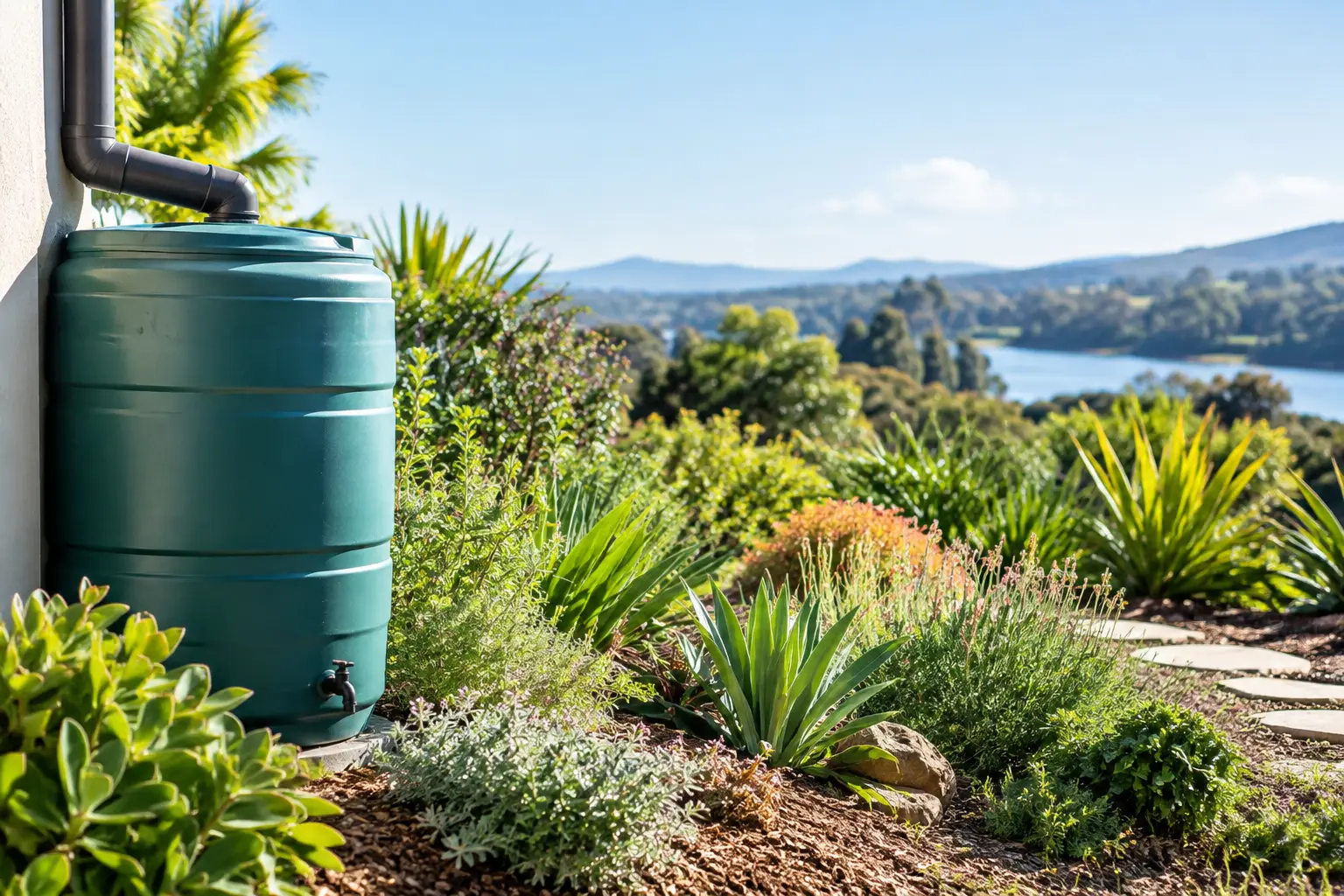
Northern Rivers weather can swing from long dry spells to intense rain. A waterwise garden should be able to make use of both. Directing roof water into a rainwater tank can provide a useful supply for garden use, subject to your property setup and local requirements. Even without a tank, garden design can slow rainfall down rather than sending it straight to stormwater.
Gentle swales, permeable paving, planted edges and mulched garden beds can all help water soak into the landscape. On sloping blocks, retaining walls and drainage need to be planned together. Water moving downhill can erode soil, undermine paths and drown plants at the bottom if it has nowhere sensible to go.
Hard surfaces have a role in a functional garden, especially around entertaining areas and access paths. The key is balancing paving with planted zones and considering where runoff will travel during a heavy downpour.
Maintain the garden for long-term water savings
Waterwise gardens are lower maintenance, not no maintenance. Pruning keeps shrubs compact and reduces competition in crowded beds. Removing weeds early stops them taking moisture and nutrients intended for your plants. Replacing a struggling plant quickly is usually more economical than repeatedly watering, fertilising and hoping it turns around.
Seasonal attention also makes a difference. Refresh mulch before the hottest months, adjust irrigation after meaningful rain and check new plants more often than established ones. If a bed repeatedly dries out or floods, treat it as a design issue rather than a watering issue.
For homeowners planning a larger update, professional site assessment can prevent costly trial and error. Evolve Gardens & Landscaping can help match planting, soil preparation, irrigation and practical hardscaping to the way your property is used.
A well-planned garden should feel easier to live with each year. Start with one exposed bed, one troublesome lawn edge or one irrigation zone, then build on what works in your own patch of the Northern Rivers.